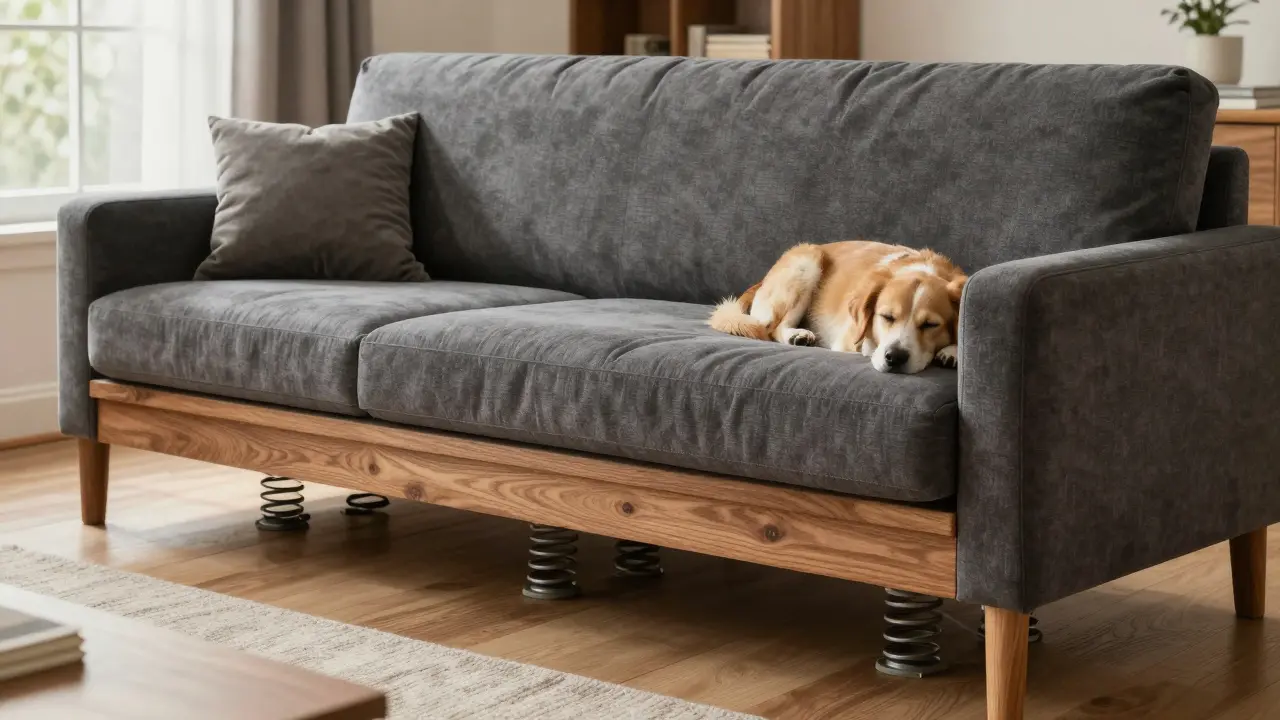
Buying a sofa isn’t just about picking a color that matches your rug. It’s about spending money on something you’ll sit on every day-for years. A cheap sofa might look fine in the store, but after six months of Netflix marathons and dog naps, it starts to sag, squeak, and smell like last week’s pizza. A good quality sofa, on the other hand, lasts 10 to 15 years. So how much should you actually spend? The answer isn’t a single number. It depends on what you’re getting for your money.
What Makes a Sofa "Good Quality"?
A good sofa isn’t just soft. It’s built to handle daily use without falling apart. Look at the frame first. Solid hardwood like kiln-dried oak, maple, or beech is the gold standard. You’ll find this in sofas priced at $1,500 and up. Cheaper models use particleboard, plywood, or even plastic joints. They warp over time. If you shake the frame and it wobbles, walk away.
Then there’s the suspension. Eight-way hand-tied springs are the best. They’re labor-intensive and expensive, but they give you even support and last decades. If you see sinuous S-springs, that’s fine for mid-range sofas ($800-$1,500). They’re durable enough for most families. But if the springs feel loose or you hear metal clanking when you sit down, it’s a red flag.
Down and feather blends are plush and luxurious, but they need fluffing. High-density foam (2.5 lbs/cu ft or higher) holds its shape better and doesn’t flatten out after a year. Many manufacturers now use a mix: foam core with a down wrap. That gives you support and softness without the maintenance.
Stitching matters too. Double-stitched seams and reinforced corners mean the fabric won’t rip when your kids jump on it. Look at the underside of the sofa. If you can see raw edges, loose threads, or uneven stitching, skip it.
Price Ranges: What You Get at Each Level
There’s no magic price point, but here’s what you can expect across the board in 2026:
- Under $800: This is where you’ll find mass-market sofas from big-box stores. They’re often made with engineered wood frames, low-density foam, and synthetic fabrics. They might look okay for a few months, but most start to lose shape by year two. These are temporary solutions.
- $800-$1,500: This is the sweet spot for most households. You get solid hardwood frames, S-springs, and foam with 2.5-3.0 lb density. Fabrics are usually performance-grade polyester blends or microfiber-stain-resistant and easy to clean. Brands like IKEA’s FRIHETEN, Ashley’s Homestretch, and Wayfair’s AllModern offer solid value here.
- $1,500-$2,500: This is where real craftsmanship begins. Hand-tied springs, kiln-dried frames, and top-grain leather or high-thread-count linen are common. You’ll also see custom options: modular designs, reversible cushions, and made-to-order sizes. Brands like Floyd, West Elm, and Pottery Barn fall here. Many offer 10-year warranties.
- $2,500-$5,000: These are premium, often custom-made sofas. You’re paying for artisanal construction, exotic woods, European upholstery, and hand-finished details. Brands like Roche Bobois, Natuzzi, or local Canadian makers like Reverie (based in Ontario) fit here. These sofas are heirlooms. They’re built to last 20+ years.
One thing to watch: sales. Many brands run promotions in January and September. You can often get $500-$1,000 off a $2,000 sofa during these windows. Don’t buy at full price unless you’re in love with the design and know it’s a quality piece.
Where to Buy for the Best Value
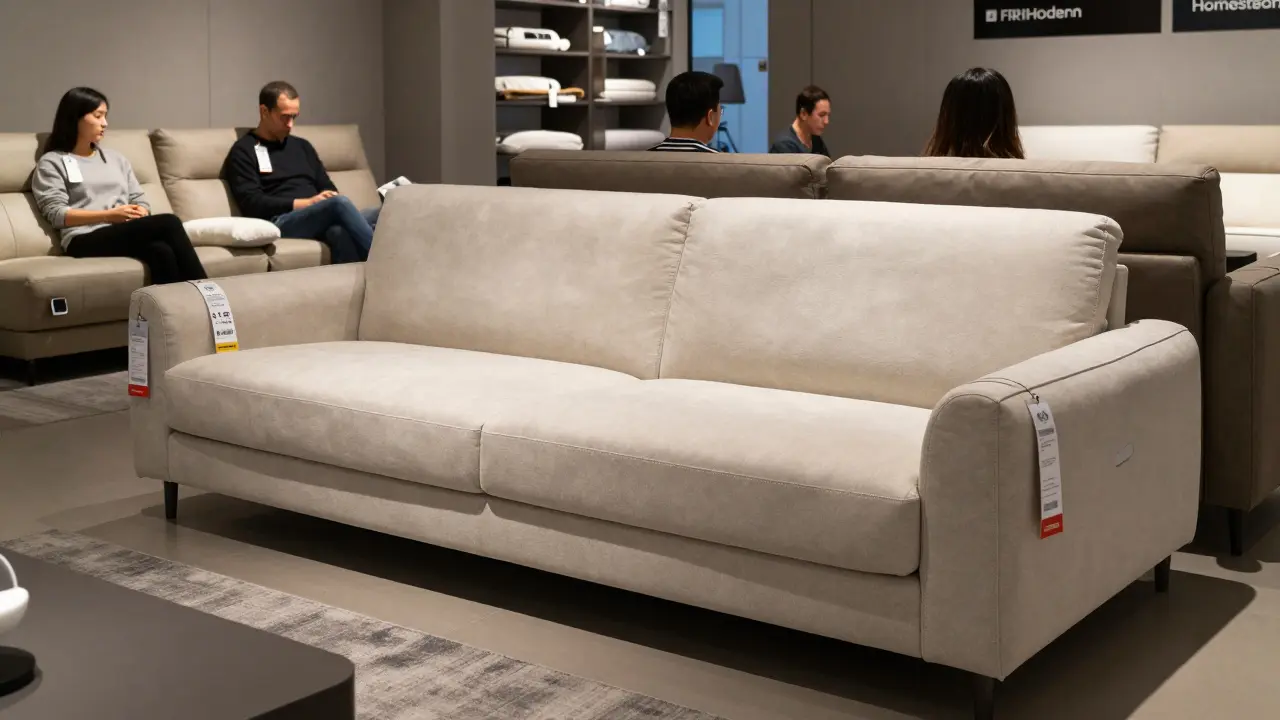
Online retailers like Floyd and Burrow offer transparent pricing and free delivery. They cut out middlemen, so you pay less for the same quality. But you can’t sit on them first. If you’re unsure, visit a local showroom. Burlington has several reputable furniture stores-like Canadian Furniture Outlet and HomeSense-that carry mid-to-high-end brands. Test the comfort by sitting in it for at least 10 minutes. Lie down if you can. See how your back feels after 15.
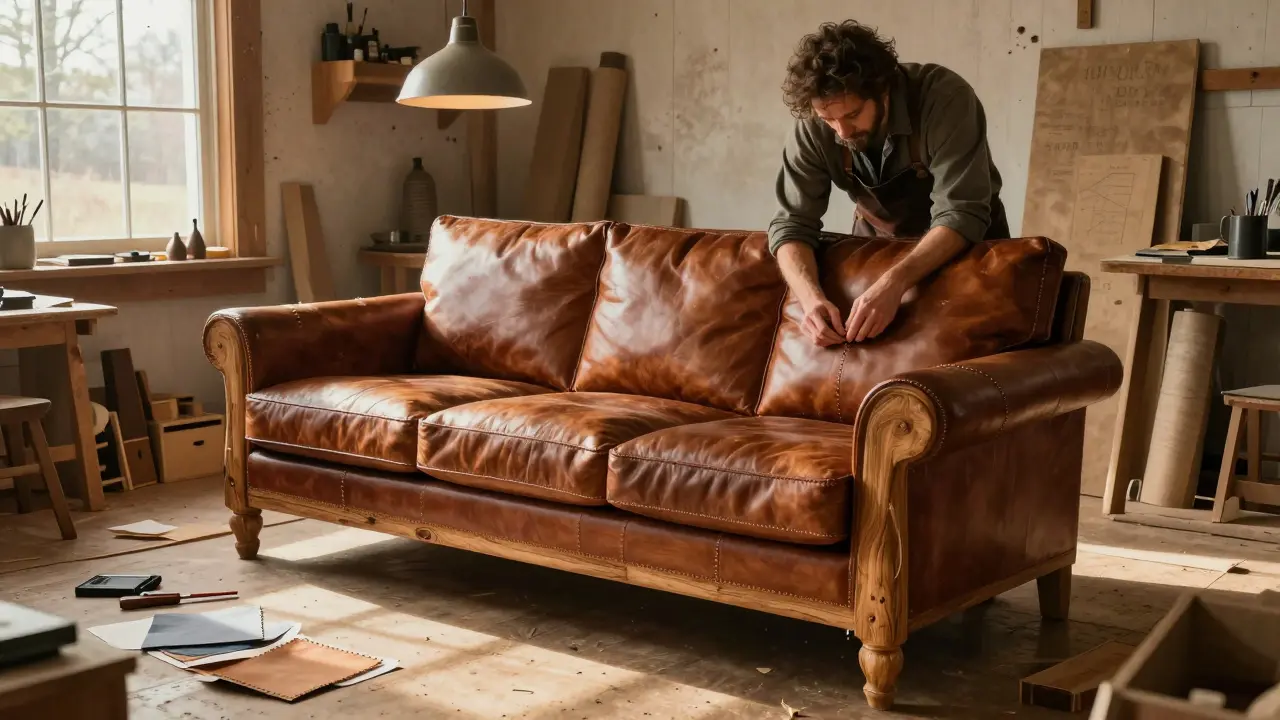
Local makers are another smart option. In Ontario, there’s a growing number of small workshops building custom sofas using reclaimed wood and eco-friendly fabrics. They might cost $2,000-$3,000, but you get a one-of-a-kind piece and support local craftsmanship. Plus, you can choose the fabric, size, and leg style.
What to Avoid
Don’t fall for marketing buzzwords like "luxury," "premium," or "designer" unless you can back them up with specs. A sofa labeled "Italian leather" might just mean the cushions are lined with a thin layer of leather scraps. Ask: Is it full-grain? Top-grain? Bonded? Full-grain lasts the longest.
Avoid sofas with no return policy or warranty. A good brand stands behind its product. Look for at least a 5-year warranty on the frame and 1-3 years on the upholstery. If they won’t give you one, it’s a warning sign.
Also skip sofas that come in a box and require assembly. Those are usually low-density foam and particleboard. They might be cheap upfront, but you’ll replace them in 3-4 years. That’s not saving money-it’s wasting it.
Is a ,000 Sofa Worth It?
Only if you plan to keep it for life. A $5,000 sofa isn’t just furniture-it’s an investment. Think of it like a good pair of boots. You pay more upfront, but you don’t need to buy new ones every year. If you’re renting, or you move often, skip it. But if you’re settling into a home for the long haul, spending more now saves you hundreds-or thousands-over time.
One family in Hamilton replaced their $600 sofa three times in 12 years. Each time, they spent $600-$800. That’s $2,000 total. They finally bought a $2,200 sofa with a 10-year warranty. It’s still going strong. They’ve saved over $1,000-and they don’t have to argue about where to put the new one every few years.
Final Rule: The 10-Year Test
Before you buy, ask yourself: Will I still be happy with this sofa in 10 years? Not just because it looks nice, but because it still feels good. If the answer is yes, and the price fits your budget, go for it. If you’re unsure, wait. A good sofa doesn’t go on sale every week. But when you find the right one, it’s worth the wait.
The best sofa isn’t the cheapest. It’s the one you’ll still love a decade from now.
Is it worth spending more than $2,000 on a sofa?
Yes, if you plan to keep it for 10+ years. Sofas over $2,000 typically have hardwood frames, hand-tied springs, and top-grain leather or high-density foam. These last much longer than cheaper options. Over time, you save money by not replacing it every few years.
What’s the best fabric for a sofa with kids or pets?
Performance microfiber, Crypton, or Sunbrella fabrics are the best. They’re stain-resistant, easy to clean with soap and water, and hold up to claws and spills. Avoid silk, velvet, or light-colored linen if you have active kids or dogs. Darker colors hide dirt better too.
Can I find a good sofa on sale?
Yes. Major sales happen in January (after the holidays) and September (end of summer). Many brands offer 20-40% off during these times. Check local showrooms and online retailers like Floyd, Burrow, and West Elm. Don’t buy at full price unless you’re certain it’s the right one.
Should I buy a modular sofa?
Modular sofas are great if you want flexibility. You can rearrange them, add chaise lounges, or replace individual sections if they wear out. Brands like Burrow and Floyd make modular sofas with replaceable cushions and frames. They cost more upfront but last longer and adapt to your space better.
Are online sofas reliable?
Many are. Brands like Floyd, Burrow, and Article offer free returns, detailed specs, and long warranties. But you can’t test comfort in person. Read reviews carefully-look for comments on cushion firmness, frame sturdiness, and delivery experience. If you’re unsure, visit a local store to sit on similar models first.

Wilda Mcgee
January 13, 2026 AT 15:26Love this breakdown. I bought my first real sofa last year for $1,800 - hardwood frame, 3.0 lb foam, performance microfiber. Two dogs, two toddlers, and 14 months later? Still looks brand new. No sag, no stains, no drama. Worth every penny. You’re not buying furniture - you’re buying peace of mind.
Glenn Celaya
January 14, 2026 AT 02:54Bro why are you even talking about $2000 sofas like its normal. I got a 7ft sectional from Costco for $699 and it’s been fine for 5 years. You people spend too much on stuff you sit on. Just get a beanbag and call it a day.
Ryan Toporowski
January 14, 2026 AT 11:47Love this so much 🙌 I used to buy cheap sofas every 3 years until I read this. Now I’m saving up for a Floyd. My back thanks me. My wallet will too in 10 years 😅
Jen Becker
January 16, 2026 AT 10:22I bought a $300 sofa and it collapsed during a Netflix binge. My dog still won’t sit next to me. I’m traumatized.
Samuel Bennett
January 17, 2026 AT 20:11Wait so you’re saying particleboard is bad but you recommend West Elm who uses the same stuff as IKEA but charges 4x more. You’re not a buyer you’re a marketing puppet
Jess Ciro
January 18, 2026 AT 07:10Did you know most ‘hand-tied springs’ are just glued together now? Big brands outsource to factories in Vietnam. The whole ‘craftsmanship’ thing is a lie. They just put a sticker on it and charge extra
saravana kumar
January 19, 2026 AT 23:24In India we buy sofas for $200 and they last 15 years. Why are you paying so much? You are being scammed by Western consumerism. The frame is not that important. Cushions matter more. Simple.
Franklin Hooper
January 20, 2026 AT 09:44Actually the term ‘kiln-dried’ is often misused. Many manufacturers only dry the wood for 48 hours. True kiln-drying takes 3 weeks. If they don’t specify duration it’s meaningless. You’ve been misled
Chuck Doland
January 22, 2026 AT 08:54There’s a deeper philosophical question here: Are we purchasing utility, or are we purchasing the illusion of permanence in a transient world? A sofa is not merely an object - it is a vessel for rest, for memory, for the quiet moments that define our lives. To reduce its value to dollars per cubic foot of foam is to misunderstand the human condition.
Perhaps the real question is not how much to spend, but what kind of life you wish to inhabit. Does your furniture reflect your values? Or does it reflect the marketing department of a corporation that wants you to feel inadequate unless you buy more?
I’ve sat on $5,000 sofas that felt cold. I’ve sat on $400 ones that felt like home. The difference isn’t in the springs - it’s in the silence between your breath and the cushion’s embrace.
Buy what anchors you. Not what impresses.
Chris Atkins
January 23, 2026 AT 10:08My uncle in Ohio built his own sofa from reclaimed barn wood and old army surplus fabric. Cost him $200 in materials. Still sitting on it 20 years later. No warranty needed. Just good hands and patience
Tamil selvan
January 24, 2026 AT 06:46Thank you for sharing this thoughtful and comprehensive guide. I appreciate the emphasis on durability, craftsmanship, and long-term value. It is refreshing to see a discussion that prioritizes sustainability over disposability. Many consumers overlook the environmental cost of frequent replacements. Choosing a well-made sofa is not only economically prudent but also ethically responsible.
Additionally, I would like to add that supporting local artisans - as you mentioned - contributes to community resilience and reduces carbon footprint from international shipping. In my region, we have several small workshops that use organic dyes and non-toxic finishes. These are often overlooked but represent the true future of furniture.
May your seating be comfortable, your choices intentional, and your homes filled with quiet joy.
Madeline VanHorn
January 25, 2026 AT 22:28Anyone who buys a sofa under $2500 is just trash. You’re not living - you’re surviving. And if you don’t know the difference between top-grain and bonded leather, you don’t deserve to sit down.
Rob D
January 25, 2026 AT 23:22USA made sofas? Please. Most ‘American’ brands outsource everything. The only thing made here is the logo. Buy Chinese. They build better than we do now. And cheaper. We’re just too proud to admit it.