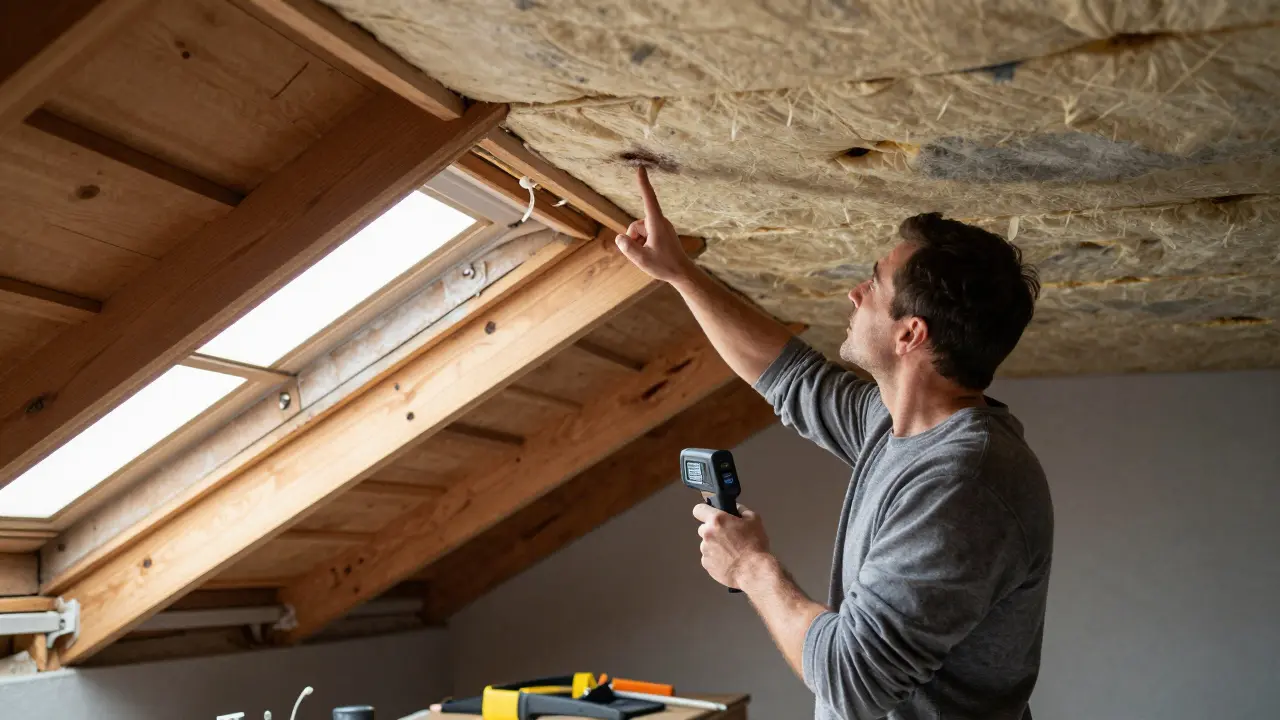
Fixing a roof isn’t like fixing a leaky faucet. You can’t just grab a wrench and call it a day. When your roof starts leaking, sagging, or shedding shingles, the cost can swing from a few hundred dollars to over $10,000 - and that’s not counting hidden damage you didn’t know about. So how do you know what’s fair? Let’s cut through the noise with real numbers, real situations, and what actually drives the price.
What’s the average cost of roof repair?
In 2026, most homeowners in Canada pay between $500 and $3,500 for a standard roof repair. That covers things like replacing a few damaged shingles, fixing flashing around chimneys, or patching a small leak. But if your roof is older, poorly maintained, or has structural issues, you could be looking at $5,000 or more. The key isn’t just the size of the hole - it’s what’s underneath it.
Here’s a breakdown of typical repair jobs and what they cost in Ontario and Quebec:
- Replacing 5-10 damaged shingles: $200-$500
- Fixing flashing around a chimney or vent: $300-$800
- Repairing a small leak (under 10 sq ft): $400-$1,200
- Replacing damaged roof decking (wood under shingles): $800-$2,500
- Full section replacement (100-300 sq ft): $2,000-$5,000
These prices include labor, materials, and disposal. But here’s the thing: roof repair costs aren’t set in stone. They change based on three things - location, materials, and how fast you act.
Why location matters more than you think
Roofing isn’t a national standard. In Burlington, Ontario, where winters are harsh and snow loads hit 30-40 pounds per square foot, roofers charge more because they need heavier-duty materials and specialized tools. A simple shingle replacement here might cost $75 per shingle. In Toronto, it’s $65. In northern Ontario, it’s $90 - and that’s before travel fees.
Why? Because roofers in colder regions need to use ice-and-water shield underlayment, reinforced decking, and metal flashing that won’t crack in -30°C weather. They also deal with more insurance claims, so their overhead is higher. If you’re in a rural area, expect to pay $100-$300 extra for travel time and fuel.
And don’t forget permits. In many municipalities, including Burlington, you need a permit for any repair that involves replacing more than 25% of the roof. That adds $150-$300 to the bill. Some contractors include it. Others don’t. Always ask.
What materials are you paying for?
Not all shingles are created equal. Asphalt fiberglass shingles - the most common type - cost $80-$120 per square (100 sq ft). But if your roof uses architectural shingles, you’re looking at $140-$200 per square. Metal roofs? $250-$400 per square. Wood shakes? $300-$500 per square.
But it’s not just the shingles. Underneath them is underlayment, which protects against ice dams and wind-driven rain. Synthetic underlayment costs $10-$15 per square. Felt paper? $5-$8. If your roofer skips the synthetic version to save money, you’re setting yourself up for water damage in three years.
Flashing matters too. Aluminum flashing lasts 10-15 years. Copper lasts 50+. If your chimney flashing is aluminum and it’s rusting? You’re not just paying to fix a leak - you’re paying to fix a mistake that should’ve been avoided.
How fast you act changes everything
Roof leaks don’t stay small. Water doesn’t just drip. It travels. It soaks into insulation. It warps floor joists. It breeds mold. A $500 repair today can turn into a $7,000 repair in six months if you wait.
I’ve seen it happen. A homeowner in Oakville noticed a small stain on her ceiling. She thought, “I’ll get to it next month.” Three months later, her attic was full of wet insulation, two ceiling joists were rotted, and the drywall had to be ripped out. The repair cost jumped from $800 to $6,200.
That’s why timing matters more than price. If you see:
- Water stains on ceilings
- Missing or curling shingles
- Granules in your gutters
- Dark spots on attic insulation
Call a roofer within 48 hours. Most reputable contractors offer free inspections. Don’t wait for rain to prove there’s a problem.
When repair isn’t enough - and replacement is cheaper
Here’s the hard truth: if your roof is over 20 years old and you’re spending more than $1,500 on repairs, you’re probably just delaying the inevitable. A full replacement in 2026 costs $8,000-$15,000 for an average 2,000 sq ft home. That sounds steep - until you realize that a 25-year-old roof with repeated repairs could cost you $12,000 in repairs over five years.
Think of it like a car. You wouldn’t keep replacing the transmission, radiator, and brakes on a 20-year-old vehicle. You’d replace it. Roofs are the same. If your roof is nearing 20 years, and you’ve had three repairs in the last five years, replacement is the smarter financial move.
And here’s something most contractors won’t tell you: some municipalities offer rebates for energy-efficient roofing. In Ontario, the Home Energy Savings Program gives up to $5,000 back if you install a cool roof (reflective shingles) or add attic insulation during replacement. That cuts your net cost by 30-40%.
Red flags that you’re being overcharged
Roofing scams are real. Here’s how to spot them:
- They show up uninvited after a storm. Storm chasers often overcharge and use substandard materials.
- They ask for 100% upfront payment. Legit contractors ask for 30-50% deposit.
- They say your roof “needs replacing” but won’t show you the damage. Ask for photos.
- They don’t have a physical address or local license. Check with the Ontario Home Builders’ Association.
- They use “special discounts” that disappear after 24 hours. Real discounts don’t expire.
Always get at least three quotes. Ask each one: “What’s included?” “What’s the warranty?” “Will you remove the old materials?” “Do you carry liability insurance?”
How to save on roof repair without cutting corners
You don’t need to pay full price. Here’s how to cut costs smartly:
- Bundle repairs. If you’re replacing shingles on the south side, ask if they can fix the east side too. Labor stays the same - materials are cheaper in bulk.
- Wait for off-season. Roofers are slower from November to March. You might get 10-15% off.
- Ask about manufacturer warranties. Many shingle brands offer 25-50 year warranties. If your roof is under warranty, you might get free labor.
- Check with your insurance. If damage was caused by wind, hail, or ice dams, your homeowner’s policy may cover it.
One homeowner in Hamilton saved $2,100 by filing an insurance claim after a hailstorm. Her roof had 18 damaged shingles - the roofer said it was “minor.” The insurance adjuster found 72 damaged shingles and covered the full replacement.
What to expect during the repair
A professional repair takes 1-3 days. You’ll see:
- Drop cloths to protect your yard and driveway
- A dumpster for old shingles and debris
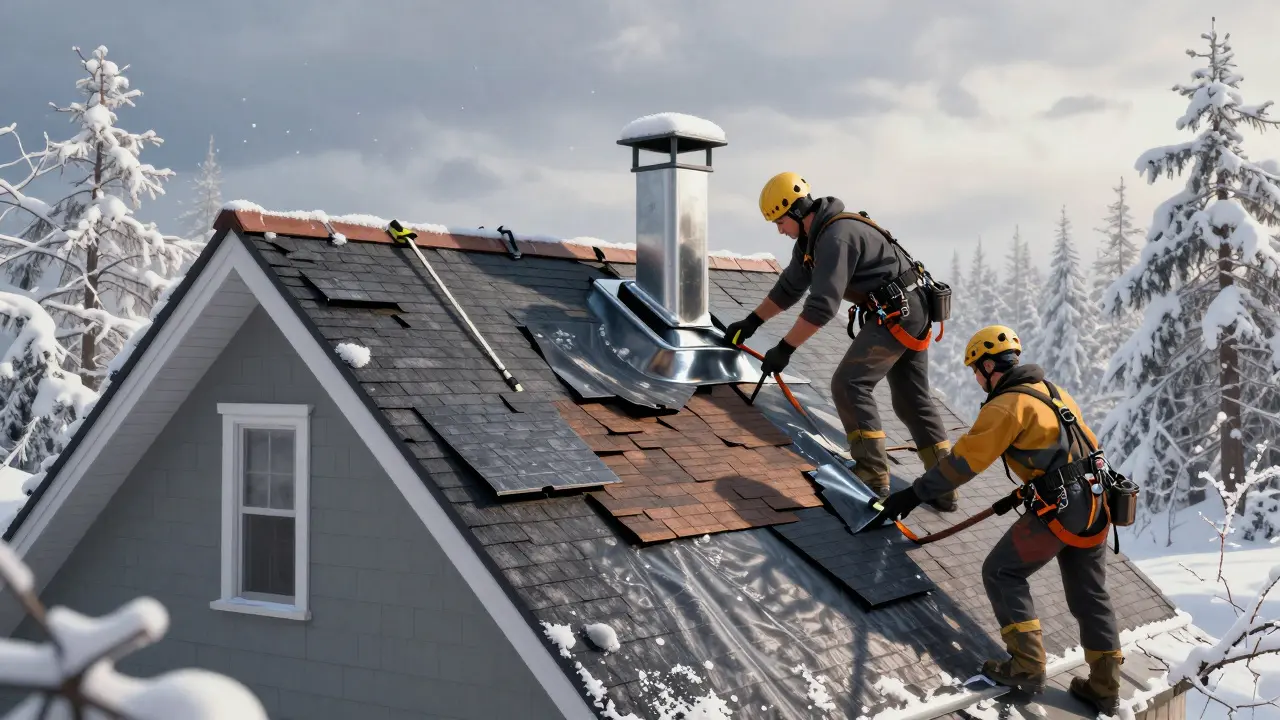
- Workers wearing safety harnesses and using ladder stabilizers
- A final inspection with photos of the repaired area
They should leave your property cleaner than they found it. If they don’t, that’s a red flag.
After the job, get a written warranty. It should say:
- What’s covered (materials, labor, leaks)
- How long it lasts (minimum 2 years for labor, 10+ for materials)
- Who to call if it fails
And keep all receipts. You’ll need them if you sell your home.
Final advice: Don’t guess - get a real inspection
Roof repair costs vary because every roof is different. But you don’t need to guess. Get a certified inspector. Look for someone with RCI (Roof Consultants Institute) certification or a NRCA (National Roofing Contractors Association) license. They’ll use infrared cameras to find hidden moisture, measure deck rot, and tell you exactly what’s failing - not what they think you need.
A good inspection costs $200-$400. It’s not a repair - it’s insurance. For the price of a new set of tires, you’ll know exactly what your roof needs - and how much it’ll cost. No surprises. No scams. Just facts.


Ashton Strong
February 5, 2026 AT 01:16Thank you for this incredibly thorough breakdown. As someone who’s managed property portfolios across North America, I can confirm that the regional pricing disparities you outlined are spot-on. In the Midwest, for example, labor rates are 18% lower than in Ontario, but material transport adds 12% due to supply chain constraints. The key insight here is that cost isn’t just about materials-it’s about risk mitigation. A $500 repair today prevents a $7,000 claim tomorrow. Always document everything: before, during, and after. Photos, timestamps, contractor names. It’s not paranoia-it’s due diligence.
Steven Hanton
February 7, 2026 AT 01:09I appreciate the structured clarity of this post. One point I’d like to gently expand on: the mention of permits. In many jurisdictions, if a repair exceeds 25% of the roof area, it’s classified as a replacement under building codes. This triggers different inspections, insurance requirements, and even energy efficiency standards. It’s not just about cost-it’s about compliance. Always ask your contractor if the work will require a permit, and if so, whether they’ll handle the paperwork. Skipping this can invalidate your home warranty or future insurance claims.
Pamela Tanner
February 7, 2026 AT 11:37Excellent resource. I especially appreciate the emphasis on underlayment quality. Too many homeowners focus on shingles and ignore the layer beneath-like buying expensive shoes but skipping socks. Synthetic underlayment isn’t a luxury; it’s a necessity in freeze-thaw cycles. Also, the note about insurance claims is critical. I’ve seen policyholders deny coverage because they didn’t document damage early. A single photo of a curling shingle, dated and timestamped, can be the difference between a claim being accepted or denied. Don’t wait for the leak to become a flood.
Kristina Kalolo
February 8, 2026 AT 11:50Just wanted to say that the section on red flags was the most useful part. I had a contractor try to upsell me on a full replacement when I only had three missing shingles. He didn’t show me any photos, and his van had no company logo. I walked away. Two weeks later, I got a quote from a licensed local roofer who found the same issue-and fixed it for $320. Sometimes, the best decision is to say nothing and walk out.
ravi kumar
February 9, 2026 AT 04:48This is very helpful. I live in rural India, and roof repair here is completely different. We use clay tiles, cement, and sometimes asbestos sheets. No shingles. No permits. No insurance. But the principle is the same: fix it fast. A small leak becomes a ceiling collapse. I’ve seen families lose everything because they waited. Your advice about acting within 48 hours? That applies everywhere. Thank you.
Megan Blakeman
February 10, 2026 AT 22:48Okay, I just read this and I’m emotionally moved. Like, I actually teared up a little. I didn’t realize how much I’d been ignoring my roof until I read about the Oakville homeowner. I have a stain on my ceiling. I’ve been pretending it’s from condensation. But now? I’m calling a roofer tomorrow. I feel like I’ve been avoiding a truth I knew deep down. Thank you for not just informing me-but for nudging me toward responsibility. 🙏
Akhil Bellam
February 11, 2026 AT 14:05Let’s be brutally honest: most of these numbers are fantasy. You’re talking about Ontario prices as if they’re universal. In reality, most contractors are gouging. I’ve been in this business for 17 years. A ‘$500 shingle repair’? That’s what they charge tourists. The real cost of labor? $45/hour. Materials? $120. The rest? Profit, fear-mongering, and insurance kickbacks. And don’t even get me started on ‘energy-efficient rebates’-those are marketing traps. If you’re not a contractor, you’re being played. Always get a second opinion from someone who doesn’t own a truck with a roof logo.
Amber Swartz
February 12, 2026 AT 19:38I can’t believe this post didn’t mention the emotional toll of roof repair. I’ve been there. I cried when I saw the mold. I screamed when the contractor said ‘it’s gonna be $6,200.’ I didn’t sleep for three nights. I Googled ‘can I sue my neighbor for not fixing their gutter?’ I even considered moving to a cabin. This isn’t just about money-it’s about safety, dignity, and the crushing weight of homeownership. I’m so glad someone finally said it: call them within 48 hours. Because your peace of mind? It’s worth more than a few hundred bucks.
Robert Byrne
February 13, 2026 AT 09:12You say ‘get three quotes’ like it’s a magic solution. But here’s the truth: most homeowners don’t know how to compare them. One contractor says ‘reinforced decking,’ another says ‘new plywood.’ Same thing. One says ‘copper flashing,’ another says ‘aluminum with sealant.’ One’s a scam, one’s a bargain, and one’s a middle ground. You need to know the specs. If you don’t understand terms like ‘ice-and-water shield’ or ‘synthetic underlayment,’ you’re not comparing-you’re guessing. So here’s what you do: print out the specs from the manufacturer’s website. Bring them to every quote. Ask: ‘Is this what you’re using?’ If they hesitate, walk away.
Tia Muzdalifah
February 14, 2026 AT 02:04yo this was actually super helpful like i didnt even know about the home energy savings program?? i thought i was just gonna get ripped off. i had no idea you could get 5k back?? i’m gonna check if my roof qualifies. also, i always thought ‘granules in the gutter’ meant i needed to clean the gutters, not that my shingles were dying. lol. thanks for the education. 🤝
Zoe Hill
February 14, 2026 AT 05:25This is so helpful!! I just had my roof inspected and it turns out I had a small leak near the chimney-exactly like you said. I didn’t realize how much water travels until I saw the photos from the infrared scan. I’m so glad I didn’t wait! I’m getting it fixed this week. Also, I didn’t know about the warranty paperwork-thank you for reminding me to ask for it in writing. I’m gonna print this out and give it to my husband. He’s the one who always says ‘it’s fine, we’ll do it later.’ 😅
Albert Navat
February 15, 2026 AT 16:39Let me drop some jargon: the real variable here is R-value degradation in the substrate due to hygrothermal cycling. Most homeowners don’t realize that a 10-year-old asphalt shingle system with 12% moisture retention in the decking reduces thermal efficiency by 38%. That’s not just a repair-it’s an energy performance intervention. If you’re not measuring dew point differentials and vapor diffusion resistance, you’re not fixing the roof-you’re just patching the symptom. Get a BPI-certified energy auditor before you call a roofer. Otherwise, you’re just throwing money at a latent heat transfer problem.