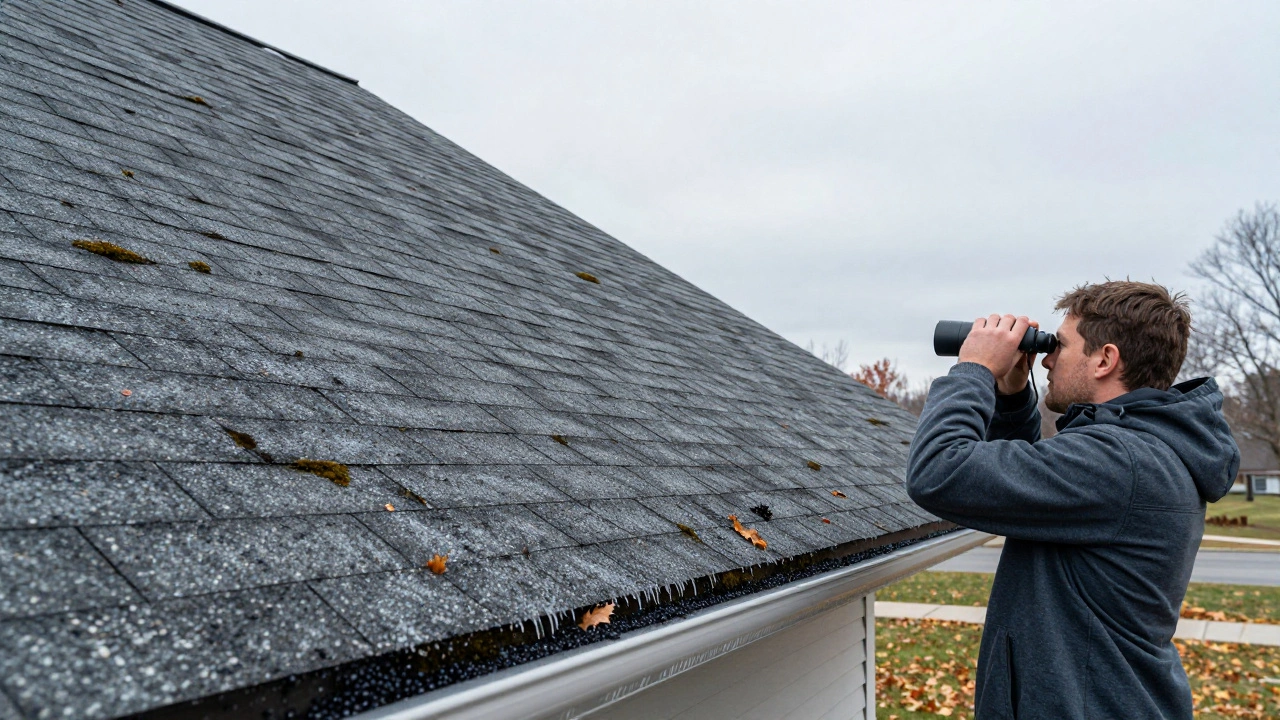
Most homeowners don’t think about their roof until it starts leaking. By then, water has already seeped into the attic, rotting wood, ruining insulation, and maybe even growing mold. The truth is, roofs don’t need constant repairs-but they also don’t last forever without care. Knowing how often a roof should be repaired can save you thousands in avoidable damage and extend your roof’s life by decades.
Roof Repairs Aren’t Scheduled Like Oil Changes
You don’t fix your roof every six months like you change your car’s oil. Roof repair isn’t about timing-it’s about condition. A well-built asphalt shingle roof in Burlington, Canada, can last 20 to 25 years if left alone. But that doesn’t mean you should ignore it. The real question isn’t “how often?” It’s “when do you need to act?”
Most roofs need their first repair between years 10 and 15. That’s when shingles start to curl, granules wash off, and flashing around chimneys loosens from freeze-thaw cycles. In Canada, winter snow loads and spring ice dams are the biggest killers of roofs. If you live here, you’re not just dealing with aging materials-you’re fighting the weather every season.
Signs Your Roof Needs Repair Now
Waiting for a leak is a mistake. By then, the damage is already done. Look for these warning signs before water hits your ceiling:
- Missing, cracked, or curled shingles-especially near the edges or ridges
- Granules in your gutters like sand-that’s the protective coating wearing off
- Dark streaks or moss growing on the roof-this traps moisture and accelerates decay
- Sagging spots on the roofline-could mean rotted decking underneath
- Water stains on your attic ceiling or rafters
- Increased energy bills-poor insulation from roof damage lets heat escape
One homeowner in Burlington noticed moss growing on the north side of her roof in early spring. She ignored it until winter snow piled up, then found a 2-foot hole in the decking. Repair cost: $4,200. A simple cleaning and sealant job two years earlier would’ve cost $350.
How Weather Affects Repair Frequency
Where you live matters more than you think. In Burlington, we get heavy snow, freezing rain, and sudden temperature swings. These conditions stress roofs in ways other climates don’t.
Ice dams form when snow melts on the warmer parts of the roof and refreezes at the eaves. This traps water behind it, forcing it under shingles and into your home. If you’ve had ice dams two winters in a row, your roof likely needs better ventilation or insulation-not just a patch job.
Wind is another silent killer. Strong gusts lift shingles, creating gaps. After a major storm, walk around your property and check for shingles in the yard or stuck in bushes. That’s your roof telling you it’s vulnerable.
Roofs in southern Ontario typically need inspections every 2-3 years. If you’ve had a hailstorm, high winds, or a record snowfall, schedule a professional check right after.
Roof Material Matters-Here’s What You Really Need to Know
Not all roofs age the same. Your repair schedule depends on what’s on top of your house:
| Material | Average Lifespan | First Repair Window | Common Issues |
|---|---|---|---|
| Asphalt Shingles | 20-25 years | 10-15 years | Curling, granule loss, algae |
| Wood Shakes | 25-30 years | 15-20 years | Mold, rot, insect damage |
| Metal Roof | 40-70 years | 20+ years | Loose fasteners, paint fading |
| Clay or Concrete Tile | 50+ years | 25+ years | Cracked tiles, broken underlayment |
| Flat Roof (TPO/EPDM) | 15-25 years | 5-10 years | Cracks, pooling water, seam failure |
Asphalt shingles are the most common in Canadian homes-and the most vulnerable. If yours is over 15 years old and you see granules in the gutters, don’t wait for a leak. Call a pro. A $600 repair now can prevent a $6,000 replacement later.
Annual Roof Check: What to Do (and What Not to Do)
You don’t need to climb up there every spring. But you should do a quick visual inspection from the ground or your attic twice a year-once after winter, once after fall storms.
Here’s what to look for:
- From the ground: Use binoculars. Look for broken or lifted shingles, dark spots, or moss buildup.
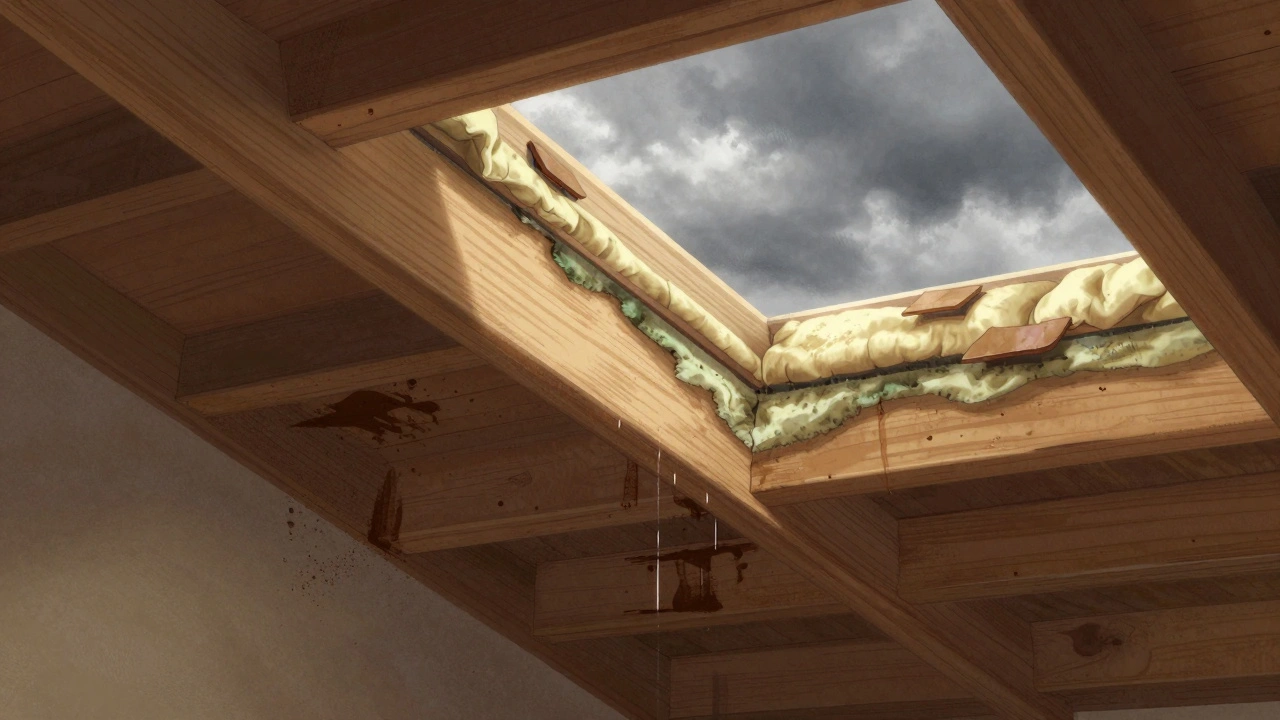
- From the attic: On a sunny day, look up. Sunlight streaming through gaps means holes. Check for damp wood, mold, or rusted nails.
- Check gutters: Are they clogged with shingle granules? That’s a red flag.
- Look at flashing: Around chimneys, vents, and skylights, metal flashing should be tight and rust-free. If it’s pulling away, water gets in.
What not to do: Don’t pressure wash your roof. Don’t walk on it unless you have to-and never in wet or icy conditions. Roofers use specialized gear for a reason. One slip, and you’re not just risking your roof-you’re risking your life.
When to Repair vs. When to Replace
It’s easy to think, “I’ll just fix it again.” But roofs are like bones-they heal poorly after repeated damage.
Here’s a simple rule: If more than 25% of your roof needs repair within a 3-year period, it’s time to replace. That’s the industry standard. It’s not just about cost-it’s about safety and long-term value.
Also, if your roof is over 20 years old and you’re already fixing it every few years, you’re throwing money away. A new roof adds value to your home, improves energy efficiency, and gives you peace of mind. In Burlington, a new asphalt shingle roof costs between $10,000 and $16,000. That sounds steep, but it’s cheaper than replacing drywall, insulation, and ceiling joists after a major leak.
What Happens If You Ignore It?
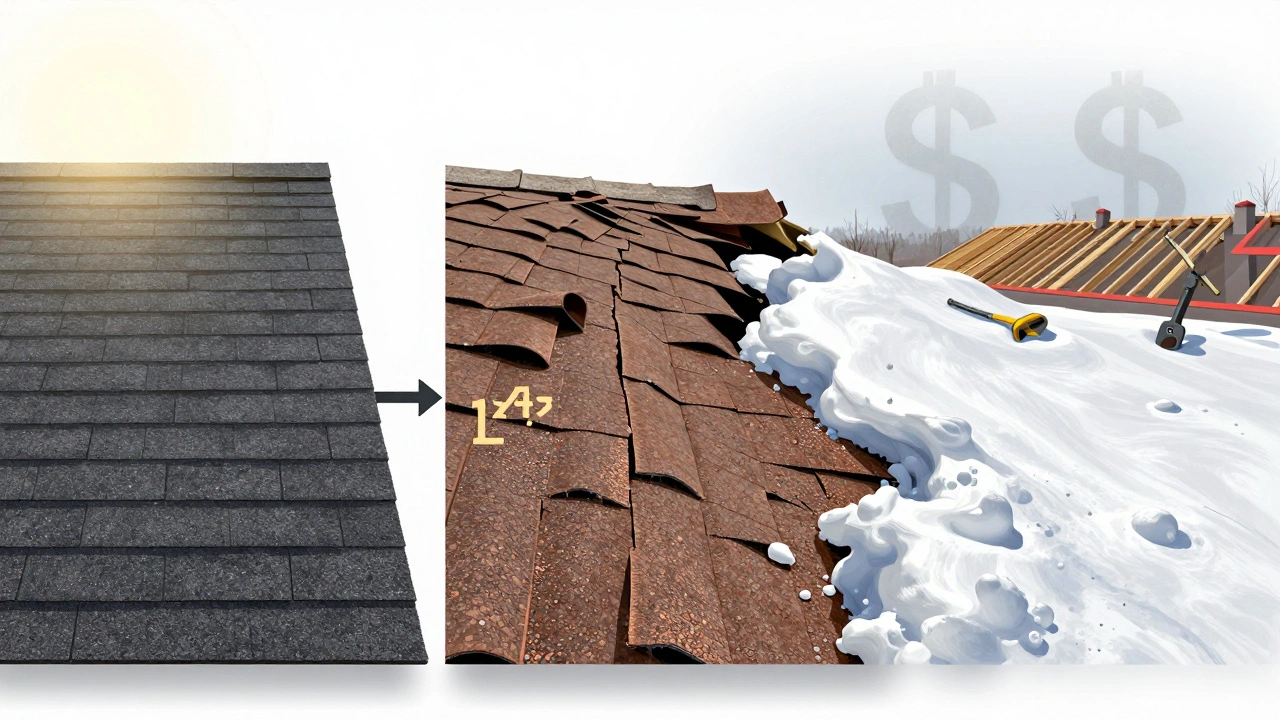
Ignoring roof problems doesn’t make them go away. It makes them worse-and more expensive.
Here’s the domino effect:
- Small leak → water in attic → wet insulation loses R-value → higher heating bills
- Wet wood → mold grows → air quality drops → health risks for kids and elderly
- Rotting decking → structural weakness → roof collapse risk under heavy snow
- Water in walls → drywall crumbles → mold behind paint → full renovation needed
A 2023 study by the Canadian Home Builders’ Association found that 68% of major home insurance claims in Ontario were linked to roof-related water damage. Most of these could’ve been prevented with a $200 inspection and a few simple fixes.
Pro Tips for Saving Money on Roof Repairs
- Get quotes from two local contractors. Avoid companies that show up after storms-they’re often fly-by-night operators.
- Ask if they use synthetic underlayment. It lasts longer than traditional felt and resists ice dams better.
- Check if your roof has a warranty. Some shingles come with 25-30 year coverage, and some manufacturers will cover labor if installed by a certified pro.
- Clear debris from gutters and valleys every fall. Leaves and pine needles hold moisture against the roof edge.
- Trim overhanging tree branches. They scratch shingles and drop sap that attracts algae.
One homeowner in Oakville saved $3,000 by fixing three loose flashing pieces after a windstorm-instead of waiting for the next winter to bring leaks.
Final Answer: How Often Should a Roof Be Repaired?
There’s no magic number. But here’s what works for most homeowners in Canada:
- Every 2-3 years: Do a visual inspection (or hire someone to do it)
- After major storms: Check for damage
- Between years 10-15: Expect your first serious repair
- After 20 years: Start planning for replacement
Roof repair isn’t about frequency. It’s about awareness. Stay alert. Act early. And don’t let a few missing shingles turn into a $20,000 disaster.
How often should I inspect my roof?
Inspect your roof at least twice a year-once in the spring after winter snow and ice, and once in the fall after storms. Look for missing shingles, granule loss, moss, and water stains in the attic. If you’ve had a major wind or hailstorm, check right after.
Can I repair my roof myself?
Minor repairs like replacing a few shingles are possible if you’re comfortable on a ladder and know what you’re doing. But for anything involving flashing, underlayment, or structural damage, hire a pro. Roofing is dangerous, and a bad DIY job can cause more leaks. Plus, most warranties require professional installation.
Does roof repair increase home value?
Yes. A well-maintained roof is one of the top factors buyers look at. If your roof is less than 10 years old with no visible damage, it can add 3-5% to your home’s value. A roof that needs replacement can scare off buyers or lower your offer by thousands.
How long does a roof repair last?
A proper repair on a single area-like replacing flashing or sealing a vent-can last 5 to 10 years. But if the whole roof is aging, patching won’t fix the underlying problem. If you’re making more than two repairs in three years, replacement is likely the better investment.
Are there government rebates for roof repairs in Ontario?
There are no direct rebates for roof repairs, but Ontario’s Home Energy Retrofit Program offers incentives for roof upgrades that improve insulation and ventilation. If you’re replacing your roof and adding better insulation or energy-efficient materials, you may qualify for up to $5,000 in grants. Check with your local municipality or the Ontario Energy Board for current programs.

poonam upadhyay
December 12, 2025 AT 20:05ujjwal fouzdar
December 14, 2025 AT 19:29Anand Pandit
December 16, 2025 AT 00:24Reshma Jose
December 16, 2025 AT 02:25rahul shrimali
December 16, 2025 AT 02:29Eka Prabha
December 17, 2025 AT 12:26Bharat Patel
December 18, 2025 AT 08:02Bhagyashri Zokarkar
December 19, 2025 AT 17:41Rakesh Dorwal
December 20, 2025 AT 20:44Vishal Gaur
December 20, 2025 AT 22:11Nikhil Gavhane
December 22, 2025 AT 00:47Rajat Patil
December 22, 2025 AT 06:19