Buying furniture shouldn’t feel like a gamble. You’ve probably seen the same sleek sofa in three different stores, priced from $400 to $4,000. What’s the real difference? It’s not just brand names or marketing photos. High-quality furniture lasts decades. Cheap stuff starts squeaking after six months and falls apart before your warranty expires. So how do you spot the good stuff before you spend your money?
Look at the frame
The frame is the skeleton of any piece of furniture. If it’s weak, nothing else matters. High-quality furniture uses kiln-dried hardwood like oak, maple, or beech. You won’t find particleboard or MDF in solid pieces-those materials swell with moisture and crumble under stress. Check the underside or back of chairs, sofas, and tables. If you see thin, paper-thin panels or visible glue lines, walk away. Real hardwood frames are dense, heavy, and often left unfinished on the inside so you can see the grain. If the wood feels smooth and consistent, it’s likely well-sourced. A good frame doesn’t wobble when you push it. Test it by sitting on the edge of a chair or couch. If the whole thing shifts or creaks loudly, the joints aren’t secure.Check the joints
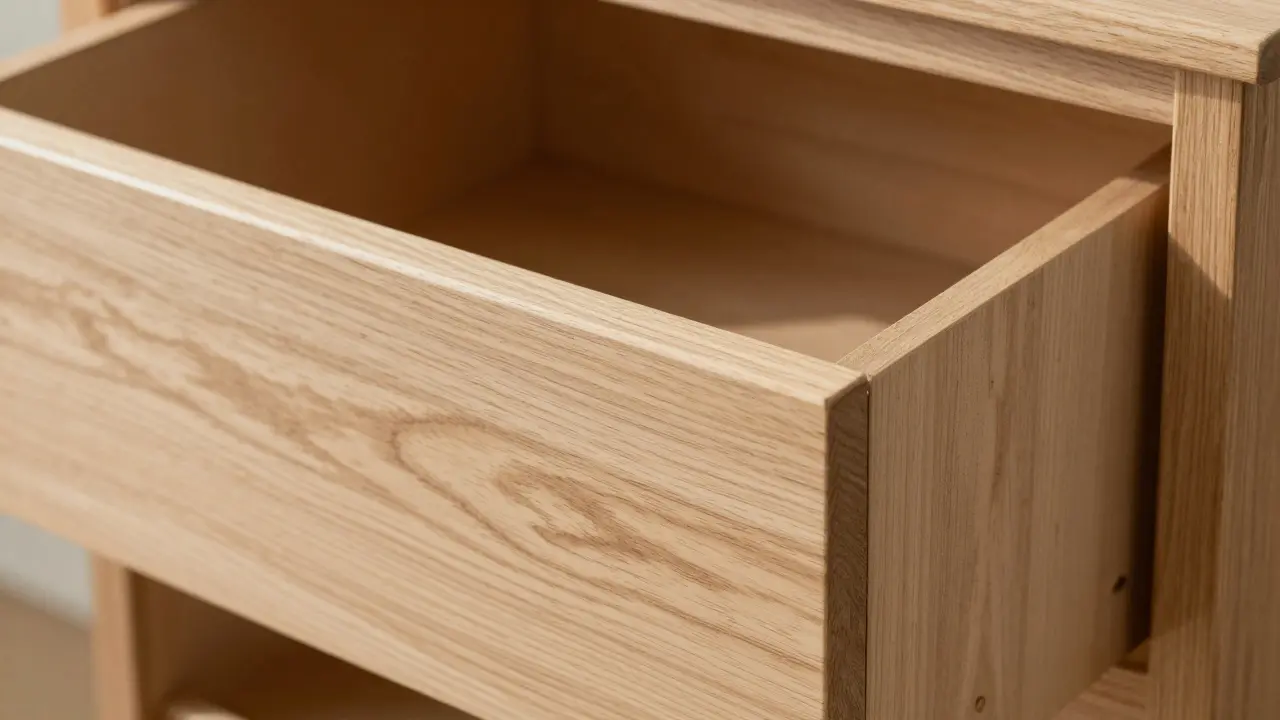
How the pieces connect tells you everything about craftsmanship. Cheap furniture uses staples, nails, or glue alone. That’s like building a house with tape. High-quality pieces use traditional joinery: mortise and tenon, dovetail, or dowel joints. Dovetail joints on drawers are a dead giveaway. Look at the front of a drawer. If you see interlocking wedge-shaped cuts, that’s hand-cut or precision-machined dovetailing. It’s strong, durable, and lasts generations. Staples or nails sticking out? That’s a red flag. Even if the outside looks polished, the inside is where the truth shows. Lift a drawer and wiggle it. If it moves side to side or feels loose, the joints aren’t built right.Feel the upholstery
Fabric and padding matter more than you think. High-end sofas don’t just look plush-they feel substantial. Pull back the cushion. Underneath, you should see high-density foam (at least 1.8 lb per cubic foot) layered over springs or webbing. If the cushion collapses like a beanbag when you sit, it’ll flatten in months. Springs should be hand-tied, not machine-attached. You can test this by pressing down hard on the seat. If you feel individual springs pushing back, that’s a good sign. Machine-tied springs are cheap and noisy. Also, check the fabric. Natural fibers like wool, cotton, or linen breathe better and wear longer than synthetic blends. Look for a double-rub count on the label-15,000 or higher means it’s made for heavy use. A $1,200 sofa with 30,000 double-rubs will outlast a $2,500 one with 8,000.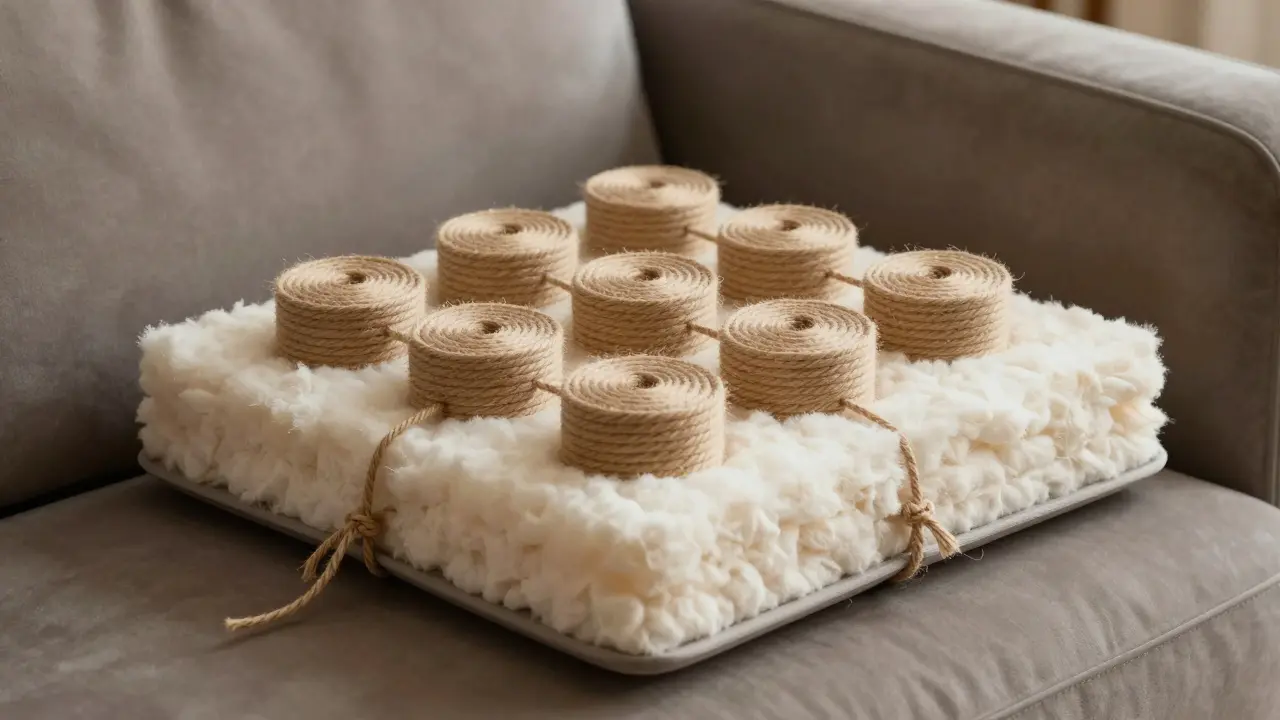
Examine the finish
A beautiful finish hides a lot of flaws. But it can’t fix bad construction. High-quality finishes are applied in multiple thin coats, sanded between each layer. The surface should feel smooth, not sticky or overly glossy. Run your hand over the surface. If you feel bumps, drips, or uneven texture, it was sprayed hastily in a dusty warehouse. Good finishes are often hand-rubbed with oil or lacquer, giving depth and warmth. Check edges and corners-those are the first places to chip. If the finish is thick and peeling at the corners, it’s likely a cheap spray job. Also, look at the back of the piece. If the finish is missing or rough there, the maker didn’t care about the whole thing. Quality furniture looks good from every angle, even the parts you never see.Test the hardware
Drawers, doors, and hinges are the first things to break. High-quality furniture uses metal hardware, not plastic. Pull open a drawer slowly. Does it glide smoothly? Does it close with a soft, quiet click? That’s usually a sign of soft-close glides made of steel. Cheap drawers rattle, stick, or slam shut. Look at the knobs and pulls. Are they solid brass, bronze, or stainless steel? Or are they hollow plastic with a thin metal coating? Tap it with your fingernail. A real metal pull rings out clear. Plastic sounds dull. Brass pulls will tarnish over time-that’s normal. But if they bend easily or feel flimsy, they’re not built to last.Weight matters
This one’s simple: heavy furniture is usually better furniture. A solid oak dining table should be too heavy for one person to lift easily. A well-built armchair should require two hands to move. If you can pick up a sofa with one hand, it’s probably filled with foam scraps and thin plywood. Weight doesn’t mean it’s overbuilt-it means it’s made with real materials. Compare two similar-looking chairs. The heavier one? It’s using solid wood, not hollow frames. It’s got thicker cushions, better springs, and stronger joints. That’s the one you want.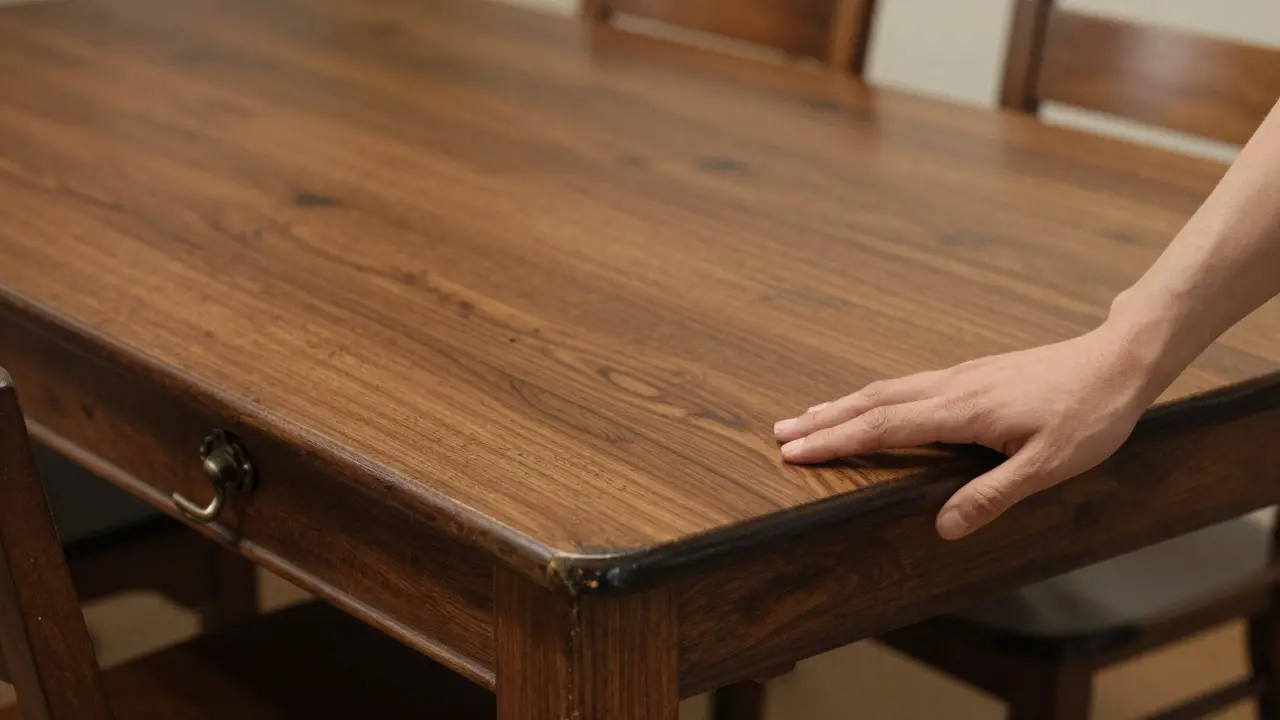
Ask about the maker
Brand names like IKEA or Ashley are fine for budget buys, but they rarely make their own furniture. High-quality pieces come from smaller makers who control the process. Ask where it’s made. If the answer is "imported" or "assembled in China," dig deeper. Look for names like Stickley, Hancock & Moore, or local Canadian workshops in Ontario or Quebec. Many small shops still hand-build furniture using century-old techniques. If the store can tell you the wood source, the joinery type, and the finish process, that’s a good sign. If they can’t, they’re just reselling mass-produced items.What to avoid at all costs
- Particleboard or MDF frames-these warp in humidity and can’t be repaired.
- Plastic or nylon glides-these crack and scratch floors.
- Stapled upholstery-this pulls loose within a year.
- Thin veneers over cheap wood-peel back a corner if you can. If it’s lifting, walk away.
- Too-good-to-be-true prices-a $600 leather sofa is almost never real leather.
There’s a reason your grandparents’ furniture still looks great. They didn’t buy on sale. They bought for life. You don’t need to spend $10,000 on a couch. But if you’re spending $1,500 or more, you should get something that lasts 20 years-not two.
Is solid wood always better than engineered wood?
Solid wood is stronger and more repairable, but engineered wood like plywood can be high quality too-if it’s made with multiple layers of real wood glued together. Avoid particleboard and MDF. They’re made from sawdust and glue, and they fall apart when exposed to moisture. Solid wood expands and contracts with humidity, but it won’t crumble. Engineered wood with a thick real wood top layer (over 1/8 inch) can be fine for tabletops, but never for frames.
How long should high-quality furniture last?
Well-made furniture lasts 20 to 50 years, sometimes longer. A solid oak dining table from the 1950s is still in use today. Modern pieces from reputable makers, built with hardwood frames, hand-tied springs, and durable finishes, should easily last 25 years with normal use. If your sofa starts sagging in under five years, it wasn’t built to last. You’re paying for longevity, not just style.
Can I repair cheap furniture to make it last?
Sometimes, but it’s rarely worth it. You can reupholster a sofa or replace drawer glides, but if the frame is particleboard, you’re fighting a losing battle. Glue won’t hold for long. Screws strip out. Wood splits. It’s cheaper and smarter to replace it than to spend $500 repairing a $800 piece that’s already failing. Save your money for something built to be fixed, not thrown away.
Is leather always a sign of quality?
No. Many "leather" sofas are actually bonded leather or vinyl with a thin leather coating. Real full-grain leather is expensive and has natural marks, scars, and variations in color. It smells rich and feels warm to the touch. Bonded leather peels, cracks, and fades fast. Check the label: "top-grain" or "full-grain" means real leather. "Bonded" or "pu leather" means plastic. If the price seems too low for leather, it is.
Where should I buy high-quality furniture in Canada?
Look for local Canadian makers, especially in Ontario, Quebec, and British Columbia. Brands like Canadiana, Ligne Roset Canada, and smaller workshops in Toronto, Montreal, and Vancouver often use domestic hardwoods and traditional methods. Avoid big-box stores unless you’re buying a side table. For serious pieces, visit showrooms where you can ask questions, feel the materials, and see the craftsmanship up close. Many makers offer custom options-this lets you choose wood, fabric, and dimensions for a piece built for your home.

Mbuyiselwa Cindi
January 22, 2026 AT 17:57I used to buy everything at IKEA until my dining table fell apart after 18 months. Then I spent way more on a local Ontario maker and it’s been 7 years-still looks brand new. The weight alone told me everything. You can’t fake solid oak.
Also, if the drawer doesn’t glide like silk, walk away. No exceptions.
Krzysztof Lasocki
January 23, 2026 AT 05:57So let me get this straight-you’re telling me if I can’t lift my couch with one hand, it’s ‘quality’? Wow. I thought ‘luxury’ meant not needing a forklift to move it. But okay, if my $3,000 chair needs a team of Vikings to relocate, I guess I’m doing it right.
Also, I now know my cat’s scratching post is probably a masterpiece of joinery. Thanks, sir.
Henry Kelley
January 24, 2026 AT 01:24Yea I totally get what u mean bout the frame. I bought this ‘solid wood’ chair last year and the second I sat on it, it made this noise like a dying walrus. Turned out it was MDF painted to look like oak. Ugh.
Now I just check the bottom. If it’s rough and you can see the grain? That’s the one. No fancy labels needed.
Victoria Kingsbury
January 25, 2026 AT 09:41Let’s talk about double-rub counts because people ignore this like it’s a typo in a legal document. 15,000 is the bare minimum for ‘heavy use’-but if you have kids, dogs, or a Netflix binge habit, you need 30k+. That’s not marketing fluff, that’s textile engineering.
And hand-tied springs? They’re not a luxury-they’re a biomechanical necessity. Machine-tied springs are like a car with rubber bands instead of shocks. You’ll feel it after week one.
Also, real leather smells like a horse stable after rain. Bonded leather smells like regret and plastic wrap.
Tonya Trottman
January 26, 2026 AT 17:25Correction: ‘kiln-dried hardwood’ isn’t just ‘likely well-sourced’-it’s the only acceptable standard. If you see ‘engineered wood’ on a frame, you’re not buying furniture, you’re buying a time bomb with upholstery.
Also, ‘top-grain leather’ is still a lie if it’s 0.5mm thick. Full-grain means the hide was left untouched. If it’s ‘corrected grain,’ it’s been sandblasted to hide flaws and then painted like a cheap Halloween mask.
And no, your ‘hand-finished’ sofa isn’t hand-finished if the back is spray-painted and the label says ‘Made in China.’ That’s not craftsmanship-that’s performance art for gullible people.
Rocky Wyatt
January 28, 2026 AT 04:53You people are pathetic. You spend $2,000 on a couch because you ‘want it to last’ but then you eat pizza on it, spill wine, let your dog sleep on it, and wonder why it ‘wears out.’
It’s not the furniture’s fault-it’s your life. Buy a $400 couch. Use it until it’s trash. Buy another. Stop pretending you’re a minimalist when you’re just a hoarder with a budget.
Also, if you’re still using ‘grandparents’ furniture’ as your benchmark, you’re living in 1952. Get a life.
Santhosh Santhosh
January 29, 2026 AT 03:35I come from a small village in India where furniture is still made by hand by carpenters who know every grain of teak like a family member. We don’t have brands, we have stories. My grandfather made a chair for my mother’s wedding-it’s still here, and I sit on it every morning with my chai.
Back then, we didn’t measure double-rub counts or foam density-we measured love. The wood didn’t warp because it was treated with neem oil, not chemicals. The joints didn’t loosen because they were carved from one piece, not glued.
Today, I see people in cities paying $5,000 for a sofa that looks like a robot’s dream and lasts two years. I wonder if they ever feel the soul in their furniture-or if they just see a thing to sit on.
Maybe the real quality isn’t in the wood or the springs. Maybe it’s in the hands that made it, and the silence between the creaks.
Veera Mavalwala
January 30, 2026 AT 12:05Oh honey, if you’re still buying furniture from places that don’t let you touch the wood before you pay, you’re basically giving your money to a magician who says ‘trust me, this rabbit’s real.’
I once bought a ‘mahogany’ dresser that smelled like a chemical plant threw up. Turned out it was MDF with a sticker that said ‘premium finish.’ Premium for what? A landfill? I took a razor blade to the corner and peeled back a layer like a bad tattoo.
Real wood doesn’t need a sales pitch. It whispers. It smells like forests. It ages like fine wine-not like a cheap perfume that fades by noon.
And if your drawer glides like a drunk penguin? That’s not ‘rustic charm,’ that’s a cry for help. From the furniture. And you’re ignoring it.
Ray Htoo
January 31, 2026 AT 12:22Biggest thing I learned? Look at the inside of the drawer. Not the front. Not the handle. The bottom. If it’s smooth, sanded, and looks like it was made with care, the whole piece probably was.
I bought a $1,800 dresser from a ‘luxury’ brand and the inside was rough as sandpaper. The outside looked like a magazine spread. The inside looked like it was assembled by someone who hated their job.
Now I always check the back panel. If it’s thin, flimsy, or nailed on like an afterthought? Run. Fast.
Natasha Madison
February 2, 2026 AT 12:13Who told you these ‘local makers’ aren’t funded by Chinese factories? Big brands outsource, sure-but so do the ‘artisan’ shops you’re praising. They just slap a ‘Made in Canada’ sticker on it after the real work’s done in Guangdong.
And ‘solid wood’? That’s a scam too. Most ‘solid oak’ is just veneer over plywood with a thick coat of stain. You think you’re buying heritage? You’re buying a marketing lie wrapped in a tax write-off.
Stop falling for the ‘handcrafted’ fairy tale. The real quality is in the warranty. If it’s not 25 years, it’s not worth your time.
Sheila Alston
February 3, 2026 AT 22:05It’s not just about furniture. It’s about values. Buying cheap means you don’t care about the planet, the workers, or your own future. You’re part of the problem.
My grandmother never bought anything she couldn’t repair. She fixed, reupholstered, refinished. She didn’t just toss things. She respected them.
And now? You throw away a sofa because the cushion got a little flat. You’re not just wasteful-you’re spiritually bankrupt.
If you can’t afford to buy something that lasts, you can’t afford to live like a human being.
sampa Karjee
February 3, 2026 AT 23:19You think you’re being wise by buying ‘local’? How quaint. The only real craftsmanship is in Europe-Swiss joinery, Italian leather, German hardware. Anything else is colonial nostalgia dressed in reclaimed wood.
Canadian workshops? They’re barely above IKEA with a folk song playlist. True quality is measured in centuries, not square feet. If your piece doesn’t have a provenance older than your great-grandfather, it’s not furniture-it’s decoration for the emotionally insecure.
Patrick Sieber
February 5, 2026 AT 21:51My dad’s a carpenter in Cork. He told me once: ‘If you can’t see the wood grain on the underside, you’re not buying furniture-you’re buying a prop.’
He’s right. I bought a chair last year that looked gorgeous. Turned out the back was plywood with a sticker. I returned it. No drama. Just walked out.
Simple rule: if it’s too light, too quiet, or too cheap-it’s lying. Always.
Mbuyiselwa Cindi
February 6, 2026 AT 20:43Someone above mentioned the back panel. I always check that. My last chair had a perfectly finished front but the back was just stapled plywood. I asked the salesperson and they said, ‘No one sees it.’
I said, ‘Yeah, but I sit on it every day. And so does my spine.’ Walked out.
Quality isn’t for show. It’s for living.