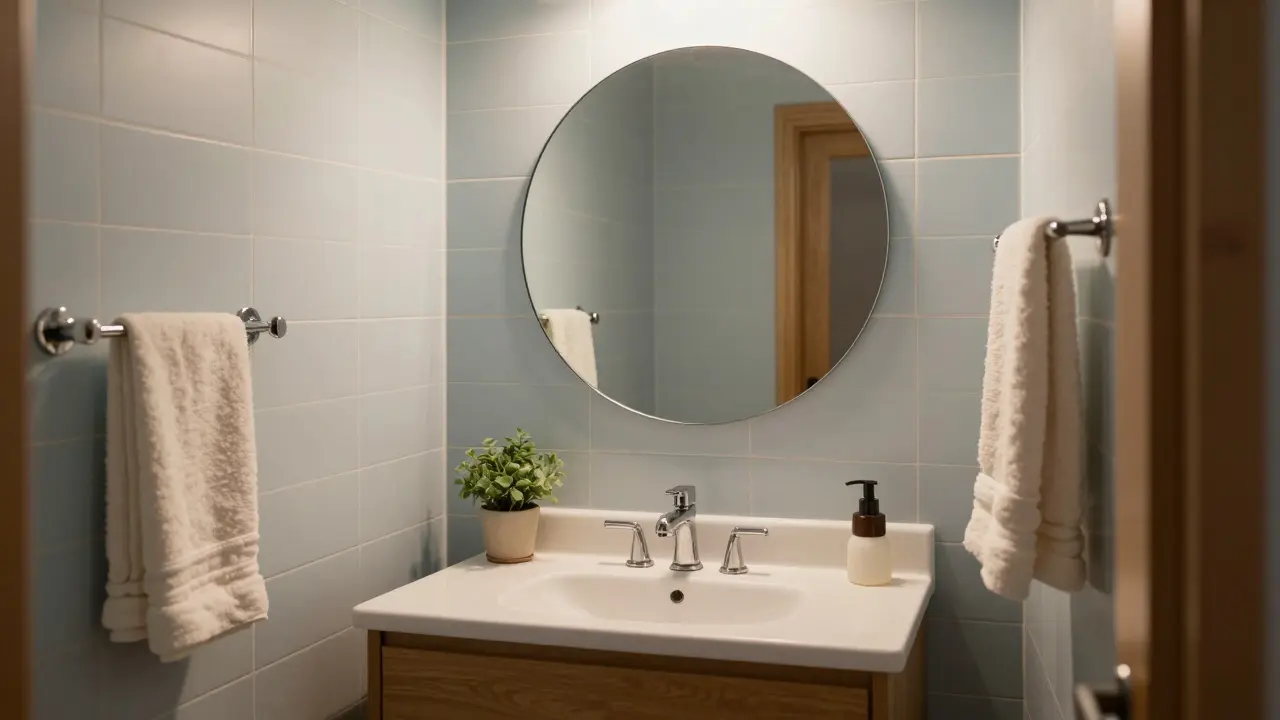
Choosing the right mirror shape for a small bathroom isn’t just about style-it affects how big the space feels, how much light you get, and even how practical it is for daily use. You might think a round mirror looks fancier, or that a square one feels more modern, but the truth is simpler: the shape you pick should solve a problem, not just look good.
Why mirror shape matters in a small bathroom
In a cramped bathroom, every inch counts. A mirror isn’t just for checking your hair-it’s a tool that tricks your eyes into seeing more space. Light reflects off the surface, bouncing around the room and making walls feel farther away. But not all mirrors do this equally. The shape changes how light spreads, where it hits, and how much of the room it connects with.
Think about it: if your mirror is too narrow or oddly shaped, it leaves dark corners. If it’s too wide, it might block a cabinet or make the sink feel crowded. The shape also affects how you use it. Do you need to see your whole face? Your shoulders? Your toothbrush? These aren’t trivial details-they’re daily rituals.
Round mirrors: soft light, cozy feel
Round mirrors soften the edges of a small bathroom. They don’t compete with angular fixtures like rectangular sinks or square tiles-they blend. That’s why they’ve been popular in vintage and farmhouse styles for decades. But their real power in small spaces is in how they reflect light.
A round mirror has no corners. That means light reflects evenly in all directions. It doesn’t get trapped or blocked by sharp edges. In a bathroom with a single overhead light, a round mirror can spread that light more smoothly across the sink area, reducing shadows under your chin or around your eyes. That’s why people with poor lighting often see better results with round mirrors.
They also feel less imposing. In a narrow bathroom, a wide square mirror can feel like a wall. A round one, even if it’s the same diameter, reads as lighter. It doesn’t dominate the space-it sits in it. If you have a small vanity (under 30 inches wide), a 20- to 24-inch round mirror usually fits without overwhelming the area.
Square mirrors: clean lines, maximum coverage
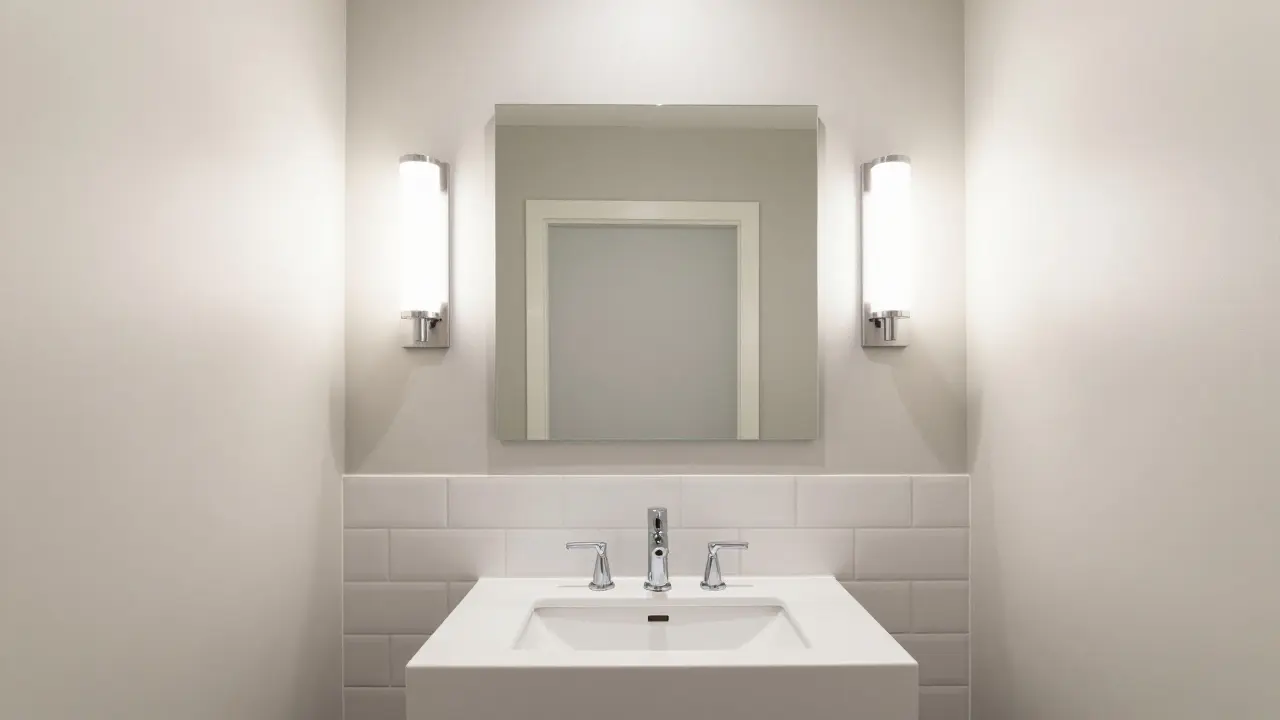
Square mirrors are the go-to for modern, minimalist bathrooms. They match the geometry of sinks, tiles, and cabinets. If your bathroom has straight lines everywhere, a square mirror ties it together. But their biggest advantage? They offer more usable surface area per inch of wall space.
For example, a 24-inch square mirror gives you 576 square inches of reflection. A 24-inch round mirror? Only about 452 square inches. That’s nearly 20% more mirror surface-meaning you can see more of yourself without moving your head. If you’re tall, wear glasses, or need to check your collar or neck, that extra space matters.
Square mirrors also work better with vanity lighting. If you have wall sconces on either side of the sink, a square mirror sits perfectly between them. The light hits evenly across the whole surface. Round mirrors often leave dark spots on the sides unless you add extra lighting.
They’re also easier to mount flush with the wall. No awkward curves to align with tile grout lines or cabinet edges. That clean, seamless look is why square mirrors dominate new builds and high-end remodels.
What size should your mirror be?
Size matters more than shape. A huge round mirror in a tiny bathroom looks like a balloon. A tiny square mirror looks like an afterthought. The rule of thumb: your mirror should be no wider than your vanity, and ideally 2 to 4 inches narrower.
For a 30-inch vanity, go with a 26-inch mirror. For a 24-inch vanity, stick to 20 inches. That leaves room for side lighting or decor. If your vanity is 36 inches or wider, you can go bigger-but don’t let the mirror extend past the edges of your cabinets. That breaks the visual balance.
Height is just as important. The bottom of the mirror should be about 5 to 7 inches above the sink. That way, you don’t have to bend down to see your eyes, and you don’t accidentally splash water on the glass.
Lighting and placement: the hidden factors
Shape only matters if the light works with it. If you’re relying on a single ceiling light, a round mirror is your friend. It spreads the light evenly. But if you have side lighting-like sconces or LED strips-square wins. It gives you a flat surface to work with, no shadows on the sides.
Placement matters too. Don’t mount the mirror directly opposite the door. That creates a tunnel effect, making the room feel longer and narrower. Instead, place it above the sink, centered with the faucet. If you have a window, avoid placing the mirror where it reflects the outside view. That can make the space feel cluttered.
Also, consider the frame. A thin, frameless mirror (whether round or square) makes the glass feel bigger. A thick wooden or metal frame can make the mirror feel heavier, even if it’s the same size. In small bathrooms, less frame = more space.

Real-world examples: what works
In a 5x7-foot bathroom in Burlington, a homeowner replaced a 22-inch round mirror with a 24-inch square one. The vanity was 28 inches wide. Before, she struggled to see her neck when applying makeup. After, she could see her whole face without tilting her head. The square mirror didn’t make the room feel smaller-it made it feel more functional.
Another case: a rental bathroom with a 20-inch round mirror. The tenant loved it because it looked like a spa. But the sink was only 18 inches wide, and the mirror hung too low. Every time they washed their face, water splashed onto the frame. They switched to a 16-inch square mirror with a slim metal edge. It fit perfectly, didn’t collect water, and still looked clean.
There’s no one-size-fits-all. But if you’re choosing between the two, ask yourself: Do I need more reflection area? Go square. Do I want softer lighting and a calming vibe? Go round.
What about oval or other shapes?
Oval mirrors are a middle ground-they have the softness of a round mirror but the vertical height of a square one. They’re great if you’re tall and need to see more of your torso. But they’re harder to find, more expensive, and often require custom mounting.
Hexagons, octagons, or asymmetrical shapes? They’re trendy on Pinterest, but in practice, they create visual noise. In a small bathroom, you want calm, not chaos. Stick to the basics unless you’re doing a full design overhaul.
Final decision: round or square?
Here’s how to pick:
- Choose a round mirror if your bathroom has poor lighting, you prefer a cozy or vintage look, or your vanity is narrow (under 28 inches).
- Choose a square mirror if you need maximum reflection, have side lighting, want a modern look, or your vanity is 30 inches or wider.
Neither is better. One just fits your needs better. If you’re unsure, take a photo of your bathroom with your phone. Draw a rectangle and a circle over the mirror space in an app. See which one feels more natural. Then go with what feels right when you stand in front of it.
And remember: mirrors aren’t just for looks. They’re for function. Pick the shape that helps you get through your morning without frustration.
Is a round mirror better for small bathrooms?
A round mirror can make a small bathroom feel softer and more inviting, especially if lighting is limited. It reflects light evenly and doesn’t dominate the space visually. But it doesn’t give you more reflection area than a square mirror of the same width. Choose it for style and ambiance, not for extra space.
Can a square mirror make a small bathroom look bigger?
Yes, but only if it’s sized correctly. A square mirror offers more surface area than a round one of the same width, so you see more of the room in reflection. When mounted properly-above the sink and not too wide-it creates a clean, open feel. But if it’s too large or poorly lit, it can make the space feel cramped.
What size mirror should I get for a 24-inch vanity?
For a 24-inch vanity, aim for a mirror that’s 20 inches wide. This leaves 2 inches on each side for balance and avoids crowding. Height-wise, the bottom of the mirror should sit 5 to 7 inches above the sink. Both round and square shapes work at this size.
Do frameless mirrors make a bathroom look bigger?
Yes. A frameless mirror removes visual boundaries, making the glass appear larger and the space feel more open. In small bathrooms, even a thin frame can add bulk. Frameless mirrors-whether round or square-are the best choice for maximizing perceived space.
Should I match my mirror shape to my sink?
Not necessarily. Your sink shape doesn’t dictate your mirror shape. What matters more is lighting, space, and how you use the mirror. A square sink can look great with a round mirror, and vice versa. Focus on function and flow, not matching shapes.

Steven Hanton
December 29, 2025 AT 08:36Interesting breakdown. I never thought about how the lack of corners in a round mirror helps diffuse light so evenly-makes sense why my old bathroom felt less harsh in the morning. I went with round for my 22-inch vanity, and honestly, it’s less stressful to look into after a bad night’s sleep.
Pamela Tanner
December 30, 2025 AT 00:04While the article is well-structured, it overlooks one critical point: mirror height relative to eye level. If you’re under 5’4”, a 24-inch square mirror mounted 6 inches above the sink may force you to look down at your collarbone, not your eyes. Adjust based on the tallest regular user, not the vanity width alone.
Kristina Kalolo
December 30, 2025 AT 13:14My rental had a 20-inch round mirror and I hated it. Then I swapped it for a 22-inch square and suddenly I could see my whole face without leaning. No magic, just geometry. Also, frameless is non-negotiable in small spaces.
ravi kumar
January 1, 2026 AT 09:52I live in a tiny apartment bathroom in Delhi, 4x5 feet. I chose a 16-inch square mirror because my sink is narrow. It fits perfectly. No frame. Light from the window hits it just right. Simple works.
Megan Blakeman
January 2, 2026 AT 07:27Okay, but what if you’re just trying to survive your morning and you’re half-asleep? A round mirror feels like a hug, you know? Like, it doesn’t judge you when your hair is a mess and you’ve got toothpaste on your chin. Square mirrors are like your boss staring at you while you brush your teeth… it’s intense. I went round, and I don’t regret it. 😌
Akhil Bellam
January 3, 2026 AT 08:36Let’s be real-anyone who picks a round mirror in 2024 is either decorating a 1978 suburban bathroom or has never seen a design magazine. Square mirrors are the only rational choice. Round ones are for people who think ‘farmhouse’ is a lifestyle and not a decorative cliché. Also, if you need ‘soft lighting,’ fix your damn bulbs-not your mirror.
Amber Swartz
January 4, 2026 AT 06:01Okay, but I just saw someone on TikTok with a hexagonal mirror and it looked like a spaceship had landed in their bathroom. I’m not even mad. I’m inspired. Why are we still talking about round vs square? Where’s the drama? The art? The rebellion? A mirror should be a statement, not a spreadsheet.
Robert Byrne
January 5, 2026 AT 13:10That ‘frameless makes it look bigger’ point? Correct. But the article says ‘thin frame’ is okay-wrong. Even a 1/4-inch metal frame adds visual weight. If you’re serious about space, go full frameless. And stop using ‘vintage’ as an excuse for poor lighting design. Your round mirror isn’t charming-it’s a workaround.
Tia Muzdalifah
January 7, 2026 AT 10:40so i got a round mirror because it looked chill and now i cant see my whole face but i dont care bc it makes my bathroom feel like a spa? idk maybe im just lazy but i like it
Zoe Hill
January 7, 2026 AT 16:57Wait, I just realized-I’ve been mounting my mirror too high! I thought it looked better centered with the vanity, but now I see why it’s supposed to be 5-7 inches above the sink… I’ve been squinting for years. Thanks, everyone. Going to fix it this weekend. 😅