Thinking about going smart at home? You’re not alone. But before you start buying smart lights, locks, and thermostats, you need to know one thing: how much will this actually cost? The answer isn’t simple. You can start with under $100-or spend over $5,000. It all depends on what you want and how far you’re willing to go.
Starting Small: The $50-$200 Smart Home
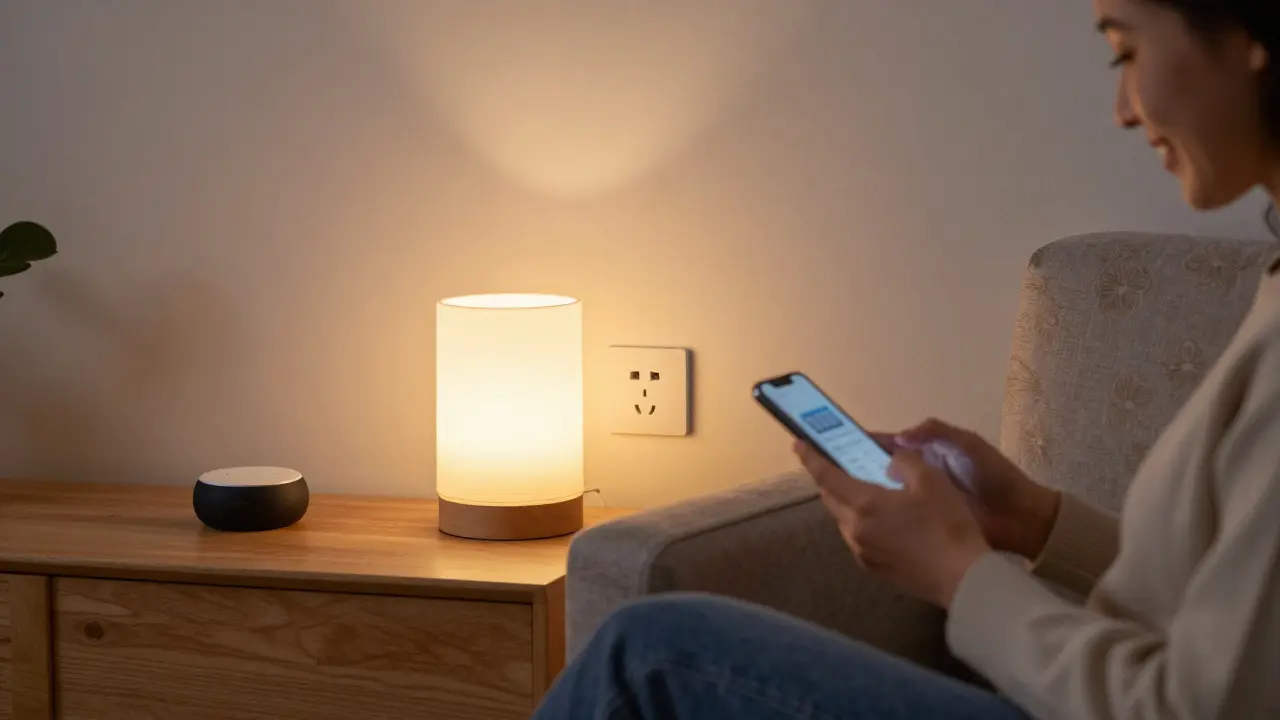
You don’t need to overhaul your whole house to get started. Most people begin with one or two devices that make daily life easier. A smart plug costs about $15-$25. Plug in a lamp or coffee maker, control it from your phone, and set schedules. That’s instant automation for less than the price of a dinner out.Smart bulbs are next. Philips Hue White starts at $12 per bulb. If you replace five bulbs in your living room and hallway, you’re looking at $70-$80. Add a basic smart speaker like the Amazon Echo Dot ($30) and you’ve got voice control. Total? Around $120. You can turn lights on with your voice, set timers, and even dim them for movie nights-all without touching a switch.
For security, a smart doorbell like the Eufy Video Doorbell costs $99. It gives you motion alerts, two-way talk, and local storage so you don’t need a monthly fee. That’s it. You’ve got a real smart home setup for under $200. No electrician. No wiring. Just plug in and go.
Level Up: The $500-$1,500 Smart Home
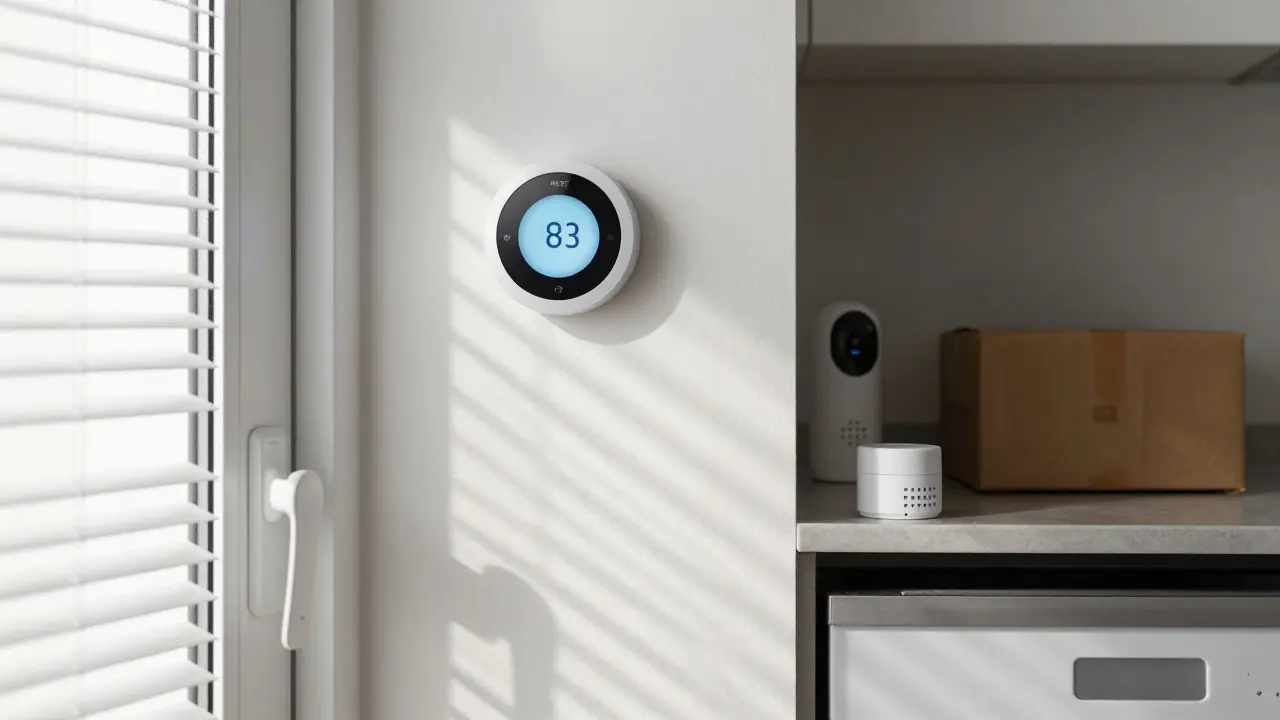
Once you’re hooked, you’ll want more. The next step is adding a smart thermostat. Nest Learning Thermostat runs $200-$250. It learns your schedule and saves you 10-15% on heating and cooling bills. In Canada, that’s $100-$200 a year. You’ll get your money back in less than two years.Smart locks like the August Smart Lock Pro ($200) let you lock and unlock your door with your phone. You can give temporary access to guests or delivery people without handing out keys. Pair that with a smart hub like Samsung SmartThings ($70), and you can link everything together. Say goodbye to juggling five different apps.
Now add smart sensors. A water leak sensor ($40) can alert you if your washing machine overflows. A window/door sensor ($30 each) tells you if someone opens a door when you’re away. Add three sensors and you’re at $90. Throw in a smart plug for your space heater and you’ve got a full security and energy-saving system.
For $1,000-$1,500, you’ve built a home that responds to you. Lights turn on when you walk in. The heat adjusts when you leave for work. You get alerts if something’s wrong. And you don’t need a tech degree to run it.
Full Automation: The $2,000-$5,000 Smart Home
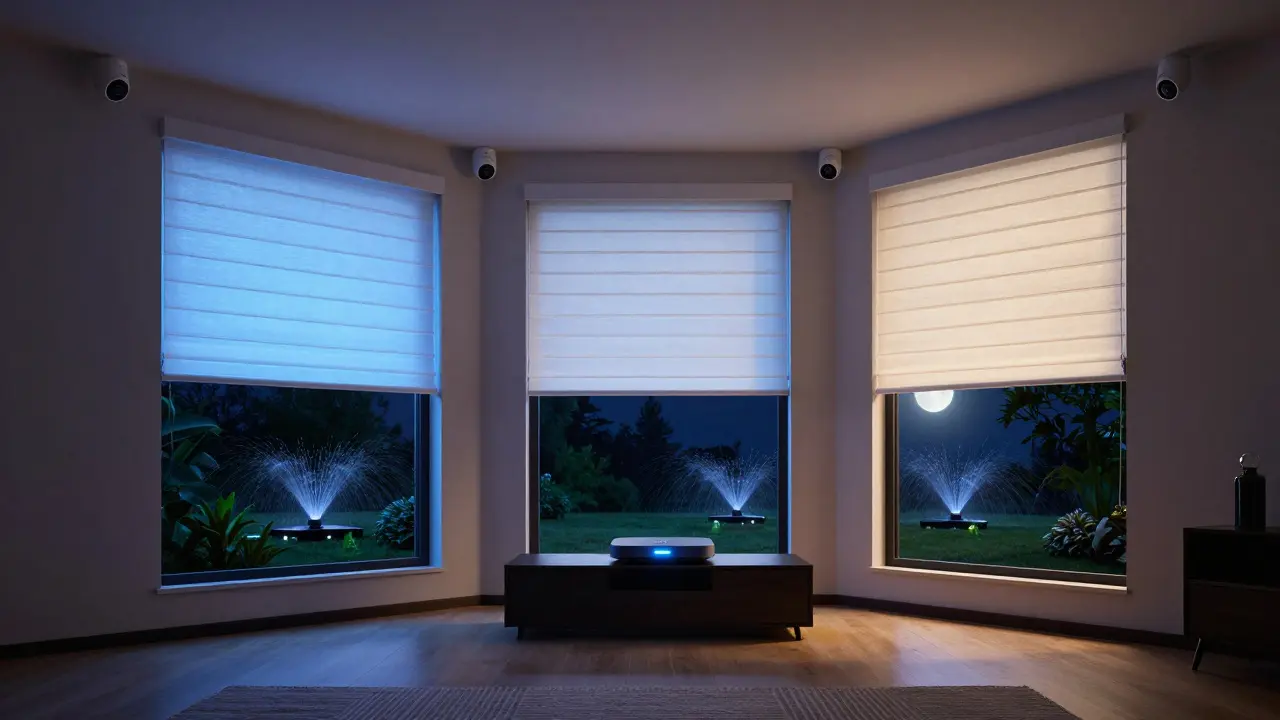
This is where things get serious. People who spend this much usually want total control-and they’re willing to pay for it. A whole-home automation system like Control4 or Savant starts at $2,000 just for the hardware. Add professional installation, and you’re looking at $5,000-$10,000.But you don’t need branded luxury systems to get there. You can build something close with off-the-shelf parts. Replace every light with smart LEDs (Philips Hue White and Color, $30 each). For a 10-light home, that’s $300. Add smart blinds ($200-$400 per window) for three rooms? That’s $600-$1,200. A smart irrigation system for your yard? $300-$500. A whole-home audio system with Sonos speakers? Another $1,500.
And then there’s security. A professional-grade camera system with 8 indoor/outdoor cameras (Arlo Pro 4 or Ring Floodlight Cam) runs $1,200-$1,800. Add facial recognition, 24/7 professional monitoring, and cloud storage? That’s another $30-$50 a month. You’re now spending $4,000-$5,000 upfront-and $500+ a year in subscriptions.
Why do people do this? Because it’s seamless. You walk in the door, and the lights adjust, the music starts, the thermostat warms the house, and the front door unlocks-all automatically. It’s not just convenience. It’s comfort, safety, and peace of mind.
Hidden Costs You Can’t Ignore
Most people forget the hidden stuff. Smart devices need Wi-Fi. If your router is five years old, it won’t handle 10+ smart gadgets. A new mesh system like Eero or TP-Link Deco costs $200-$300.Then there’s power. Smart devices never fully turn off. A smart plug uses 0.5 watts idle. A smart thermostat uses 2 watts. Ten devices? That’s 12-15 watts running 24/7. In Ontario, that’s about $15-$20 extra a year. Not much, but it adds up.
And subscriptions. Many smart cameras, alarms, and doorbells push you toward monthly plans. Ring Protect Basic is $4/month per device. Arlo Smart is $12/month for unlimited cameras. If you have five devices, that’s $60 a month-or $720 a year. You can avoid this with local storage or open-source systems like Home Assistant, but that takes time to set up.
Don’t forget compatibility. Not all smart devices work together. If you buy Google Nest devices, they play nice with each other but might not connect to Apple HomeKit. If you’re an iPhone user, stick with HomeKit-certified gear. Otherwise, you’ll end up with three apps and no real automation.
What’s the Best Value?
If you want the biggest bang for your buck, start with these three:- Smart thermostat - Saves money, pays for itself fast
- Smart doorbell - Adds security without a full alarm system
- Smart plugs - Turns any device into a smart one
After that, add smart lights if you like ambiance. Then sensors if you’re worried about leaks or break-ins. Skip the fancy voice assistants unless you actually use them. Most people only use Alexa or Google Assistant to turn lights on and off. A $30 Echo Dot does that just fine.
Don’t buy everything at once. Test one device. Live with it for a month. See if it changes your routine. If it does, add another. If it doesn’t, return it. That’s how you avoid spending $3,000 on gadgets you never use.
Smart Home Costs in 2026: Quick Reference
| Device | Entry-Level Price | Mid-Range Price | High-End Price |
|---|---|---|---|
| Smart Plug | $15 | $25 | $40 (with energy monitoring) |
| Smart Bulb (single) | $12 | $25 (color-changing) | $40 (with built-in hub) |
| Smart Thermostat | $150 | $200 | $300 (with advanced learning) |
| Smart Doorbell | $99 | $150 (with color video) | $250 (with facial recognition) |
| Smart Lock | $120 | $200 | $300 (with auto-unlock) |
| Smart Security Camera | $80 | $150 | $250 (with AI detection) |
| Smart Speaker | $30 | $70 | $150 (premium sound) |
| Smart Hub | $50 | $80 | $120 (multi-protocol) |
| Smart Blinds | $150 | $300 | $500 (motorized, custom fit) |
Is It Worth It?
Smart home devices aren’t just gadgets. They’re tools that change how you live. A smart thermostat saves money. A doorbell keeps you safe. A leak sensor prevents a $20,000 water damage claim.The real value isn’t in the tech-it’s in the peace of mind. You’re not just buying a light bulb. You’re buying control. You’re buying time. You’re buying safety.
Start small. Build slowly. Don’t get sucked into buying everything at once. The best smart home isn’t the one with the most gadgets. It’s the one that actually makes your life easier.
What to Do Next
If you’re ready to start:- Pick one problem: Is your heating bill too high? Are you worried about packages getting stolen? Do you forget to turn off lights?
- Find one device that solves it.
- Buy it. Install it. Live with it for 30 days.
- If it helps, move to the next one.
Don’t chase trends. Chase results.
Are smart home devices worth the cost?
Yes-if you pick the right ones. A smart thermostat pays for itself in under two years through energy savings. A smart doorbell reduces package theft and gives you peace of mind. But buying every gadget on the market won’t make your life better. Focus on solving real problems, not just adding tech.
Do smart home devices need Wi-Fi?
Most do. Smart lights, cameras, and thermostats rely on Wi-Fi to connect to your phone or voice assistant. If your Wi-Fi is weak or unreliable, devices will drop offline. For a home with 10+ smart devices, invest in a mesh Wi-Fi system like Eero or TP-Link Deco. It costs $200-$300 but keeps everything running smoothly.
Can I use smart home devices without monthly fees?
Yes. Many devices offer local storage instead of cloud subscriptions. For example, Eufy cameras store video on a microSD card. August locks work without a subscription. Smart plugs and bulbs don’t need monthly fees at all. Avoid brands that push subscriptions hard-look for ones that give you the option to store data locally.
Which smart home devices save the most money?
Smart thermostats save the most-up to 15% on heating and cooling bills. In Canada, that’s $100-$200 a year. Smart plugs help too: turning off idle devices like coffee makers or TVs can cut $50-$100 off your annual bill. Water leak sensors prevent costly damage. A $40 sensor could save you $10,000 in repairs.
Do smart home devices work during power outages?
Most don’t. Smart locks, thermostats, and cameras need power. If the electricity goes out, they stop working-unless they have battery backups. Some smart locks (like August) have backup batteries. Battery-powered cameras (like Arlo) keep recording during outages. But Wi-Fi routers and hubs need power too. For true reliability, pair your smart home with a UPS (uninterruptible power supply) for your router and hub.

Sheetal Srivastava
January 21, 2026 AT 02:45Let's be real-most people don't need a $5,000 smart home; they need a $500 one with proper interoperability architecture. The real bottleneck isn't cost, it's protocol fragmentation. Zigbee, Z-Wave, Matter, Wi-Fi-it's a goddamn IoT spaghetti bowl. And don't get me started on vendor lock-in disguised as 'ecosystem synergy.' If you're not using Home Assistant or OpenHAB, you're just paying for convenience theater. Local-first, privacy-centric automation is the only ethical path forward. Cloud-dependent devices are digital serfdom with a pretty UI.
Bhavishya Kumar
January 21, 2026 AT 18:33It is imperative to note that the assertion regarding energy consumption of smart devices is statistically inaccurate. The idle power draw of 0.5 watts per device, when extrapolated across ten units, yields a total of five watts, not twelve to fifteen. Furthermore, the annual cost calculation for Ontario is based on an assumed rate of 12 cents per kilowatt-hour, which is inconsistent with current provincial tariffs. Precision in data presentation is not optional in technical discourse.
ujjwal fouzdar
January 23, 2026 AT 14:03Imagine this: you walk into your home, and the lights don’t just turn on-they remember your mood. The music doesn’t just play-it knows the song you needed before you did. The thermostat doesn’t just adjust-it feels the chill in your bones and warms you like a hug from your grandmother. That’s not technology. That’s magic. And magic doesn’t come cheap. But neither does peace. When you’re lying awake at 3 a.m. wondering if you locked the door, or when the pipes burst and your floor turns into a swamp-then you’ll understand. The real cost isn’t in dollars. It’s in sleep. In safety. In silence. And those? You can’t put a price on them.
Anand Pandit
January 23, 2026 AT 16:46Great breakdown! I started with just a smart plug and a doorbell-total under $150-and now I can’t imagine going back. The doorbell saved me from three package thefts in one month. The plug helped me cut phantom load from my TV and gaming console-I saved about $40 on my electricity bill last year. Honestly, the biggest win? Not having to fumble for light switches in the dark. Start small, like the post says. One device at a time. You’ll be surprised how much it changes your day-to-day. No need to go full sci-fi unless you really want to.
Reshma Jose
January 23, 2026 AT 22:35OMG YES. I bought a smart thermostat last winter and my bill dropped by 30%. I thought it was a scam, but it actually learned my schedule. Now I come home to a warm house and I didn’t even think about it. Also, the Eufy doorbell is a game-changer-I can talk to my dog walker from my phone while I’m at work. No subscriptions, no drama. Just chill automation. Don’t overthink it. Just get one thing that solves your biggest annoyance and go from there.
Rajat Patil
January 24, 2026 AT 12:57I appreciate how this post breaks down the costs in stages. Many people feel overwhelmed by smart homes, thinking they need to buy everything at once. But starting small, as suggested, allows one to truly experience the benefit before investing further. It is not about having the most devices, but about having the right ones that bring comfort and security. I have found that even one well-chosen device can make a meaningful difference in daily life.
deepak srinivasa
January 25, 2026 AT 02:56What about compatibility with older homes? My house has no neutral wires in the switch boxes. Most smart switches require them. Are there good alternatives that work without neutral? And does Matter help with that, or is it still mostly a marketing buzzword?
pk Pk
January 25, 2026 AT 06:13You’re all overthinking this. Start with a smart plug. Plug in your lamp. Use your phone to turn it on before you get out of bed. That’s it. That’s the magic. Now try it for a week. If you feel like a wizard? Then get a bulb. Then a doorbell. You don’t need to be an engineer. You just need to want to make your life a little easier. And if you don’t? No shame. Just leave the tech alone. But if you do-welcome to the future. It’s not flashy. It’s quiet. And it works.
NIKHIL TRIPATHI
January 26, 2026 AT 06:17Biggest mistake I made? Buying a bunch of Google Nest stuff because my partner had an Android phone. Then I realized half the devices didn’t work with my iPhone Home app. Ended up with three apps, constant notifications, and a hub that kept disconnecting. Switched to HomeKit-certified gear-Eve, Aqara, and a HomePod Mini. Now everything just works. No subscriptions, no chaos. Lesson learned: pick your ecosystem before you buy anything. Don’t let marketing trick you into buying a house of cards.
Shivani Vaidya
January 26, 2026 AT 11:58The hidden cost of Wi-Fi infrastructure is often underestimated. In multi-story homes or those with thick walls, a single router is insufficient. A mesh system is not an optional upgrade-it is a necessity for reliability. Furthermore, the assumption that smart devices consume negligible power ignores cumulative impact over time. While individual idle consumption is low, the aggregation across multiple devices contributes meaningfully to baseline household energy demand. A holistic view of system efficiency is essential.
Rubina Jadhav
January 27, 2026 AT 14:58I just got a smart plug and it’s already worth it. I turn off my space heater from bed now. No more forgetting. Simple. No apps. No fuss. Maybe I’ll get a bulb next.