
Ever looked at a sofa in a fancy showroom and thought, “How much did this actually cost to make?” You’re not alone. Furniture markup isn’t just high-it’s often wild. A $3,000 sectional might have cost the retailer $600 to buy from the factory. That’s a 400% markup. But here’s the thing: furniture markup isn’t always a scam. Sometimes, you’re paying for more than just wood and foam.
Where does the price actually go?
When you buy a new dining table, you’re not just paying for the lumber. Retailers have to cover a lot before they even get to you. Think about it: someone had to design it, ship it across the country, stock it in a warehouse, move it into a store, hire staff to show it to you, pay for the lights, the rent, the website, and the Instagram ads that made you click on it. All of that adds up.
For big-name brands like Restoration Hardware or Crate & Barrel, the markup can hit 500% or more. That’s because they’re not just selling furniture-they’re selling a lifestyle. The velvet upholstery, the brushed brass legs, the “hand-finished” look-all of it costs money to produce at scale with consistent quality. And then there’s the experience: the showroom with the soft lighting, the free coffee, the stylist who helps you pick cushions. That’s part of the package.
But if you cut out the middleman? You can find the same basic design-same materials, same dimensions-for half the price. Online direct-to-consumer brands like Burrow, Floyd, or Article source directly from factories in Vietnam, China, or Poland. They skip the retail floor, the fancy lighting, and the 10-person sales team. Their markup? Often 100% to 150%. Still high, but nowhere near the luxury brand range.
Why some markup is justified
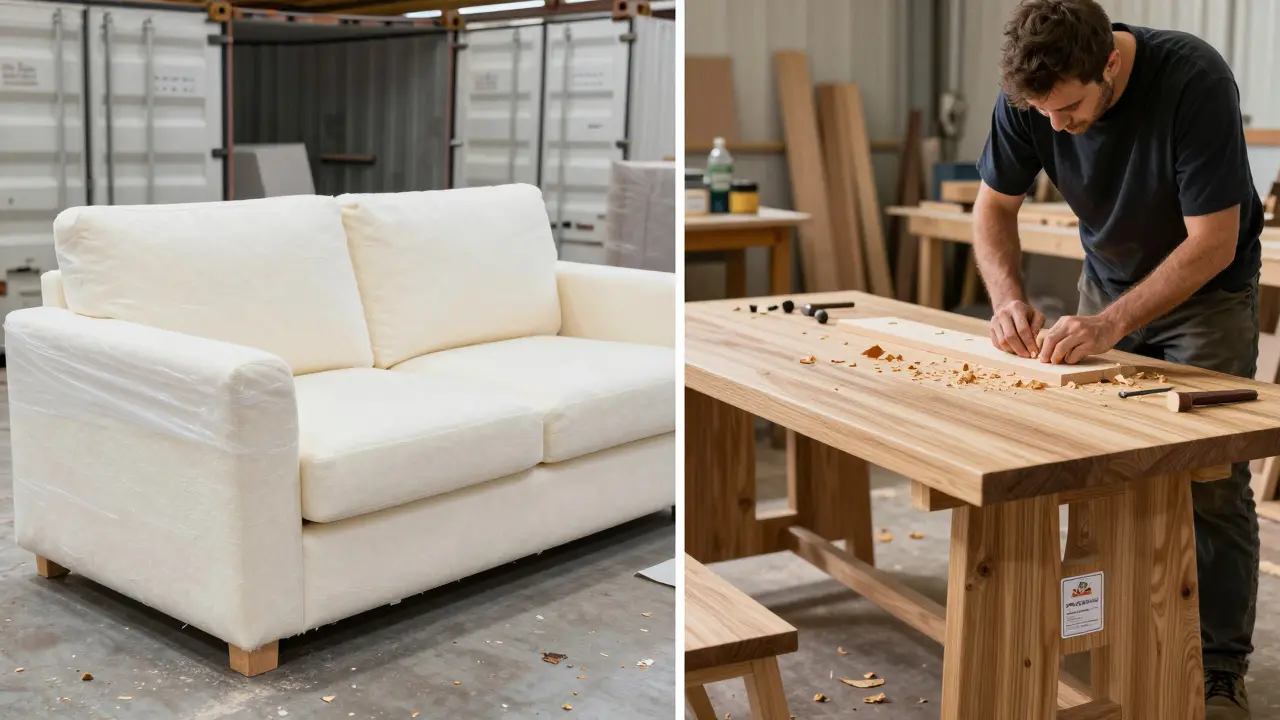
Not all high prices are rip-offs. A $2,500 solid oak dining table from a local artisan might seem outrageous until you learn it was hand-carved by one person over 80 hours. Or that the wood was sustainably harvested from a forest in Ontario. Or that it comes with a 25-year warranty and free refinishing service. That’s not markup-that’s value.
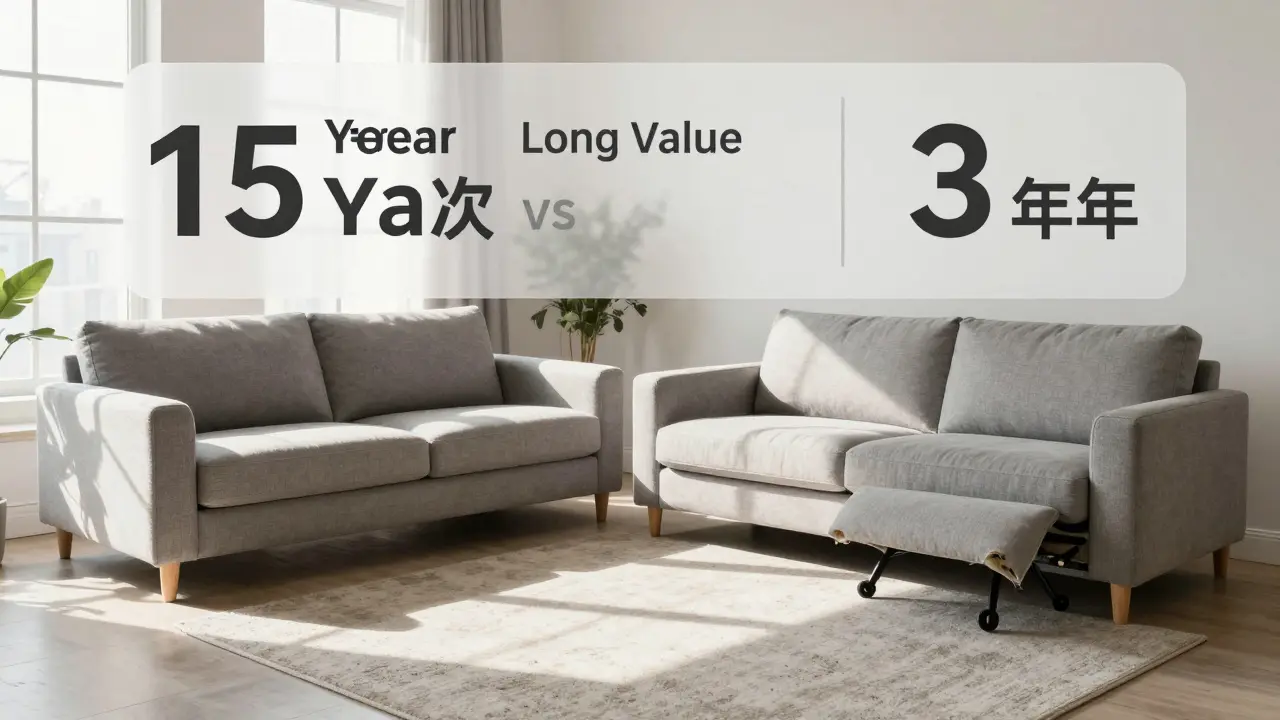
Then there’s durability. A $1,200 sofa from a discount store might sag after a year. A $2,000 one from a reputable maker might last 15 years. When you do the math-$1,200 divided by 3 years vs. $2,000 divided by 15-that’s actually cheaper per year. And if you’ve ever tried to move a broken sofa out of your apartment, you know the hidden cost of cheap furniture: disposal fees, replacement hassle, and the guilt of landfill waste.
Even shipping matters. A sofa shipped from China to Burlington takes 6-8 weeks. The retailer pays for ocean freight, customs, handling, and warehouse storage. That’s $150-$300 right there, baked into the price. If you buy locally made, you pay more upfront-but you’re cutting out the global supply chain risk. No delays. No damaged goods. No surprise tariffs.
How to spot real value vs. fake luxury
Here’s how to tell if you’re getting ripped off or paying for quality:
- Check the frame. Solid hardwood (like oak, maple, or birch) is better than particleboard or plywood. Pick it up-if it feels light, it’s probably cheap.
- Look at the joints. Dovetail or mortise-and-tenon joints mean handcrafted work. Staples or nails? That’s mass-produced.
- Test the cushions. High-density foam (1.8 lb/ft³ or higher) holds shape. Low-density foam flattens in months. Ask for the density-it’s not always listed.
- Ask about origin. “Made in China” isn’t bad. But if they won’t say where the wood comes from or who made it, that’s a red flag.
- Warranty length. A 1-year warranty? Red flag. 5+ years? That’s a brand that stands by its product.
One real example from a friend in Burlington: She bought a $1,800 velvet sofa from a big-box store. It looked amazing. Six months later, the fabric started pilling, and the legs wobbled. She replaced it with a $2,100 one from a small Canadian workshop. Same size. Same color. But the frame is oak, the foam is 2.2 lb density, and it’s made in Quebec. She’s had it for 3 years now. No issues. No regrets.
Where to find fair prices
Here are three ways to avoid overpaying:
- Buy from direct-to-consumer brands. Article, Burrow, Floyd, and IKEA (yes, IKEA) cut out retail layers. Their markup is transparent. You can often find the factory price listed on their site.
- Shop end-of-season sales. Furniture stores clear inventory in January and August. That’s when markdowns hit 40-60%. You’ll find last year’s models with zero wear.
- Visit local makers or flea markets. A lot of skilled woodworkers sell directly on Etsy or at local craft fairs. You can negotiate. You can see the craftsmanship. And you’re supporting real people-not shareholders.
There’s also a growing trend of secondhand luxury. Facebook Marketplace and Chairish have high-end pieces from people upgrading. A $4,000 mid-century dresser might go for $800 because the owner moved to a smaller apartment. No markup. Just good stuff finding a new home.
What you shouldn’t pay for
Don’t pay extra for:
- Branded names that add no functional value (e.g., “Signature Collection” on a basic sofa)
- Overpriced “designer” colors that cost the same to produce as neutral tones
- “Limited edition” releases that are just last season’s model with a new label
- Excessive “free delivery” that’s really just rolled into the price
And if a salesperson says, “This is our most popular item,” walk away. Popularity doesn’t mean quality. It just means they spent a lot on advertising.
The bottom line
Yes, there’s a big markup on furniture. But not all of it is greed. Some of it is overhead. Some of it is craftsmanship. Some of it is just bad business practices.
The key isn’t to avoid markup-it’s to understand what you’re paying for. If you want a sofa that lasts 15 years and doesn’t fall apart after your dog jumps on it, pay for quality. If you just need something to sit on for two years while you save for a house? Go cheap. But don’t let a fancy label fool you.
Ask yourself: “Would I still buy this if it had no brand name?” If the answer is yes, you’re probably getting real value. If the answer is no-you’re paying for the logo, not the furniture.


Rae Blackburn
February 19, 2026 AT 03:34LeVar Trotter
February 19, 2026 AT 13:14Tyler Durden
February 19, 2026 AT 15:00Aafreen Khan
February 21, 2026 AT 03:12Pamela Watson
February 22, 2026 AT 23:28michael T
February 23, 2026 AT 22:17Christina Kooiman
February 24, 2026 AT 21:40Stephanie Serblowski
February 26, 2026 AT 15:30Renea Maxima
February 27, 2026 AT 22:22Jeremy Chick
March 1, 2026 AT 05:11