Alexa Smart Home: What It Really Does and How It Fits Your House
When you think of an Alexa smart home, a system of connected devices controlled by Amazon’s voice assistant to automate lighting, security, temperature, and entertainment in your house. Also known as Amazon Alexa ecosystem, it lets you control your home with your voice, your phone, or even your schedule. It’s not just about asking for the weather or playing music. A real Alexa smart home turns your lights on when you walk in, locks your doors when you leave, and alerts you if something feels off—like a window left open at 2 a.m.
But here’s the thing: most people buy an Echo Dot thinking they’re getting a smart home. They’re not. They’re getting a speaker with a voice assistant. The actual smart home comes from what you connect to it—thermostats like Nest, locks like August, cameras like Ring, and plugs like TP-Link Kasa. These are the real players. Without them, Alexa is just a talkative radio. And if you skip setting up routines—like "Good morning" turning on lights, brewing coffee, and reading the news—you’re missing half the value. A smart home isn’t about gadgets. It’s about habits.
Security is another layer most skip until it’s too late. An Alexa smart home listens. Always. That means if your Wi-Fi gets hacked, someone could potentially trigger your locks or hear your conversations. It’s not common, but it’s possible. That’s why using strong passwords, turning off voice recording history, and keeping firmware updated isn’t optional—it’s basic hygiene. And while Alexa works great with Amazon’s own gear, not every smart device plays nice. Some brands lock you into their own apps, forcing you to juggle five different screens just to turn off a lamp. That’s not smart. That’s frustrating.
Then there’s cost. People think smart homes are expensive. They’re not—if you start small. A $30 smart plug, a $50 motion sensor, and a $100 thermostat can give you 80% of the benefit for under $200. You don’t need a whole house wired from day one. You need one smart thing that solves a real problem—like never walking into a dark kitchen again, or knowing if your kid got home from school. That’s where the magic happens.
And yes, there are downsides. Power outages break it. Internet drops break it. Kids scream "Alexa, play dinosaurs!" at 3 a.m. and it does. But for most people, the convenience outweighs the quirks. You’ll forget how hard life was before you could say "Alexa, turn off the garage light" while your hands are full of groceries.
What you’ll find below isn’t a list of gadgets. It’s a collection of real experiences—people who saved money, fixed safety issues, or just made their days easier using Alexa and smart home tools. Some used it to cut energy bills. Others used it to feel safer when they were alone. A few even used it to stop yelling at their teenagers to turn off the lights. These aren’t tech reviews. They’re life hacks wrapped in technology.
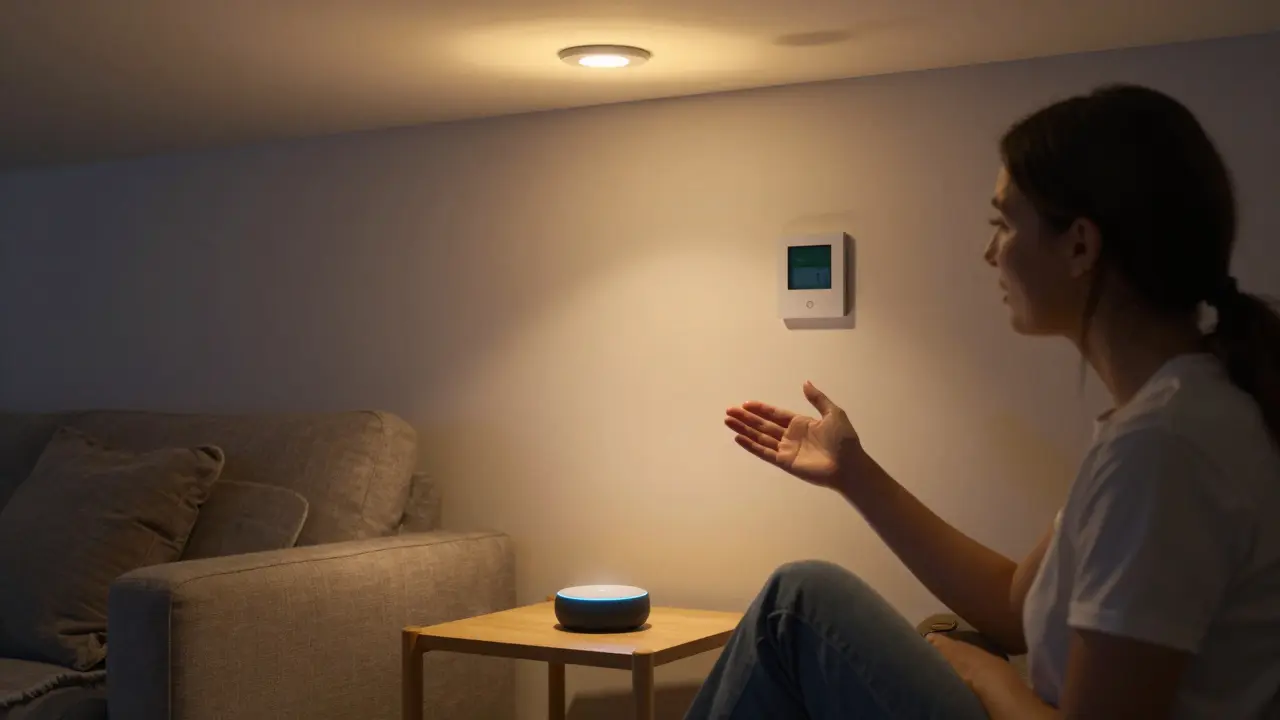
What Is Alexa Smart Home? A Simple Guide to Voice-Controlled Living
Alexa smart home lets you control lights, locks, thermostats, and more with your voice. Learn how it works, what devices connect, and why it’s the easiest way to start a smart home - no tech skills needed.
view more
Is Alexa a Smart Home Device? Here's What It Actually Does
Alexa isn't a device itself-it's the voice assistant inside Echo speakers. But when connected to smart lights, locks, and thermostats, it becomes the brain of your smart home. Here's how it really works.
view more