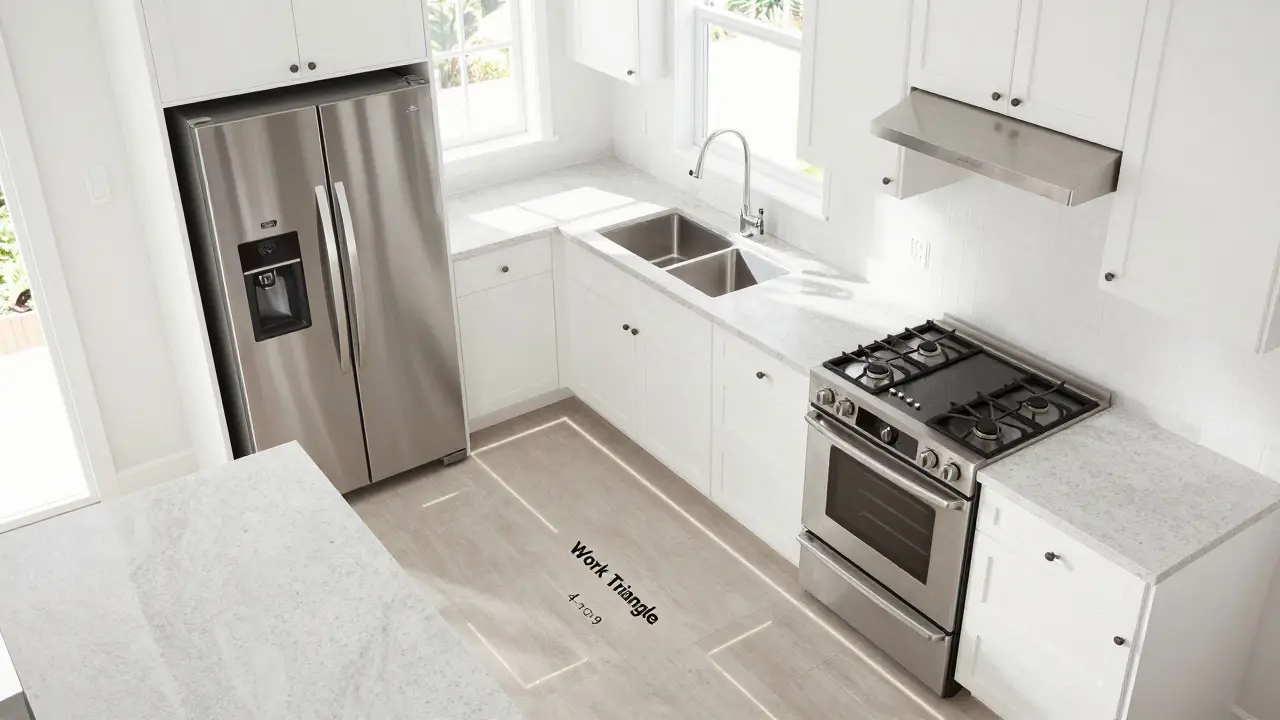
Quick Takeaways: The 2-4 Rule Basics
- The rule focuses on the distance between the fridge, sink, and stove.
- Minimum distance between any two points: 4 feet.
- Maximum distance between any two points: 9 feet (with 2-4 feet as the common "buffer" logic for walking paths).
- The goal is to reduce unnecessary steps while preventing cramping.
- It complements the traditional Kitchen Work Triangle.
Breaking Down the Math of the 2-4 Rule
To get why this rule exists, we have to look at how we actually move. Think about the process of making a salad. You grab lettuce from the fridge, wash it in the sink, and maybe sauté some toppings on the stove. If the fridge is in one room and the sink is in another, you're wasting time. If they're so close that you can't even open the fridge door fully, you're fighting your own cabinetry.
The 2-4 Rule suggests that the distance between any two of the main work centers should be at least 4 feet, but no more than 9 feet. Why 4 feet? Because a standard human body and a cabinet door need room to breathe. If you place your stove exactly 2 feet from your sink, you'll find yourself leaning awkwardly or feeling trapped in a corner. When you hit that 4-foot sweet spot, you have enough room to pivot and move without feeling claustrophobic.
But why not just make everything 10 feet apart? Because that's where the "marathon" effect kicks in. A study on kitchen ergonomics shows that homeowners who travel more than 12 feet total within their work triangle report significantly higher fatigue during meal prep. By keeping the gaps between 4 and 9 feet, you minimize the physical toll of cooking a complex meal.
Connecting the Rule to the Kitchen Work Triangle
You can't talk about the 2-4 rule without mentioning the Kitchen Work Triangle. This is the foundational concept in Interior Design that connects the refrigerator, the cooktop, and the sink. While the triangle tells you where the points should be, the 2-4 rule tells you how far apart they should be.
Imagine the triangle as the map and the 2-4 rule as the scale. If your triangle is too small, you're working in a closet. If it's too large, you're working in a gym. When these two concepts work together, you create a flow that feels natural. For example, in a L-shaped Kitchen, the sink often acts as the pivot point. If the sink is 5 feet from the stove and 6 feet from the fridge, you've hit the 2-4 rule perfectly.
| Layout Type | 2-4 Rule Application | Pros | Cons |
|---|---|---|---|
| Galley Kitchen | High (Linear paths) | Maximum efficiency | Can feel narrow |
| U-shaped Kitchen | Moderate (Cuts corners) | Lots of counter space | Can feel "boxed in" |
| Island Layout | Complex (Cross-aisles) | Great for socializing | Risk of too much distance |
Common Pitfalls When Applying the Rule
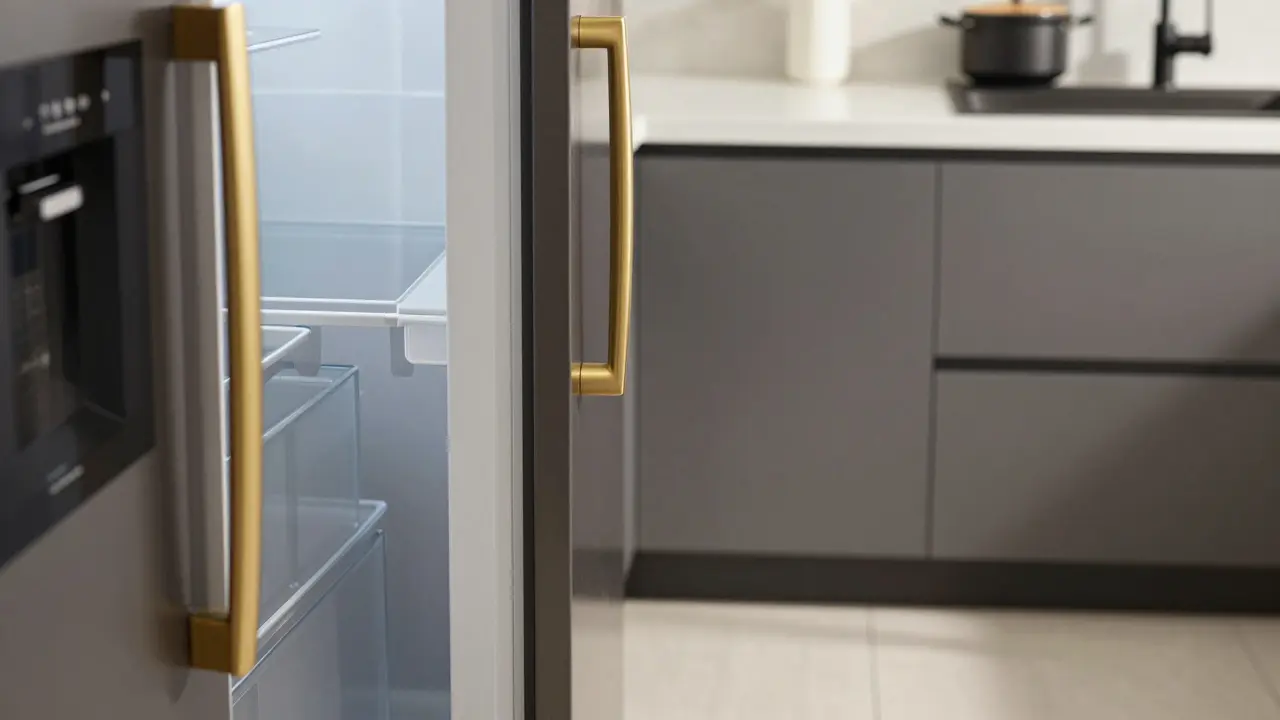
One of the biggest mistakes people make during a Modern Kitchen Renovation is ignoring the "door swing." You might measure 4 feet from the edge of the fridge to the edge of the sink, but if the fridge door swings out 3 feet, your walking path is suddenly reduced to 1 foot. That's not a functional kitchen; that's a trap.
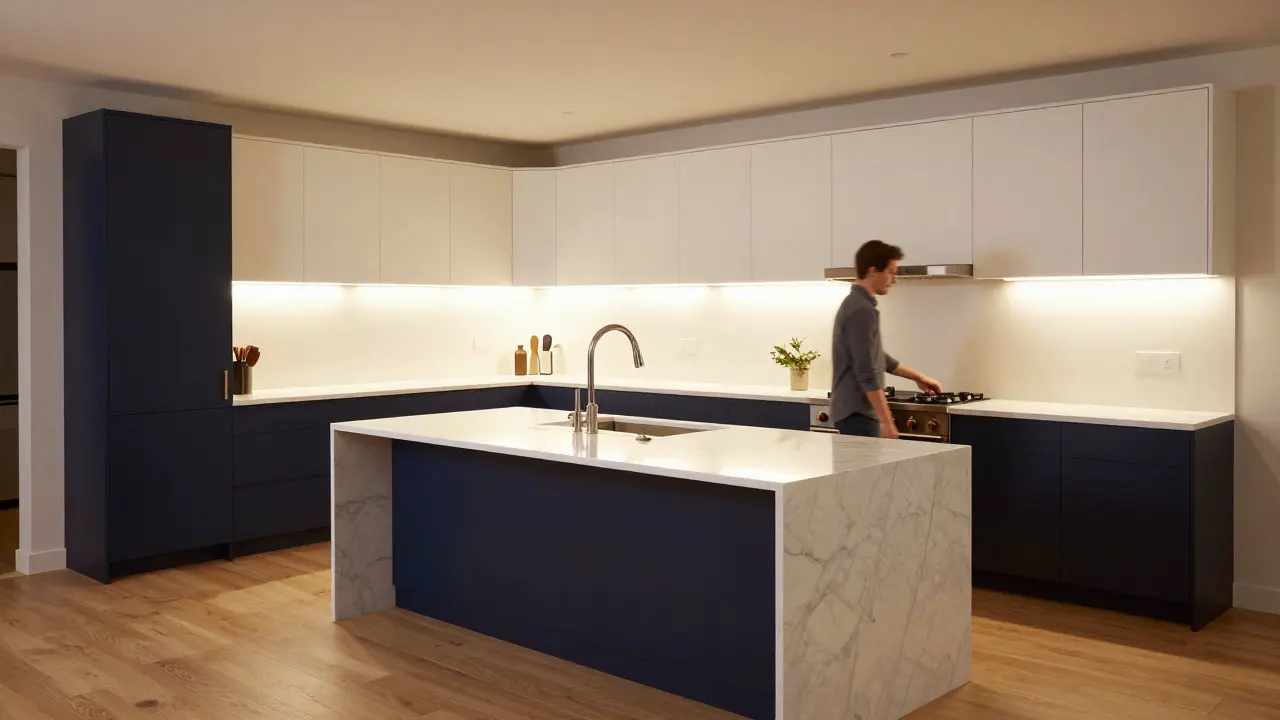
Another issue is the "island obstacle." In modern homes, the Kitchen Island is the star of the show. However, islands often break the straight-line distance of the 2-4 rule. If you have to walk around a massive marble slab to get from the stove to the sink, that 4-foot gap effectively becomes an 8-foot journey. When planning your island, ensure the aisles are wide enough for two people to pass (usually 42 to 48 inches), but not so wide that you're gliding across the room like a hockey player.
Adapting the Rule for Multi-Cook Households
If you're the only one cooking, the 2-4 rule is your best friend. But what happens when you have a partner or kids helping out? In a high-traffic kitchen, the rule needs to evolve into "zones." Instead of one single triangle, you create work zones: a prep zone, a cooking zone, and a cleaning zone.
In these scenarios, you apply the 2-4 logic within each zone. For instance, the prep area (counter space next to the sink) should be within a few feet of the fridge. However, the cleaning zone (dishwasher and sink) should be slightly separated from the high-heat cooking zone to avoid collisions. This prevents the "traffic jam" effect where the person unloading the dishwasher is blocking the person trying to flip a pancake.
Practical Checklist for Your Layout Plan
Before you sign off on those expensive blueprints, run through this checklist to see if your layout actually respects the 2-4 rule and basic ergonomics:
- Check the distance from the center of the sink to the center of the stove. Is it between 4 and 9 feet?
- Measure from the fridge handle to the nearest counter. Can you stand there and unload groceries without blocking the main walkway?
- Open every door (oven, dishwasher, fridge) and see if you can still move around the room.
- Identify the "landing zones." Do you have at least 15 inches of clear counter space next to the stove and fridge?
- Walk the path of a typical meal. Count your steps. If you're taking more than 15-20 steps to make a basic meal, your triangle is too wide.
The Future of Kitchen Ergonomics
As we move toward more integrated homes, the 2-4 rule is staying relevant even with new tech. Smart appliances, like refrigerators with built-in screens or ovens that can be controlled remotely, don't change the fact that you still have to physically move a pot of water from the sink to the burner. The physics of the human body haven't changed, even if the appliances have.
We're seeing a trend toward "Galley-Plus" designs, where a narrow, efficient work zone is paired with a large social zone. This allows the chef to stay within the strict 2-4 rule limits while guests hang out on the opposite side of the island, enjoying the conversation without getting in the way of the sauté pan.
Is the 2-4 rule mandatory for a good kitchen?
No, it's a guideline. Every home is different. If you have a very small apartment, you might have to settle for 3 feet between appliances. If you have a massive professional-grade kitchen, you might push it to 10 feet. The goal is to find the balance that minimizes fatigue and maximizes movement.
What happens if my kitchen is too small for the 4-foot minimum?
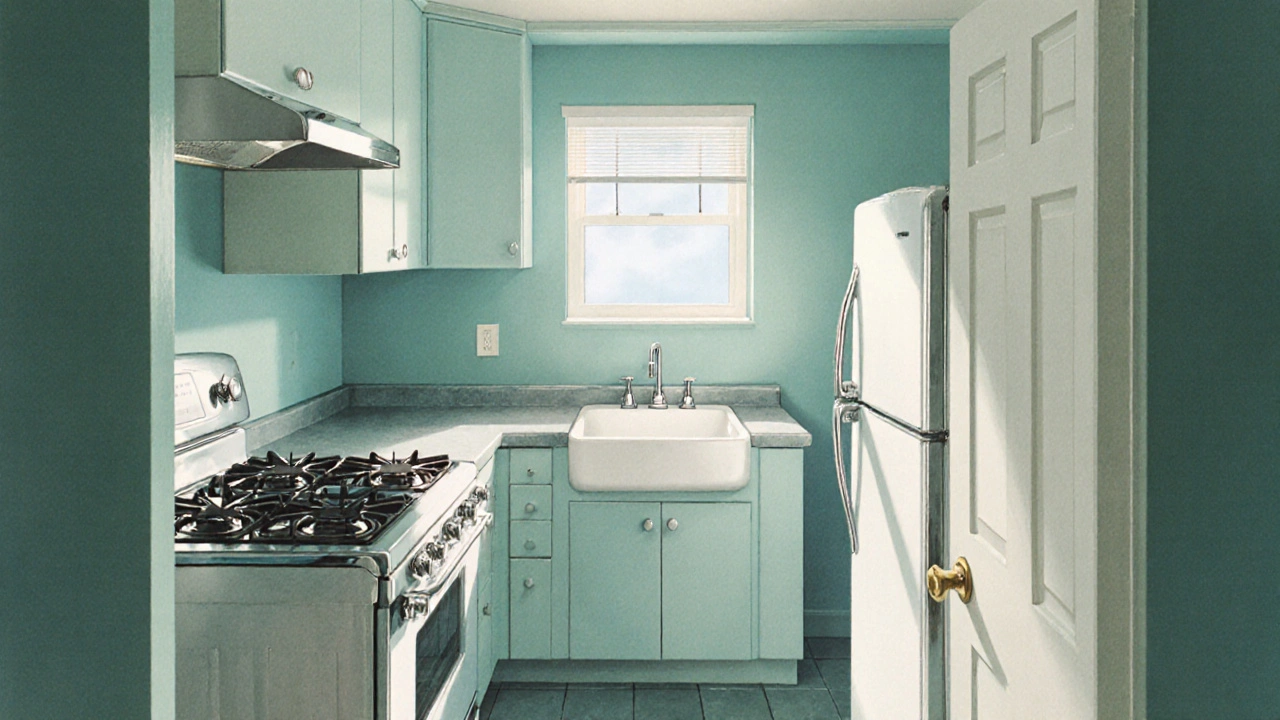
In tight spaces, focus on "clearance." Ensure that when the dishwasher is open, you can still get to the sink. Use sliding shelves or pull-out pantries to make up for the lack of floor space. You might not hit the 4-foot mark, but you can avoid the "collision' zone" by being strategic with appliance placement.
Does the 2-4 rule apply to the microwave?
Usually, the microwave is considered a secondary appliance. It shouldn't be one of the three main points of the work triangle, but it should be placed within a "support zone," typically near the fridge or the main prep counter, so you aren't walking across the room just to heat up a coffee.
Can an island be part of the work triangle?
Yes, if the island contains the sink or the cooktop. However, be careful. If the island is too large, it can actually block the triangle, forcing you to walk around it. The distance from the island's work surface to the other two points should still follow the 4-9 foot logic.
How do I measure the distance for the 2-4 rule?
Measure from the center of each appliance. For example, find the middle of your stove and measure in a straight line to the middle of your sink. This gives you the most accurate representation of how you'll actually move through the space.

Jessica McGirt
April 19, 2026 AT 09:44The precision regarding the door swing is absolutely vital. Many people overlook how a refrigerator door can effectively bisect a walkway, turning a spacious kitchen into a series of dead ends.
Donald Sullivan
April 20, 2026 AT 00:07Who cares about some random rule? My kitchen works just fine and I ain't changing a thing based on some 'gold-standard' nonsense.
Mike Zhong
April 20, 2026 AT 14:35The obsession with quantifying domestic space is just a symptom of our need to control an inherently chaotic existence. We try to optimize the 'flow' of a room to avoid the existential dread of a few extra steps, but the fatigue isn't physical-it's spiritual.
Jeff Napier
April 22, 2026 AT 08:20probably just a way for big appliance companies to make you buy bigger houses so you can fit their oversized fridges and keep the 'rule' going... follow the money people
Tina van Schelt
April 24, 2026 AT 00:11This is a total game-changer! My current setup is a complete disaster zone where I'm basically doing a chaotic dance just to make some toast. Absolute mayhem!
Sibusiso Ernest Masilela
April 24, 2026 AT 00:57Only a peasant would need a 'checklist' to design a kitchen. If you have any semblance of taste or a real architect, these pedestrian guidelines are utterly beneath you. Truly pathetic that people need to be told how to walk in a room.
Daniel Kennedy
April 25, 2026 AT 03:43Listen, while I agree the basics are here, the way some of you are reacting is ridiculous. Let's actually focus on the ergonomics. If you're building for a family, you absolutely need to prioritize the zones mentioned here or you'll end up fighting with your spouse every single morning over who's blocking the sink.
Johnathan Rhyne
April 26, 2026 AT 14:37I'll be the odd one out here, but I actually prefer a slightly tighter triangle. It's like a cockpit! Although, I must point out that the author's use of 'marathon' is a bit hyperbolic, but a delightful choice of words nonetheless!
Ronak Khandelwal
April 27, 2026 AT 01:49This approach to harmony in the home is so beautiful! 🌟 Creating a space that respects our physical movement is a form of self-care. Let's all try to make our homes a sanctuary of efficiency and peace! ✨🙏
Jamie Roman
April 28, 2026 AT 18:25I've always wondered if the 4-foot minimum is truly a universal necessity because in my experience with older homes, the spaces are way tighter and yet we managed to cook full meals without much thought, but then again, maybe we were just subconsciously adapting to the inefficiency without realizing how much it wore us down over the years, which makes this whole concept quite fascinating from a long-term health perspective.
Salomi Cummingham
April 29, 2026 AT 07:37Oh my goodness, I cannot even begin to describe the absolute horror of my last renovation where we completely ignored the island obstacle! I felt like I was navigating a labyrinth just to get a glass of water, and every single time I turned around, I was practically colliding with the dishwasher door in a scene of pure domestic tragedy that lasted for three whole years before we finally fixed it!
Sanjay Mittal
May 1, 2026 AT 02:28For those measuring, remember that the 'center of the appliance' is the most reliable metric because it accounts for the actual reach of the user.
Taylor Hayes
May 1, 2026 AT 12:53It's okay if your current kitchen doesn't fit these rules perfectly. Just try small changes, like organizing your prep tools closer to the sink, to make things feel a bit smoother.