By 2025, kitchens aren’t just for cooking anymore. They’re the heart of the home, the place where families gather, remote workers snack between meetings, and kids do homework while dinner simmers. If you’re thinking about updating your kitchen this year, you’re not just chasing style-you’re chasing function, comfort, and ease. The trends shaping kitchens right now aren’t about flashy gimmicks. They’re about quiet confidence, smart tech that actually works, and materials that last.
Dark, Rich Cabinetry Is Everywhere
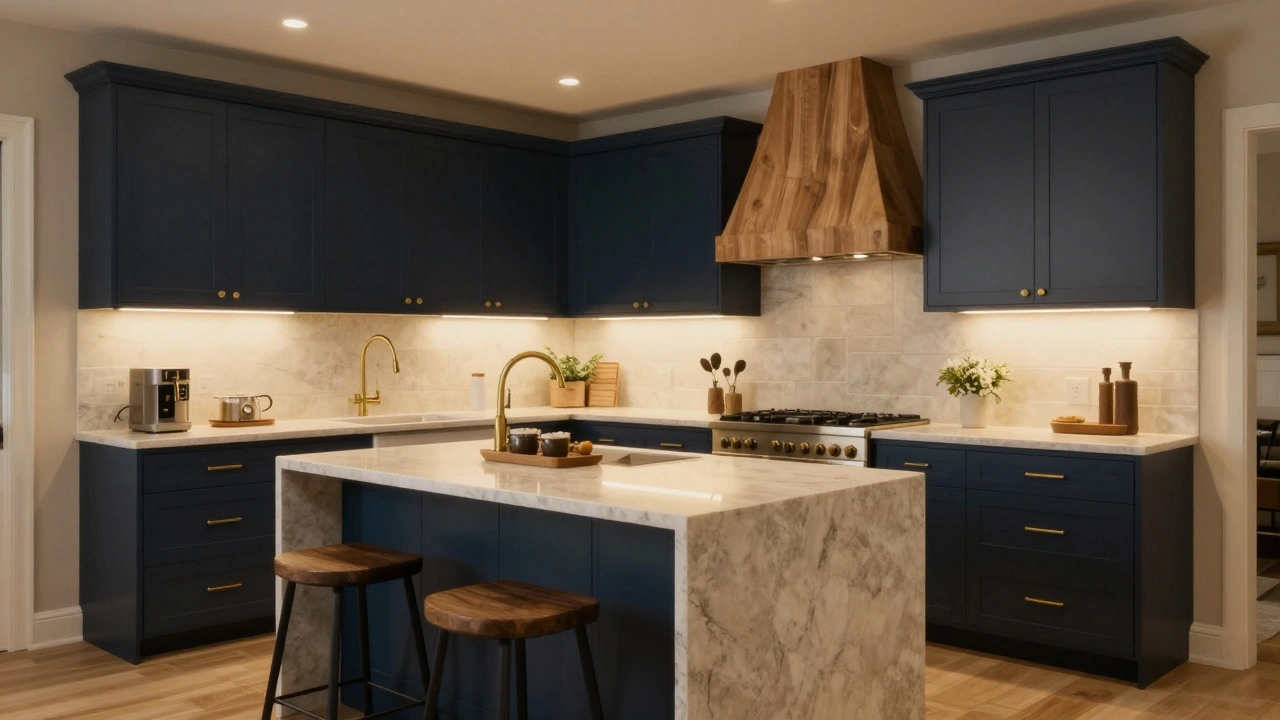
White kitchens aren’t gone, but they’re no longer the default. In 2025, deep, moody tones are dominating cabinetry. Think charcoal, forest green, navy blue, and even black. These colors create a sense of warmth and depth, especially when paired with warm lighting and natural wood accents. A kitchen with navy cabinets and brass hardware feels more like a cozy lounge than a sterile workspace.
Why now? Because people are tired of everything looking the same. After years of minimalist white kitchens, homeowners want personality. And dark cabinets hide fingerprints, smudges, and dust better than white. Brands like IKEA, KraftMaid, and custom makers are offering more finishes than ever-matte, textured, even painted with eco-friendly water-based lacquers.
Integrated Appliances Are the New Normal
If your fridge, dishwasher, or oven sticks out like a sore thumb, you’re behind. In 2025, integrated appliances are no longer a luxury-they’re expected. Panels that match your cabinetry, handles hidden or flush-mounted, and built-in ventilation systems that disappear into the ceiling. The goal? A seamless, uncluttered look that feels more like high-end furniture than a appliance showroom.
Companies like Miele, Sub-Zero, and Bosch now offer panel-ready models that fit perfectly into custom cabinetry. Even mid-range brands like GE and Whirlpool have cheaper versions with similar finishes. You don’t need to spend $10,000 on a fridge to get the look. A $2,500 panel-ready model from a local appliance dealer can do the job.
Smart Kitchens Are Less About Gadgets, More About Flow
Remember when smart kitchens meant voice-controlled lights and fridges that texted you when you were out of milk? That’s over. In 2025, smart tech is quieter, smarter, and more useful. It’s not about adding gadgets-it’s about removing friction.
Think: ovens that auto-preheat based on your calendar, induction cooktops that adjust heat automatically when a pot is removed, or dishwashers that run only during off-peak electricity hours to save money. The best smart kitchens don’t make noise-they just work better.
Google Home and Apple HomeKit now integrate with more appliances than ever. But the real win? Systems that learn your habits. A kitchen that notices you always make coffee at 7:15 a.m. and turns on the light and kettle five minutes before you wake up? That’s the future.
Stone Countertops Are Back-But Not the Kind You Think
Quartz was king for a decade. But in 2025, natural stone is making a comeback-especially soapstone and honed limestone. Why? Because they age beautifully. Soapstone darkens over time, developing a rich patina. Limestone develops soft, subtle marks that look intentional, not worn out.
Unlike quartz, which looks the same in 2030 as it did in 2025, these stones tell a story. They’re also cooler to the touch, which matters when you’re prepping food in summer. And they don’t need sealing every six months. A yearly oil treatment is enough.
One downside? They’re softer than quartz. Don’t use them if you’re a heavy knife user without a cutting board. But if you’re someone who values character over perfection, they’re perfect.
Open Shelving Isn’t Dead-It’s Evolved
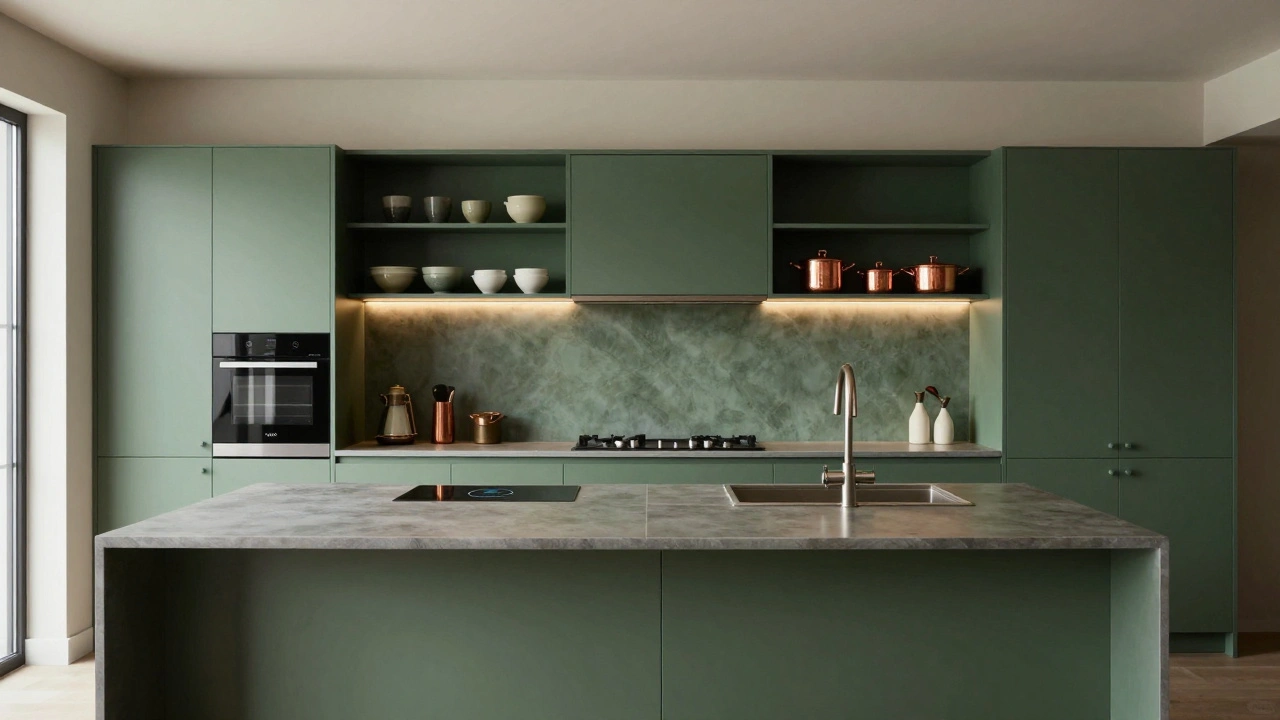
Open shelves were everywhere in 2018. Then people realized they collected dust and looked messy. In 2025, open shelving is back-but smarter. Instead of floating wood planks holding every mug and spice jar, designers are using selective open shelving: one or two shelves near the cooktop for daily-used items, and the rest closed.
The trick? Keep it intentional. Display only beautiful, functional things: hand-thrown pottery, copper pots, or a stack of well-loved cookbooks. The rest? Hidden behind matte black or wood-paneled cabinets. This approach keeps the space feeling open without looking cluttered.
Lighting Is Layered, Not Just Overhead
One bright ceiling light? That’s 2010. Today’s kitchens use three layers of light: ambient, task, and accent.
Ambient lighting comes from recessed LEDs in the ceiling-soft, warm, and dimmable. Task lighting is under-cabinet strips that illuminate the countertop without casting shadows. Accent lighting? Think LED strips behind toe kicks or inside glass-front cabinets to highlight dishware. It’s subtle, but it changes the whole feel of the room.
Color temperature matters too. Stick to 2700K-3000K for a warm glow. Avoid anything above 4000K-it makes food look gray and unappetizing.
Backsplashes Are Bold, But Not in the Way You’d Expect
Tile backsplashes are still popular, but no one’s doing subway tiles anymore. Instead, people are going for large-format slabs of porcelain, terrazzo, or even metal. Some are using single-piece backsplashes that run from counter to ceiling-no grout lines, no cleaning hassle.
Patterns are minimal. A single color, maybe with a slight texture, is enough. Think: a matte green slab that matches the cabinets, or a brushed bronze panel that reflects the light. The goal is to make the backsplash feel like part of the wall, not an add-on.

Islands Are Bigger-and More Functional
Islands aren’t just for prep anymore. In 2025, they’re multi-use zones. One end might have a sink and dishwasher. The middle is a dining spot with barstools. The other end? A built-in coffee station or mini-fridge.
They’re also deeper now-42 inches instead of 36. That extra space lets you store pots, appliances, or even a small trash compactor underneath. Some even include hidden charging ports or wireless induction pads for phones and tablets.
And the materials? Same as the countertops-stone, wood, or even concrete. Consistency is key. The island shouldn’t feel like a separate piece. It should feel like the heart of the room.
What’s Out in 2025?
Here’s what’s fading fast:
- Galley kitchens with no island
- Stainless steel appliances (unless they’re integrated)
- White subway tile backsplashes
- Overly ornate cabinet hardware
- Open shelving with clutter
- Too many gadgets that don’t solve real problems
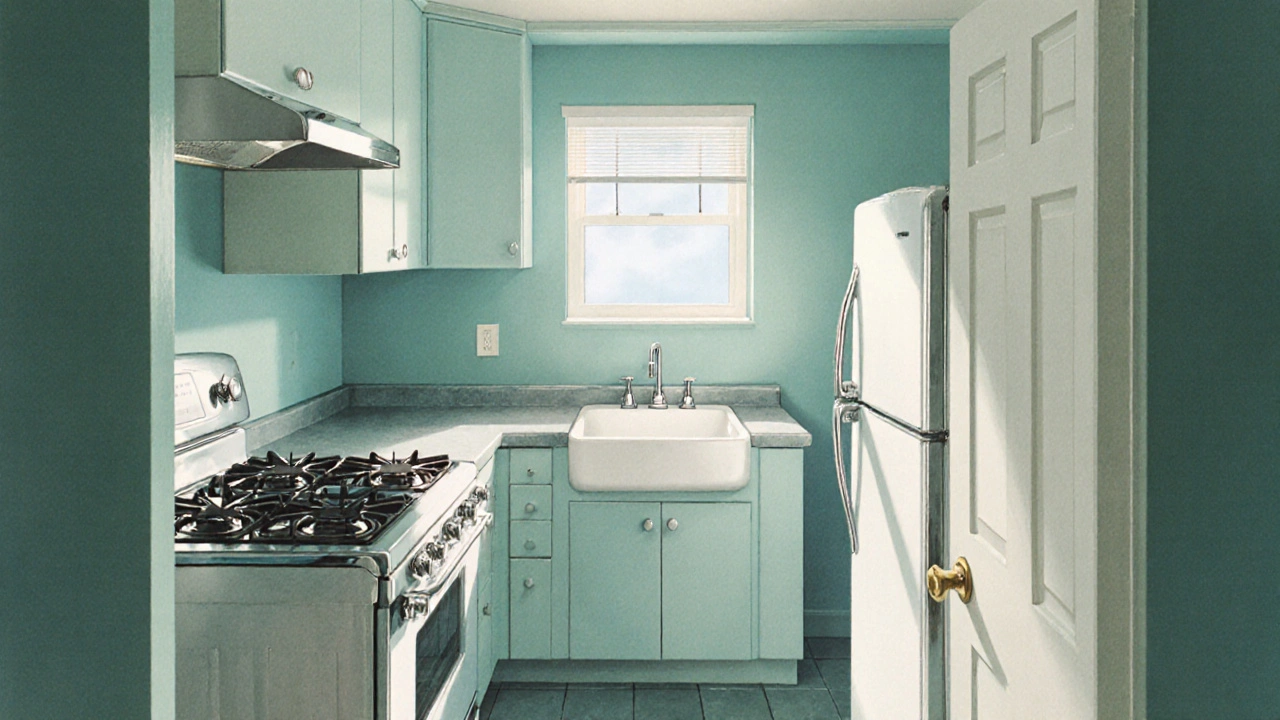
If your kitchen feels like a showroom from 2018, it’s time to rethink. The goal isn’t to copy the latest Instagram post. It’s to create a space that feels good to live in-for years, not just months.
Final Thought: Kitchens Are Personal
There’s no one-size-fits-all kitchen in 2025. Your kitchen should reflect how you live. If you bake every weekend, prioritize a big oven and a flour drawer. If you entertain often, make sure the island has room for guests. If you hate cleaning, choose low-maintenance surfaces.
The best kitchens don’t shout. They whisper: come in, stay awhile, make yourself at home.
Are dark cabinets hard to keep clean?
Not really. Dark cabinets actually hide fingerprints and smudges better than white ones. The key is using a matte or textured finish-those are easier to wipe down than high-gloss. A microfiber cloth and mild soap are all you need. Avoid abrasive cleaners, which can scratch the surface over time.
What’s the best countertop material for a busy kitchen?
For high use and low maintenance, quartz is still a top pick. But if you want something more unique and natural, soapstone and honed limestone are excellent. They’re softer, so they need occasional oiling, but they don’t stain easily and develop a beautiful patina. Avoid granite if you’re not willing to seal it yearly.
Do I need smart appliances in my kitchen?
No, but they can make life easier. Focus on features that save time or money: a dishwasher that runs during off-peak hours, an oven that preheats automatically, or an induction cooktop that turns off when it detects no pot. Avoid gimmicks like fridges that send you grocery lists. Most people don’t use them.
How much should I budget for a 2025-style kitchen remodel?
A mid-range remodel in Canada averages $30,000-$50,000. That includes cabinets, countertops, appliances, and labor. High-end, fully custom kitchens with integrated tech and natural stone can hit $80,000+. But you can get 80% of the look for less-choose one or two premium features (like a statement island or panel-ready fridge) and keep the rest practical.
Can I mix wood and metal in my kitchen?
Absolutely. In fact, it’s one of the most popular combinations in 2025. Warm wood cabinets with brass or copper hardware create a cozy, timeless feel. Pair them with a matte black faucet or light fixture for contrast. The trick is balance: don’t use more than two metals, and make sure they’re in the same tone family-warm or cool.
Still unsure where to start? Look at your daily routine. What frustrates you in your current kitchen? That’s your starting point. The best kitchen isn’t the prettiest-it’s the one that makes your life easier, every single day.

Nathan Jimerson
December 7, 2025 AT 19:40Dark cabinets are a game changer. I switched mine last year and never looked back. No more fingerprint smudges, and they make the whole room feel cozier. Pair them with brass hardware and warm lighting - it’s like a hug for your kitchen.
Eric Etienne
December 8, 2025 AT 04:07Integrated appliances? More like integrated price tags. If you think a $2,500 panel-ready fridge is cheap, you haven’t seen the rest of the bill. This whole trend is just luxury marketing dressed up as practicality.
Amanda Ablan
December 8, 2025 AT 19:31Eric, I get where you’re coming from - remodeling is expensive. But you don’t have to go full custom. Pick one statement piece - maybe the island or the backsplash - and keep the rest simple. That’s how you get the look without the debt.
Gina Grub
December 9, 2025 AT 05:23Smart kitchens are a joke. My oven doesn’t need to know my calendar. I don’t want my fridge texting me about milk. I want it to stay cold. The whole ‘learning your habits’ thing is just surveillance with a side of garlic bread.
Janiss McCamish
December 10, 2025 AT 19:33Soapstone is underrated. My countertop’s been in for three years, and it’s only gotten better. Darker, smoother, feels alive. Just oil it once a year and stop using it as a cutting board.
Meredith Howard
December 12, 2025 AT 05:20Lighting layers are non negotiable. One overhead light is a crime against humanity. Ambient task accent. Three layers. No exceptions. If your kitchen doesn’t have this you are not living you are existing.
Sandy Pan
December 12, 2025 AT 10:14There’s something poetic about a kitchen that ages with you. The scratches on the soapstone, the patina on the brass, the way the light hits the cabinets at 5 p.m. in winter - it’s not design, it’s memory-making. We treat our homes like disposable products when they should be living things.
2025 isn’t about trends. It’s about choosing what lasts - not just in material, but in meaning.
Pamela Tanner
December 12, 2025 AT 12:55Open shelving done right is elegant. Cluttered shelves are a visual headache. But one or two curated shelves with copper pots and hand-thrown mugs? That’s curation, not chaos. It’s the difference between a museum and a garage sale.
Yashwanth Gouravajjula
December 13, 2025 AT 04:07In India, we’ve always used stone counters. Cool to touch, lasts generations. No need for fancy tech. Just good design and respect for materials.
Kevin Hagerty
December 14, 2025 AT 23:09So now we’re supposed to feel guilty for liking white kitchens? Wow. Next they’ll tell me my socks don’t match my personality. Can we just let people have what they like without turning kitchens into therapy sessions?
Dylan Rodriquez
December 15, 2025 AT 23:27Kevin, I hear you. But maybe the issue isn’t that people care too much - it’s that we’ve forgotten kitchens are meant to be lived in. Not Instagrammed. Not perfected. Not judged. Just used. Warm. Messy. Real. That’s the real trend: kitchens that forgive you for being human.
Dark cabinets hide fingerprints. But they also hold memories. The splatter from Tuesday’s pasta. The flour dust from your kid’s first cake. That’s not design. That’s love.
Steven Hanton
December 17, 2025 AT 19:24If you’re remodeling, start by asking: What do I do every single day in this space? That’s your blueprint. Not Pinterest. Not trends. Your actual life. Maybe you need more counter space. Or a hidden trash bin. Or a spot to sit with coffee while the rain hits the window. That’s your 2025 kitchen.
Richard H
December 19, 2025 AT 15:55Bring back stainless steel. Everything else is just fancy plastic pretending to be luxury. Real kitchens don’t need to whisper. They roar.