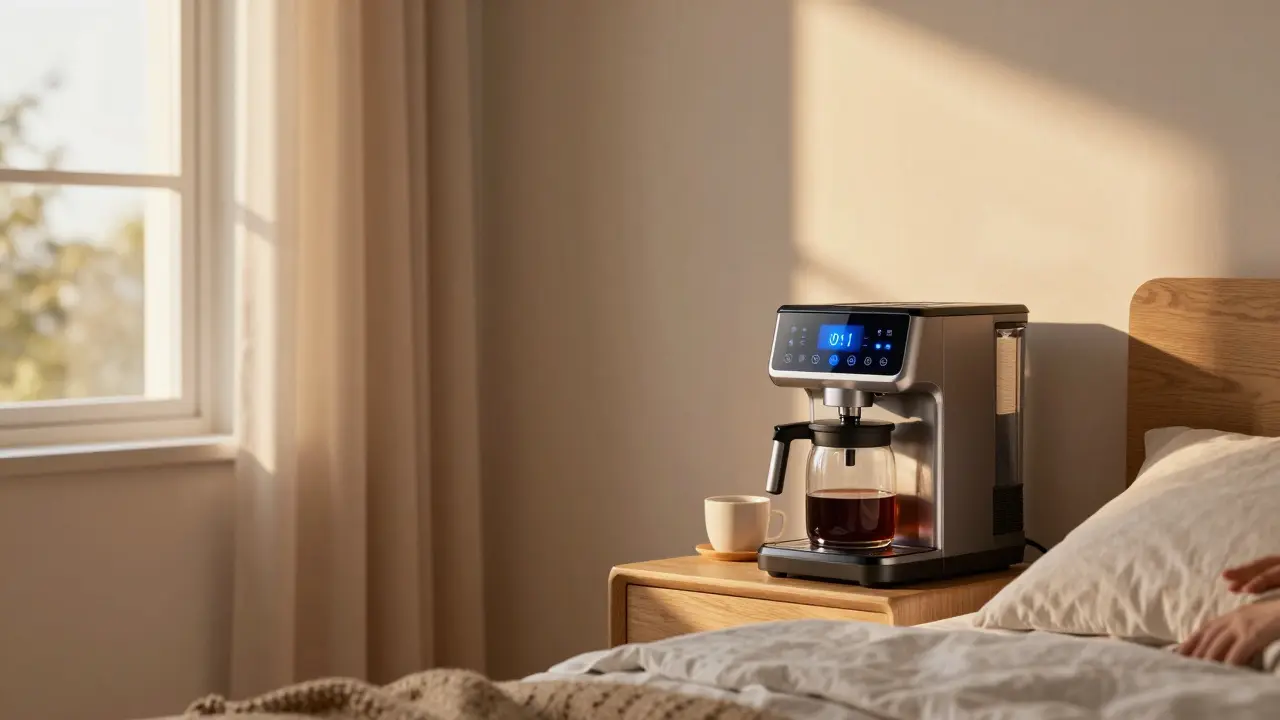
Think about this: you wake up in the morning, and your lights turn on slowly, just like sunrise. Your coffee starts brewing before you even get out of bed. The thermostat adjusts itself because it knows you’re awake. No buttons pressed. No remote control. Just your house responding to you. That’s not science fiction. That’s a smart home product at work.
What Exactly Is a Smart Home Product?
A smart home product is any device that connects to your home network and can be controlled remotely - usually through a phone app, voice assistant, or automated rules. These aren’t just fancy gadgets. They’re designed to make life easier, safer, or more efficient by doing things automatically or letting you manage them from anywhere.
Unlike regular appliances, smart home products communicate. They talk to each other. They learn your habits. They update themselves. A smart light bulb isn’t just something you turn on. It can change color, dim at sunset, or blink if your front door opens while you’re away.
The core idea? Smart home product means something that does more than its name suggests. A thermostat doesn’t just read temperature - it learns when you leave and when you come back. A door lock doesn’t just unlock - it sends you a notification when someone enters, even if it’s your kid after school.
How Smart Home Products Work
These devices don’t work alone. They need three things:
- A way to connect (Wi-Fi, Bluetooth, Zigbee, or Z-Wave)
- A way to control (app, voice command, or automation rule)
- A power source (battery, plug-in, or hardwired)
Most smart home products today use Wi-Fi because it’s already in your home. But some, like door sensors or motion detectors, use lower-power networks like Zigbee or Z-Wave. These are more reliable for battery-powered devices and don’t slow down your internet.
Control usually happens through apps like Google Home, Apple Home, or Amazon Alexa. But you don’t need to use your phone every time. You can say, “Hey Google, turn off the living room lights,” or set a rule like, “If it’s after 10 p.m. and the front door opens, turn on the hallway light.”
Common Types of Smart Home Products
There are dozens of smart devices out there. Here are the most common ones you’ll actually see in homes:
- Smart thermostats - Like Nest or Ecobee. They learn your schedule and save energy by lowering heat or AC when you’re not home.
- Smart locks - Lock and unlock your door with your phone. Some even give temporary digital keys to guests.
- Smart lights - Philips Hue, LIFX, or budget brands. Change color, set schedules, or sync with music.
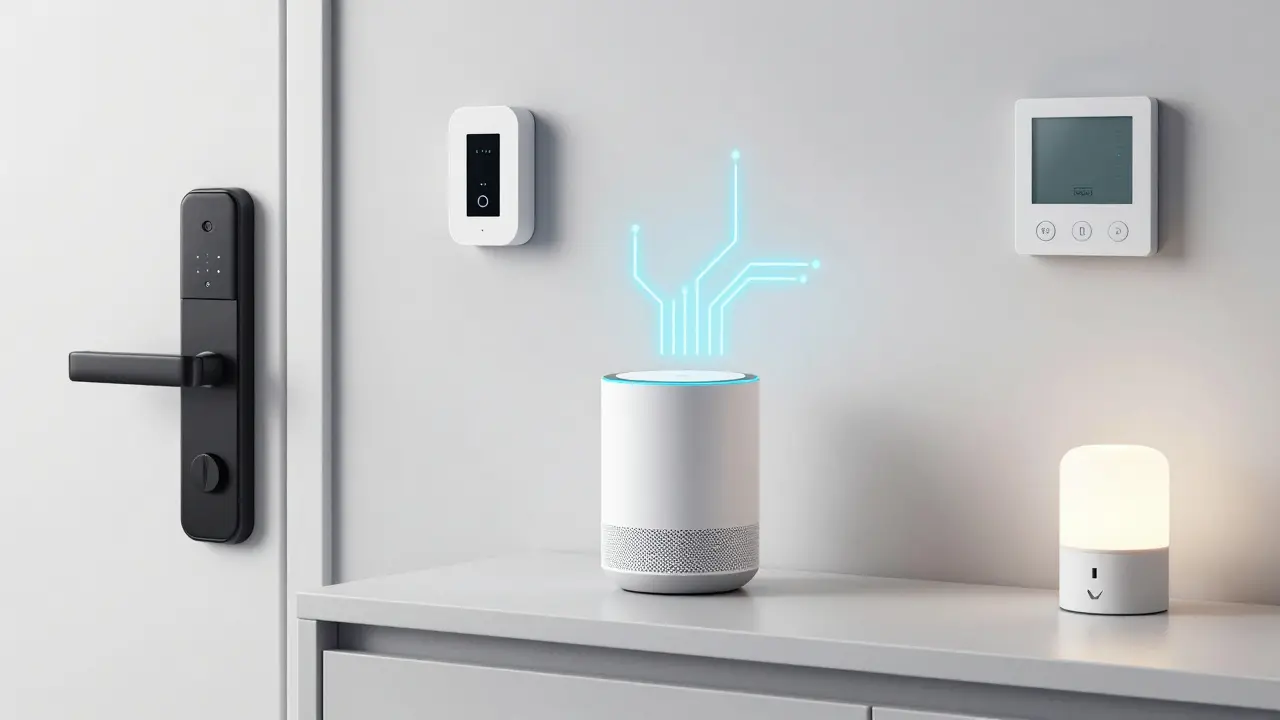
- Smart speakers - Amazon Echo, Google Nest Hub. They’re the brain of your smart home. You talk to them, and they talk to other devices.
- Smart cameras - Ring, Arlo, or Eufy. See who’s at the door, get alerts if motion is detected, and record video.
- Smart plugs - Turn any lamp or appliance into a smart device. Control it remotely, set timers, or track energy use.
- Smart sensors - Door/window sensors, water leak detectors, motion sensors. They alert you before something goes wrong.
Some products combine multiple functions. A smart hub like Samsung SmartThings can control lights, locks, and sensors all in one place. Others, like a smart refrigerator, can tell you when you’re low on milk - and even order more.
Why People Buy Smart Home Products
People don’t buy these just because they’re cool. They buy them because they solve real problems:
- Security - Knowing if someone enters your house while you’re on vacation.
- Convenience - Not fumbling for light switches in the dark.
- Saving money - Smart thermostats cut heating bills by up to 20% in cold climates like Burlington.
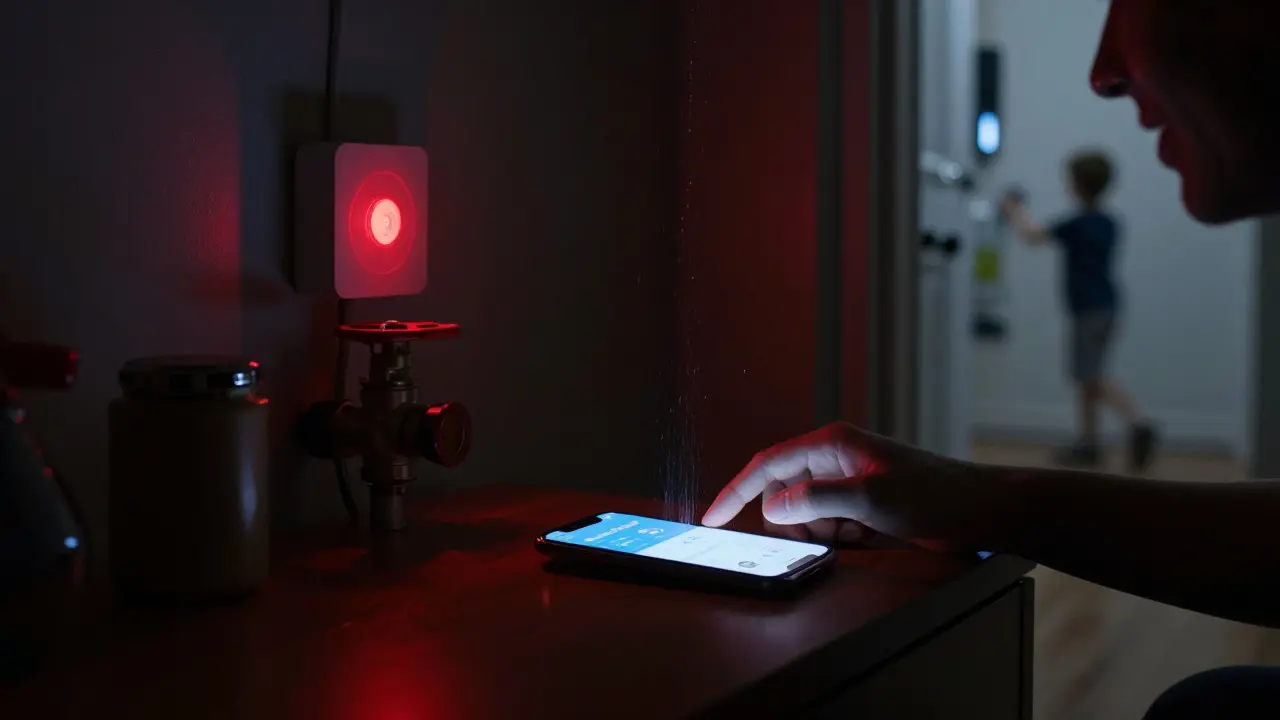
- Peace of mind - Getting an alert if your basement floods at 3 a.m.
One homeowner in Ontario told me her water leak sensor saved her $12,000 in damage. It beeped at 2 a.m., sent her a phone alert, and she shut off the main valve before the ceiling collapsed.
What Smart Home Products Are NOT
Not every gadget with an app is a smart home product. A Bluetooth speaker you control from your phone? That’s just a Bluetooth speaker. A TV with Wi-Fi? It’s a smart TV - but unless it talks to your other devices, it’s not part of your smart home system.
True smart home products work together. They respond to triggers. They adapt. They’re part of a network. A smart plug that turns on at 7 a.m. every day? That’s smart. A lamp that only works when you tap its button? That’s just a lamp.
Getting Started With Smart Home Products
You don’t need to buy everything at once. Start small:
- Get a smart speaker (like an Echo Dot or Nest Mini). It’s your control center.
- Add a smart plug. Plug in a lamp or fan and control it from your phone.
- Install a smart thermostat. Let it learn your routine.
- Add a door sensor or camera if security is a concern.
Most brands work with Alexa, Google Assistant, or Apple HomeKit. Stick to one ecosystem to avoid confusion. Mixing Apple and Amazon devices can lead to delays or broken automations.
Common Mistakes People Make
Many people buy smart devices and then forget about them. Here’s what goes wrong:
- Buying too many at once - You end up with 10 apps and no idea how to use them.
- Ignoring security - Weak passwords on smart cameras let hackers into your home feed.
- Not updating firmware - Outdated software creates security holes.
- Expecting magic - Smart devices don’t read your mind. You still have to set rules and schedules.
One person I talked to bought a $400 smart lighting system, then never used the color-changing feature. “I just wanted lights,” she said. “I didn’t need rainbows.” Start with function, not flash.
The Future of Smart Home Products
Today’s smart home is just the beginning. In the next few years, we’ll see:
- Devices that predict your needs - like a fridge that knows you’re out of eggs before you do.
- More voice control without needing a speaker - your TV, microwave, or even your mirror might listen.
- Self-healing networks - if one device fails, others reroute commands automatically.
- Better privacy controls - companies are finally listening to complaints about always-listening mics.
Smart home products won’t replace people. They’ll just make routine tasks disappear. The goal isn’t a house that thinks. It’s a house that gets out of your way.
Are smart home products worth the cost?
Yes, if you start small and focus on what you actually need. A smart thermostat can pay for itself in energy savings within a year. A smart lock saves you from carrying keys. A water leak sensor can prevent thousands in damage. But buying every device on the market? That’s just expensive clutter. Pick one problem to solve, then add more as you need them.
Do smart home products need Wi-Fi?
Most do, but not all. Wi-Fi is common because it’s easy to set up. But devices like door sensors, motion detectors, and some thermostats use low-power networks like Zigbee or Z-Wave. These connect to a hub, which then links to your Wi-Fi. They’re more reliable for battery-powered gear and don’t slow down your internet. If your Wi-Fi goes out, some smart devices still work locally - like a smart lock that still opens with a code.
Can I use smart home products without a phone?
Absolutely. You can control them with voice commands using Alexa, Google Assistant, or Siri. You can also set up automations that trigger without any input - like turning on lights at sunset or locking doors at midnight. Some devices even have physical buttons or remotes. A phone is convenient, but it’s not required.
Are smart home products safe from hackers?
They can be, if you take basic steps. Use strong, unique passwords. Turn on two-factor authentication. Keep firmware updated. Avoid cheap, no-name brands - they often skip security updates. Never use the default password. A hacked smart camera is scary, but it’s preventable. Stick to well-known brands like Nest, Ring, or Eufy. They have teams that monitor for threats.
What’s the best smart home product for beginners?
Start with a smart speaker and a smart plug. The speaker gives you voice control. The plug turns any lamp, fan, or coffee maker into a smart device. For under $50, you can control your lights and coffee from your phone or voice. Once you’re comfortable, add a smart thermostat or door sensor. Don’t rush. Build one piece at a time.


Sarah McWhirter
March 19, 2026 AT 14:59So let me get this straight - your fridge is gonna order milk before you even realize you’re out? 🤔
What’s next? Your toaster starts judging your life choices? "Sarah, you’ve had toast three days in a row. Are you okay?"
And don’t get me started on the "smart" cameras. You know who else watches you 24/7? The government. The corporations. Your ex. The toaster.
One day, your thermostat’s gonna whisper, "You’re lonely. Want me to call someone?"
And we’ll all just nod like, "Yes, please. My soul is a Wi-Fi dead zone."
At this point, I’m just waiting for my shower to start reciting Nietzsche while I wash my hair.
Smart home? More like *smart surveillance* with a side of serotonin.
But hey, if my coffee knows I’m awake before I do… I guess I’m okay with being watched.
Just don’t let it start writing my poems. I’ve got dignity left.
And if it ever tries to change my playlist? I’m unplugging the whole damn house.
And yes, I’m already paranoid about the smart light bulb that blinked three times last Tuesday. Was it a message? A warning? Or just a glitch?
…I’m sleeping with the lights on now. Just in case.
Ananya Sharma
March 20, 2026 AT 06:21Let’s be brutally honest here - the entire smart home movement is a capitalist illusion dressed up as convenience. You think you’re saving money with a "smart" thermostat? Please. The real savings go to the manufacturers who sell you $200 devices that break in 18 months and then force you into a subscription ecosystem just to keep your lights from turning into a disco party.
And don’t even get me started on the energy consumption of these "always listening" devices. Every smart speaker, every camera, every sensor - they’re all draining power 24/7 just to sit there and wait for you to say "Hey Google" like a Pavlovian dog. The irony? You’re trying to save on your electric bill, but you’re now running a mini data center in your living room.
And the security claims? Hilarious. You trust a company that’s never patched a vulnerability in three years? That’s not smart - that’s suicidal. And don’t tell me about "well-known brands." Ring? Owned by Amazon. Nest? Owned by Google. Who do you think owns your data after you hand it over to them? Your privacy? Gone. Your autonomy? Erased. Your life? Now a marketing dataset.
Meanwhile, in rural India, people are still using manual switches and wind-up alarm clocks. And they’re happier. Because they’re not constantly being monitored, manipulated, and monetized.
Stop buying into this. Build a home that works for you, not for Silicon Valley’s quarterly earnings report.
Kenny Stockman
March 22, 2026 AT 01:57I started with just a smart plug and an Echo Dot - $50 total. Now I’ve got lights that turn on when I walk in, my coffee brewing before I even stretch, and my dog doesn’t bark at 3 a.m. anymore because the motion sensor tells her it’s just the cat.
It’s not magic. It’s just… nice.
Don’t overthink it. If you don’t need color-changing bulbs? Don’t buy them. Just get the stuff that actually solves a tiny annoyance in your life.
My sister bought a $600 lighting system and now she’s got 7 apps open on her phone. I’ve got one. I say "turn off the kitchen" and it’s done.
That’s the goal. Less hassle. Not more stuff.
And yeah, security matters - use a good password, update when it asks, and don’t plug your smart fridge into your kids’ gaming network. Simple stuff.
It’s not about being techy. It’s about being lazy in a smart way.
Antonio Hunter
March 23, 2026 AT 13:57There’s something quietly profound about how these devices, when used thoughtfully, can restore a sense of agency in an increasingly chaotic world.
Consider the elderly homeowner who, after a fall, was able to remain independent because her smart door sensor alerted her daughter when she didn’t move for four hours - not because she was in danger, but because her routine had changed. That’s not just technology. That’s dignity.
Or the single parent who uses automated lighting and voice-controlled thermostats to create a stable, predictable environment for their child with anxiety - where the lights dim slowly at night, and the room warms just before they wake up. These aren’t gadgets. They’re emotional supports.
And yes, there’s a commercial layer to it all. But reducing this to "corporate surveillance" ignores the real human impact - the quiet moments where tech doesn’t intrude, it just… holds space.
Start small. Choose one need. Let the device serve you, not the other way around.
And if you’re worried about privacy? Use local automations. Disable cloud features. Turn off voice recording. You still get the benefit without the baggage.
Technology isn’t the problem. Disconnection from intention is.
Paritosh Bhagat
March 24, 2026 AT 13:52Oh wow, another article about "smart" homes like it’s some revolutionary breakthrough. Let me guess - you’ve never heard of the 1980s home automation systems that used X10 protocol? Or the 90s Wi-Fi-enabled thermostats that were already doing what Nest "invented"?
And you say "smart plugs" are beginner-friendly? Bro, I’ve had a $12 plug from Walmart that turns on at 7 a.m. since 2017. It doesn’t need an app. It doesn’t need Wi-Fi. It just… works.
Meanwhile, you people are paying $80 for a plug that requires a 12-step authentication process just to turn on a lamp.
And don’t get me started on "smart locks." What’s next? A lock that sends you a notification when your dog pees on the door? "Alert: Your pet has breached perimeter security."
Also, why do we assume every device needs to be "connected"? My toaster doesn’t need to tweet. My kettle doesn’t need to text me.
Stop marketing convenience as innovation. Most of this is just overpriced plastic with a blinking LED.
And yes, I’m still using manual switches. And I’m still alive. And I’m still not being hacked. #LowTechLife
Ben De Keersmaecker
March 24, 2026 AT 15:32The distinction between "smart TV" and "smart home product" is critical - and often misunderstood.
A smart TV is a standalone device with network connectivity. A smart home product is a node in an interconnected system that responds to environmental triggers, user behavior, and inter-device communication.
For example, a Philips Hue bulb that changes color based on sunset time is a smart home product. A TV that streams Netflix? Not unless it adjusts volume based on ambient noise or dims when you leave the room.
The key is interoperability and automation, not connectivity alone.
Also, the term "smart" is increasingly meaningless. It’s become a marketing buzzword - like "natural" or "premium."
True intelligence in home systems lies in predictive behavior, not remote control.
And yes, Zigbee and Z-Wave are superior for mesh networks due to lower latency and power efficiency - Wi-Fi is overkill for motion sensors.
Finally, firmware updates aren’t optional. They’re a non-negotiable component of secure operation. If your device doesn’t auto-update, it’s not smart - it’s a vulnerability.
Aaron Elliott
March 25, 2026 AT 14:04While the article presents a superficially coherent narrative regarding the functional utility of smart home products, it fundamentally fails to engage with the epistemological implications of their deployment within domestic spaces.
One must interrogate the ontological shift from human agency to algorithmic governance. The notion that a thermostat "learns" one’s habits is not an act of convenience - it is an act of behavioral surveillance, normalized under the guise of efficiency.
Furthermore, the uncritical celebration of automation as a panacea for inconvenience obscures the erosion of tactile, embodied domestic rituals - the deliberate act of rising, walking to the thermostat, adjusting the temperature - these are not inefficiencies to be eliminated, but human acts that confer meaning.
And the claim that smart devices "save money"? A fallacy. The cost of data collection, cloud infrastructure, and proprietary ecosystems far exceeds any marginal utility gained.
Moreover, the assertion that "one can start small" is disingenuous; the architecture of these systems is designed to entrench dependency - once integrated, disengagement is costly and technically fraught.
In sum: this is not innovation. It is colonization - of the home, of the body, of the routine.
And we are all complicit.
Chris Heffron
March 26, 2026 AT 23:50Just wanted to say - your smart plug tip is gold 😊
Got one last month, hooked up my space heater. Now it turns off at midnight automatically. No more tripping the breaker at 2 a.m. 🙌
Also, my cat thinks it’s a toy. She paws at it. It’s cute.
PS: I still use my phone to turn stuff on, but now I don’t have to get up. Win-win 😄