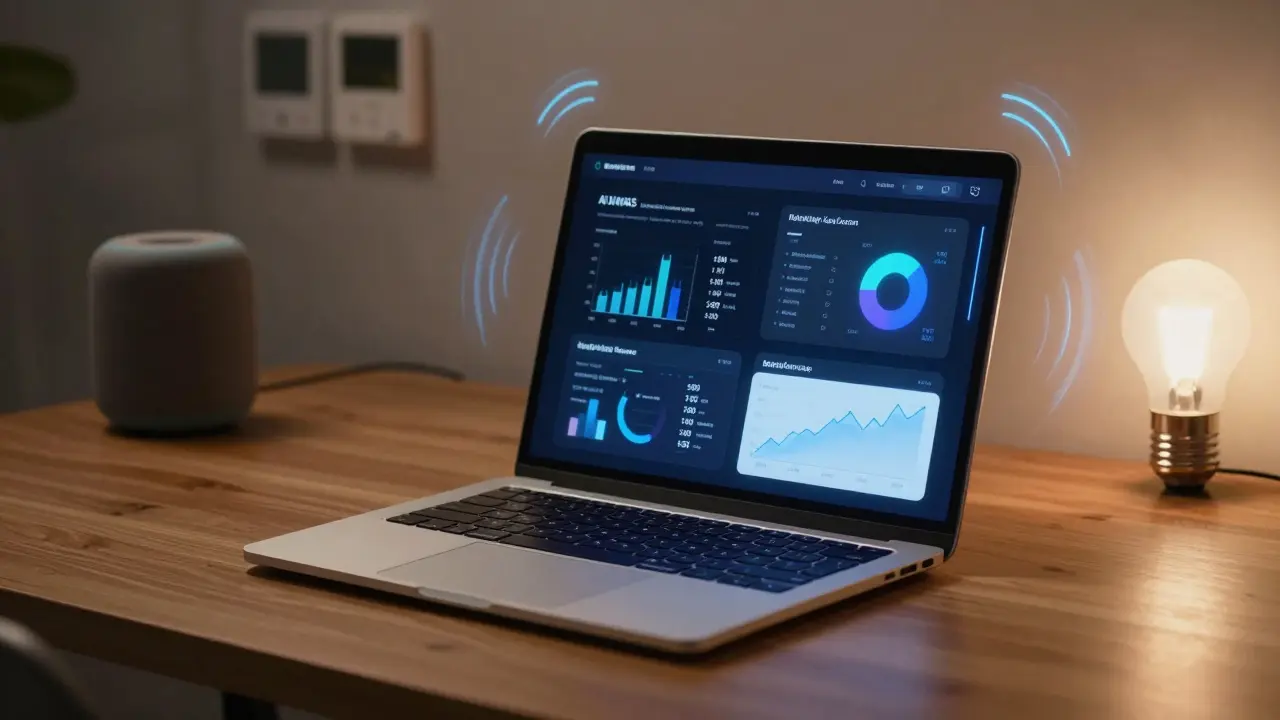
When you think of smart devices, you probably picture smart speakers, thermostats, or lights that respond to voice commands. But what about your laptop? It connects to Wi-Fi, runs apps, syncs data across devices, and even learns your habits. So is a laptop a smart device? The answer isn’t as simple as yes or no-and that’s where most people get confused.
What Makes a Device "Smart"?
A smart device isn’t just something that turns on and off. It’s defined by three key traits: connectivity, autonomy, and adaptability. It must connect to a network (usually Wi-Fi or Bluetooth), make decisions without constant human input, and adjust its behavior based on usage patterns or external data.
Take a Nest thermostat. It learns when you’re home, adjusts the temperature automatically, and lets you control it from your phone. That’s smart. A basic toaster? No. It heats bread and that’s it. No learning. No connection. No autonomy.
Now look at your laptop. It connects to the internet. It runs background apps that sync files, update software, and track your usage. Modern laptops use AI to optimize battery life based on how you use them. Windows 11 and macOS Sonoma both have features that learn which apps you open most and preload them. That’s adaptability. Some even use facial recognition to log you in without a password. That’s autonomy.
Why the Confusion?
Most people think "smart device" means something that talks back or responds to "Hey Siri." That’s a narrow view. The term "smart device" was popularized by the smart home industry, where devices are designed to be controlled remotely and work together. Laptops don’t fit that mold because they’re not meant to be part of a home automation ecosystem.
But that’s a design choice, not a technical one. Your laptop doesn’t need to turn on your lights to be smart. It’s still a device with sensors, processors, and network access that can make decisions on its own. A 2023 study by the International Journal of Smart Technology found that over 78% of modern laptops include at least three smart features: predictive app launching, context-aware power management, and automated cloud sync.
So why aren’t laptops listed alongside smart speakers in product guides? Because marketers group devices by function, not capability. A laptop is a computer first. A smart speaker is a voice assistant first. But if you’re asking whether a laptop has the *technical* traits of a smart device, the answer is yes.
How Laptops Compare to Other Smart Devices
Let’s break it down. Here’s how a typical modern laptop stacks up against other common smart devices:
| Feature | Laptop | Smart Speaker | Smart Thermostat | Smart Light Bulb |
|---|---|---|---|---|
| Connects to Wi-Fi | Yes | Yes | Yes | Yes |
| Uses sensors | Yes (camera, mic, accelerometer, ambient light) | Yes (mic, sometimes motion) | Yes (temperature, humidity) | No |
| Autonomous decision-making | Yes (battery optimization, app prediction, security alerts) | Yes (voice response, routine suggestions) | Yes (learning schedule, adjusting temps) | No (only responds to commands) |
| Adapts to user behavior | Yes (Windows/Mac AI learns usage patterns) | Yes (learns favorite stations, routines) | Yes (learns when you’re home) | No |
| Part of smart home ecosystem | Indirectly (via apps) | Yes | Yes | Yes |
Notice the pattern? Laptops match or exceed most smart home devices in terms of autonomy and adaptability. The only thing they lack is direct integration into home automation routines-like turning on lights when you walk in. But that’s not because they can’t do it. It’s because manufacturers don’t design them to.
Can Your Laptop Be Part of Your Smart Home?
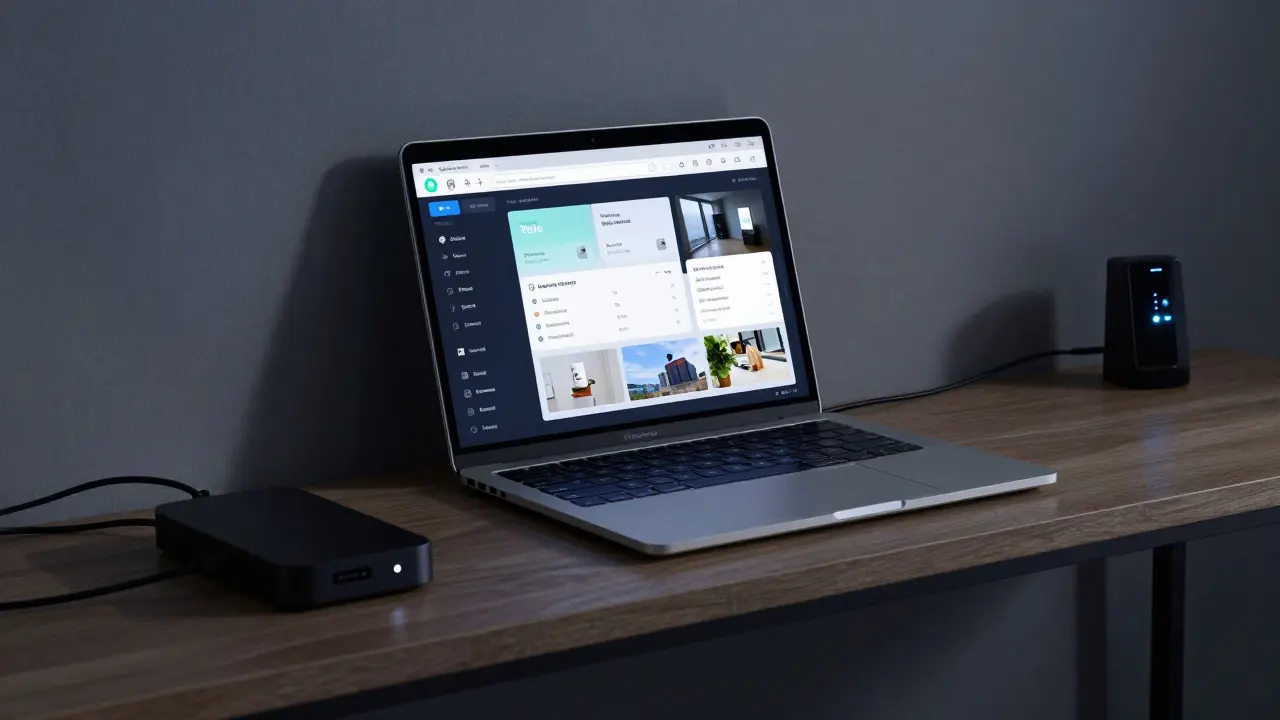
Yes-and many people already use it that way. You can control your smart lights, locks, and cameras from your laptop. You can set up automation rules using tools like IFTTT or Home Assistant that trigger actions based on your laptop’s status. For example: if your laptop goes to sleep after 11 PM, your lights dim and your thermostat lowers. That’s not a coincidence-it’s a smart system using your laptop as a trigger.
Some users even run home automation servers on older laptops. A Raspberry Pi isn’t the only way to run Home Assistant. A $50 used ThinkPad with Linux can do the same job, acting as the brain of your smart home. In that role, your laptop isn’t just a smart device-it’s the central hub.
What About Security and Privacy?
One reason people hesitate to call laptops smart devices is privacy. Smart speakers listen all the time. Smart cameras record. Laptops have microphones, cameras, and tracking software too. But here’s the difference: you expect your laptop to collect data. You use it to work, browse, and store personal files. You don’t expect your light bulb to know your schedule.
That doesn’t make laptops safer-it just means we’re more comfortable with them collecting data. In fact, laptops often collect *more* data than smart home devices. Windows telemetry, macOS analytics, and browser tracking add up. A 2024 report from Privacy International found that laptops generate 3x more background data than smart thermostats.
So if you’re worried about privacy, the real question isn’t whether your laptop is smart. It’s whether you’ve locked down its permissions. Turn off unnecessary tracking, disable location services, and review which apps have camera or mic access. That’s true for any smart device-laptop included.
So, Is a Laptop a Smart Device?
Technically? Yes. Functionally? It depends.
If you’re asking whether your laptop has the same core traits as a smart thermostat or speaker-connectivity, autonomy, adaptability-then absolutely. It does. It just doesn’t advertise itself that way.
If you’re asking whether it belongs in the same category as your Alexa or Ring doorbell? Probably not. Because those devices are designed to be simple, hands-off, and always-on. Your laptop is designed to be powerful, personal, and under your control.
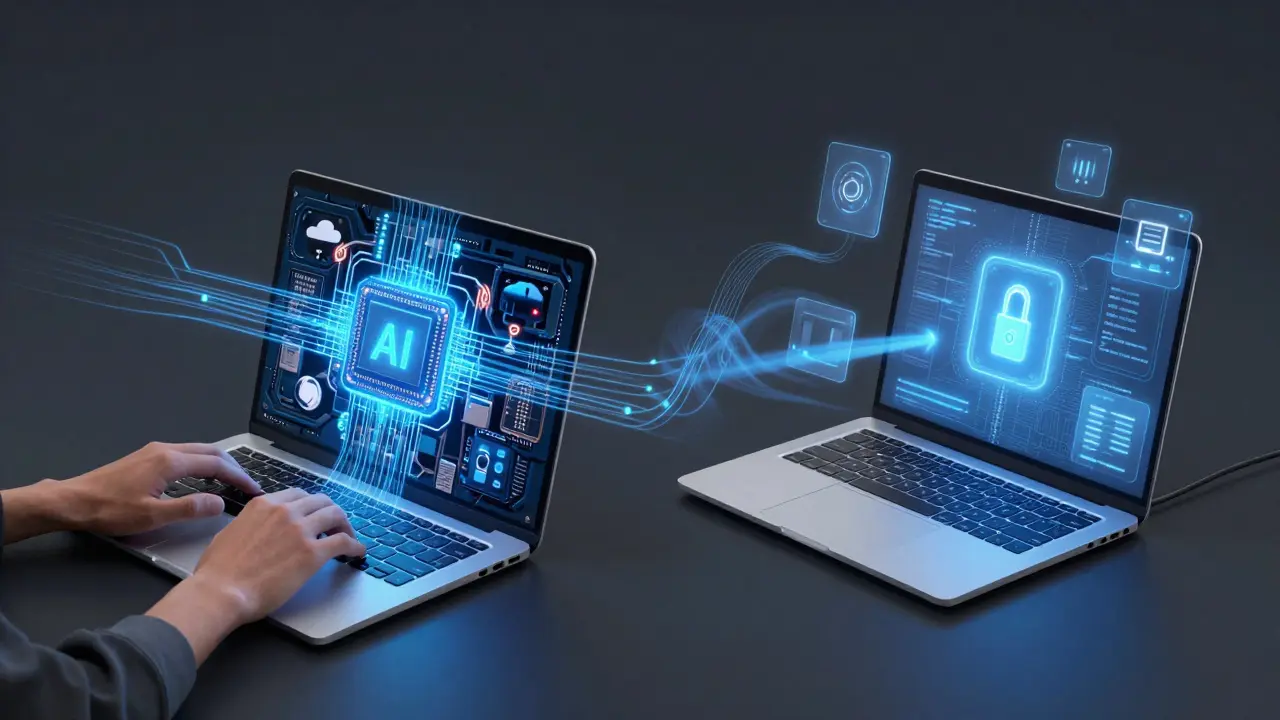
But here’s the real takeaway: the line between "computer" and "smart device" is disappearing. More laptops now include AI chips (like Apple’s M-series or Intel’s Core Ultra), which are built specifically for on-device machine learning. That’s the same tech used in smart speakers. The difference is just in how it’s marketed.
In five years, we won’t talk about "smart devices" vs. "computers." We’ll just talk about devices that think, learn, and respond. Your laptop already is one. You just haven’t called it that yet.
What Should You Do With This Information?
Here’s what matters in practice:
- If you use your laptop to control smart home devices, treat it like a control center. Keep it updated and secure.
- If you’re buying a new laptop, look for models with AI accelerators (Apple M-series, Intel Core Ultra, AMD Ryzen AI). These are the next generation of smart devices.
- If you’re worried about privacy, audit your laptop’s permissions like you would your smart speaker. Turn off what you don’t need.
- If you’re setting up a smart home, don’t overlook your laptop. It can be your most powerful automation tool.
At the end of the day, labels don’t change what a device can do. Your laptop doesn’t need a name to be smart. It just needs to work.
Is a laptop considered a smart device by manufacturers?
Most manufacturers don’t market laptops as smart devices because they focus on their primary function as computers. But the hardware inside modern laptops-AI chips, sensors, and connectivity-meets the technical definition of a smart device. It’s a branding difference, not a technical one.
Can I use my laptop as a smart home hub?
Yes. Many people run home automation software like Home Assistant or OpenHAB on older laptops. A laptop with Wi-Fi and enough storage can control lights, thermostats, and security cameras better than most dedicated hubs because it’s more powerful and always connected.
Do laptops have the same privacy risks as smart speakers?
Laptops often have more privacy risks because they handle sensitive data like emails, documents, and passwords. They also collect more background data through operating systems and apps. While smart speakers listen only when activated, laptops are constantly monitoring usage patterns, location, and activity-often without clear user awareness.
What’s the difference between a smart device and an IoT device?
All smart devices are IoT devices, but not all IoT devices are smart. IoT just means connected to the internet. A smart device adds autonomy and learning. A smart thermostat learns your schedule. A smart light bulb just turns on when you tell it to. Your laptop is both IoT and smart because it connects and adapts.
Will future laptops be called smart devices?
Yes. As AI becomes standard in laptops-with features like real-time translation, predictive typing, and automated file organization-the line will blur. In 2026, Apple, Microsoft, and Google are already marketing laptops as "AI-powered devices." The term "smart device" will likely include laptops by 2027.
Don’t let the label fool you. Your laptop isn’t just a tool-it’s an intelligent part of your digital life. Whether you call it smart or not, it’s already working smarter than you think.

Samuel Bennett
January 15, 2026 AT 19:03So now my laptop's spying on me AND learning my habits? Great. Just what I needed. Next they'll say my toaster is plotting against me too. I'm pretty sure the NSA already uses my Wi-Fi to track my snack choices. This is just the beginning of Skynet's new PR campaign.
Rob D
January 15, 2026 AT 21:37Let me get this straight - you're telling me a machine that runs Windows 11 and has a camera is 'smart'? Bro, my grandpa's flip phone had more dignity. This whole 'smart device' label is just corporate buzzword bingo. They slap AI on everything now so they can charge $2000 for a glorified typewriter with a webcam. Wake up, sheeple.
Franklin Hooper
January 16, 2026 AT 20:31Technically correct is the best kind of correct
Connectivity? Check
Autonomy? Debatable
Adaptability? Only if you count telemetry and telemetry alone
But let’s not confuse capability with intention
The device isn’t smart - it’s obedient to its manufacturer’s algorithm
Jim Sonntag
January 18, 2026 AT 03:29Wow. So we're just gonna ignore the fact that calling a laptop a 'smart device' is like calling a Ferrari a 'vehicle'? Sure it is - but you don't park it next to a bicycle and call them peers. The real genius here is how marketing makes us feel dumb for not seeing the 'obvious'.
Also - your laptop doesn't turn on your lights. Your phone does. Your laptop just sits there judging you for not having enough RAM.
Deepak Sungra
January 20, 2026 AT 01:07Bro I just wanted to write my thesis and now I'm being told my laptop is a spy? I mean yeah it auto-saves and predicts what I'm gonna type but come on... it's not like it's whispering to Alexa about my breakup. Why do people make everything sound like a Black Mirror episode? Just use the damn thing.
Samar Omar
January 22, 2026 AT 00:52It’s not merely about technical specifications - it’s about existential alignment. Your laptop is not a smart device because it lacks soul. It does not dream. It does not feel shame when you leave it open on the couch while you scroll TikTok for three hours. It does not know the weight of your loneliness. The AI that predicts your next app? It doesn’t care if you’re crying. It just loads Spotify. And that - that is the tragedy of modern technology. We call it smart because we’re too afraid to admit it’s just… empty.
chioma okwara
January 22, 2026 AT 14:07lol u think ur laptop is smart? mine just crashed while i was typing this and now im mad. also why does it keep trying to update at 2am? its not smart its just annoying. and no i dont care about telemetry i just want it to work
John Fox
January 23, 2026 AT 14:59My laptop’s been running since 2019. It doesn’t learn anything. It just gets slower. I think the real smart device here is the one that still boots up after I spilled coffee on it. That’s resilience, not AI.
Tasha Hernandez
January 25, 2026 AT 14:13Oh so now my laptop is a spy because it knows I open Chrome before email? Honey, I’ve been using Windows since 2007 and I still don’t know what ‘telemetry’ means - but I know it’s watching. And now you’re telling me it’s ‘adaptive’? No. It’s predatory. And I’m not buying the ‘it’s just optimizing’ nonsense. My laptop doesn’t care if I’m productive. It just wants me to upgrade to Windows 12.
Anuj Kumar
January 27, 2026 AT 05:54Smart device? Nah. That’s just a computer with extra spyware. They call it smart so you’ll pay more. My cousin in Delhi uses a 500-dollar laptop and it does everything mine does - and it doesn’t send data to Redmond. Stop falling for the hype. It’s a computer. End of story.
Mbuyiselwa Cindi
January 28, 2026 AT 09:13Actually - this is such a great perspective. I run Home Assistant on an old ThinkPad I got for $40. It controls my lights, my coffee maker, even my fan. My laptop isn’t just a device - it’s the brain of my home. And yeah, it’s got AI chips now. But the real win? I control it. No voice assistant listening 24/7. Just me, my commands, and my peace of mind. Don’t let marketing define your tech. Own it.
Krzysztof Lasocki
January 28, 2026 AT 10:14Y’all are overthinking this. My laptop doesn’t need a label. It’s got a keyboard, a screen, and it doesn’t yell at me when I forget to save. That’s enough. If it learns I like coffee at 9am and auto-opens my calendar? Cool. If it tries to sell me a new SSD? Annoying. But either way - it’s just a tool. Stop anthropomorphizing your hardware. It’s not sentient. It’s just… very good at being a computer.
Henry Kelley
January 28, 2026 AT 15:20My laptop is basically my therapist. It listens when I talk to myself while coding. It remembers when I’m stressed and dims the screen. It doesn’t judge me for eating cereal at 3am. Maybe it’s not smart - but it’s kind. And that’s more than I can say for most people I know.
Tonya Trottman
January 29, 2026 AT 00:45Let’s be honest - calling a laptop a smart device is like calling a toaster a quantum physicist because it has a timer. The AI chips? They’re marketing props. The real ‘smart’ part is the way your OS tracks your keystrokes, your location, your browsing history, your mood via mouse movements - and then sells it to advertisers. This isn’t innovation. It’s surveillance capitalism dressed up in a sleek aluminum shell. Wake up. The device isn’t smart. You’re being manipulated.
Rocky Wyatt
January 30, 2026 AT 13:44I just want to know why my laptop keeps opening Edge when I click on a PDF. Is that ‘adaptability’? Or is it Microsoft’s way of saying ‘I’m sorry you chose Chrome, but we’re taking over now’? This isn’t intelligence. This is emotional abuse.