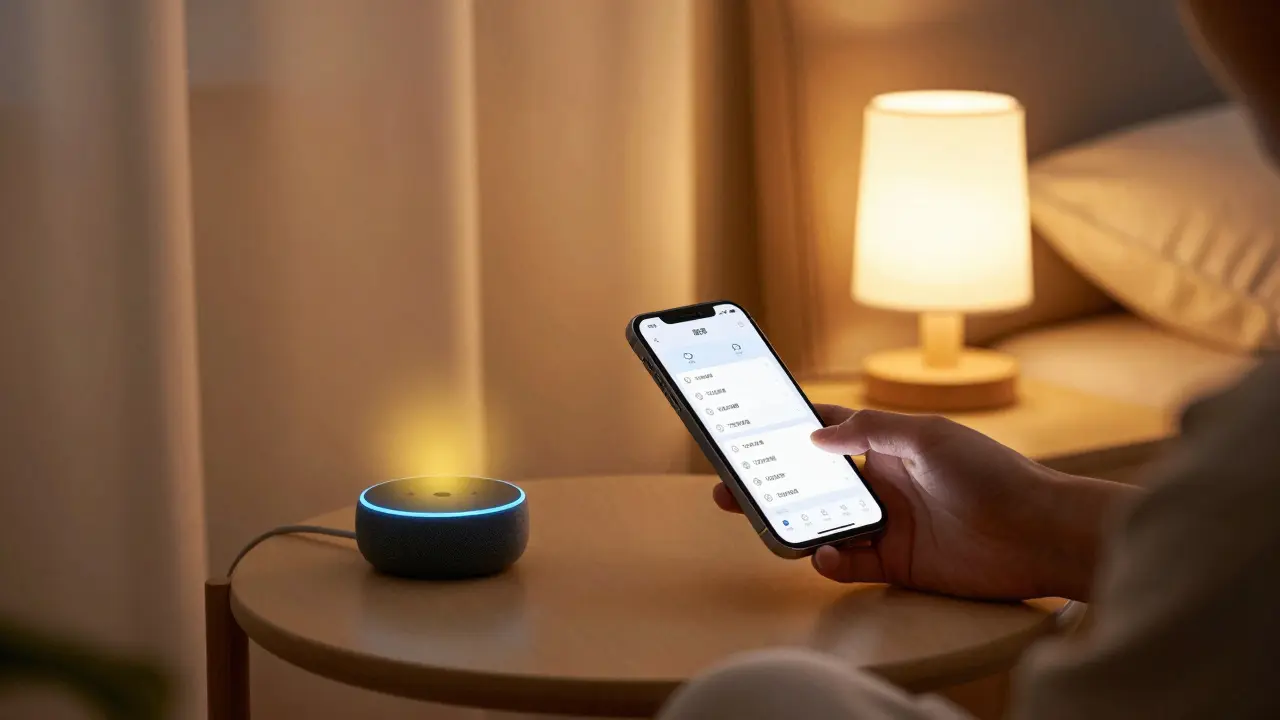
Starting a smart home doesn’t mean buying every gadget on the shelf. It means picking the right tools that actually make your life easier-without breaking the bank. In 2026, you can build a functional smart home for under $500, or go all-in for $5,000 and beyond. The price depends on what you want it to do, not how many lights you can control remotely.
What’s the bare minimum to call it a smart home?
You don’t need a full automation system to start. The cheapest smart home setup begins with a voice assistant and one smart plug. A Google Nest Mini or Amazon Echo Dot costs $30-$50. Plug in a basic smart plug-like the TP-Link Kasa or Wemo-for $15-$25-and suddenly you can turn on a lamp, coffee maker, or space heater with your voice or phone. That’s it. That’s a smart home.
That $50-$75 investment gives you control over one device, automations like "turn on the lamp at sunset," and the ability to add more later. Most people who start here don’t buy more for six months. They test the waters. And that’s smart.
Adding smart lighting: the next step
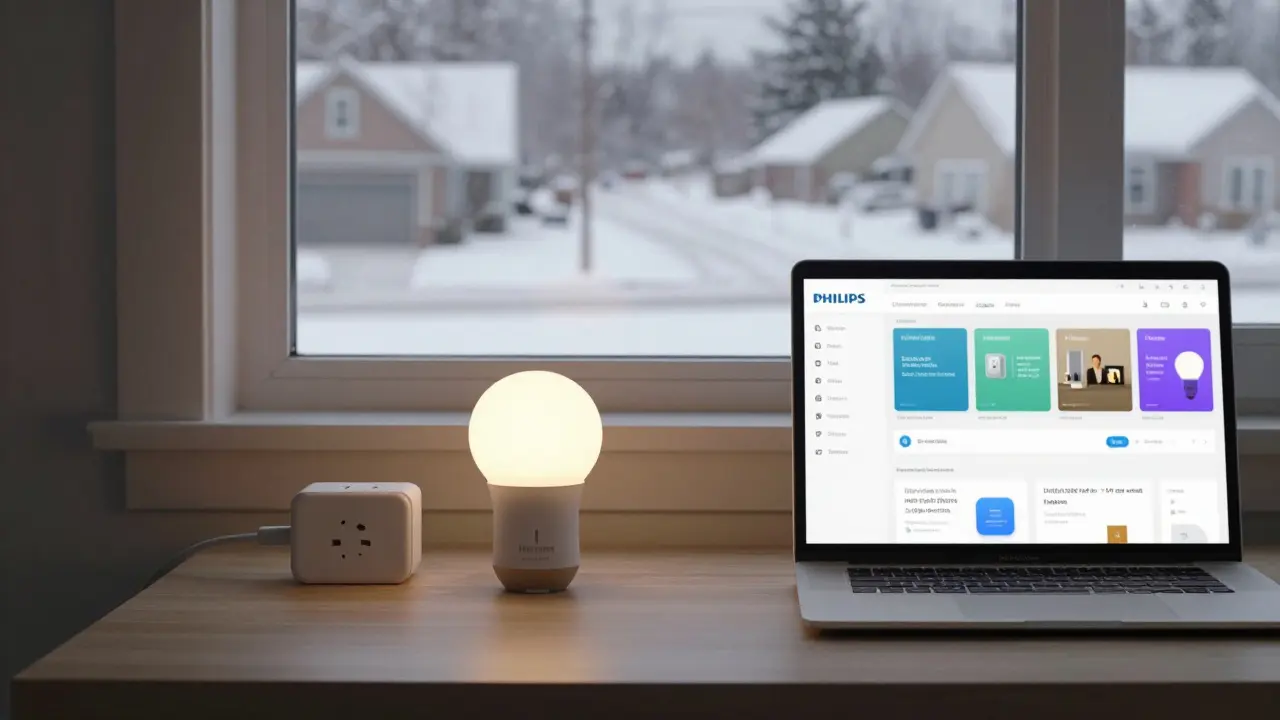
After the plug, most people upgrade to smart bulbs. Philips Hue starts at $15 per bulb, but you need at least three to make a room feel different. A Hue Starter Kit with three bulbs and a bridge costs $130. That’s the entry point. You can skip the bridge if you use Bluetooth bulbs like LIFX Mini ($20 each), but you lose remote control when you’re not home.
Smart bulbs aren’t just for mood lighting. They save energy. A study by the Lawrence Berkeley National Laboratory found smart LEDs reduce lighting energy use by 40-60% compared to old incandescents. Over five years, that adds up to $100-$200 in savings, depending on how often you use them.
Smart thermostats: the real money-saver
If you want real savings, skip the fancy lights and get a smart thermostat. The Nest Thermostat or Ecobee SmartThermostat costs $170-$250. Both learn your schedule and adjust the heat or AC automatically. In Canada, where winters are long, this pays for itself in 6-12 months.
Enbridge Gas reported in 2025 that households using smart thermostats reduced heating bills by an average of 22%. That’s $300-$500 a year saved in Ontario and Quebec. If you’re heating a 2,000 sq ft home in Burlington, that’s not a luxury-it’s a financial no-brainer.
Security: cameras, doorbells, and sensors
Security is where costs climb fast-but you don’t need everything. A Ring Video Doorbell Pro costs $250. It’s wired, has HD video, and lets you talk to visitors. Add a $100 indoor camera like the Arlo Essential and you’ve got basic coverage. For doors and windows, stick with $20-$30 contact sensors from Eufy or Aqara.
Don’t get tricked into buying a $1,000 security system with monthly fees. Most DIY setups work fine without subscriptions. Ring and Arlo offer free cloud storage for 24 hours. If you need longer, you pay $3-$5/month per camera. That’s cheaper than a security guard.

Smart home hubs and ecosystems: pick one and stick with it
Here’s where people mess up. They buy a Philips Hue bulb, a Samsung SmartThings hub, an Apple HomeKit camera, and a Google Nest speaker. Then nothing works together. The fix? Pick one ecosystem and build around it.
Google Home and Amazon Alexa support the most devices. Apple HomeKit is secure but limited. If you own an iPhone, HomeKit is fine. If you use Android or just want flexibility, go with Alexa or Google.
Most hubs are built into voice assistants now. You don’t need a separate SmartThings hub unless you’re using Z-Wave or Zigbee devices. Stick with Wi-Fi gear unless you’re adding 10+ sensors. Simpler is better.
Sample budgets: three realistic paths
Here’s what three different setups look like in early 2026:
- Basic ($400): Echo Dot ($40), smart plug ($20), two smart bulbs ($30), smart thermostat ($180), doorbell camera ($230). Total: $500. You control lights, heat, and see who’s at the door.
- Mid-tier ($1,500): Everything in Basic, plus four more smart bulbs, three window sensors, a smart lock (August, $250), a robot vacuum (Roborock S8, $600), and a hub ($0, using Alexa). Total: $1,500. You automate lights, security, cleaning, and locking.
- Full smart home ($5,000+): Whole-house lighting (20+ Hue bulbs), multi-room audio (Sonos speakers), smart blinds ($1,200), advanced security (8 sensors, 3 cameras), climate zones (smart vents), and a dedicated hub. Add $1,000+ for professional installation. Total: $5,000-$8,000.
Most people stay in the first two tiers. The third is for tech enthusiasts or new builds.
Hidden costs nobody talks about
There’s more than just the price tag.
- Wi-Fi upgrades: If your router is older than 2020, it can’t handle 10+ smart devices. A new mesh system like Eero or TP-Link Deco costs $150-$300.
- Electrical work: Some smart switches need a neutral wire. Older homes in Burlington might need an electrician to run one. That’s $100-$200 per switch.
- Subscriptions: Cloud storage, professional monitoring, or advanced AI features (like facial recognition) cost $3-$10/month per device. Skip these unless you need them.
- Time: Setting up 15 devices takes 8-12 hours. You’ll spend time troubleshooting, updating apps, and re-pairing devices after a power outage.
Don’t forget: smart devices break. A $200 smart lock might fail in three years. Have a backup plan. Most smart locks still have a physical key.
What to avoid when starting out
- Don’t buy "smart" appliances unless you’re replacing them anyway. A smart fridge costs $3,000 and adds little value.
- Avoid proprietary systems that lock you into one brand. If the company shuts down, your device becomes a paperweight.
- Don’t rush into voice control. It’s fun, but unreliable in noisy homes. Use the app first.
- Stay away from cheap no-name brands on Amazon. They often have security flaws or stop getting updates.
Stick with brands that have been around: Philips Hue, Ecobee, Ring, August, Eufy, TP-Link, and LIFX. They update firmware, honor warranties, and work with multiple platforms.
When to upgrade and when to wait
Smart home tech changes fast. In 2026, Matter protocol is standard. It means devices from different brands work together. If you buy a new device now, make sure it says "Matter certified" on the box.
Don’t wait for the "perfect" device. The smart home isn’t about having the latest. It’s about consistency. Buy one smart bulb this month. Add a thermostat next. Build slowly. Your wallet-and your sanity-will thank you.
Final thought: It’s not about gadgets. It’s about habits.
The real value of a smart home isn’t in the tech. It’s in the routines you build. Waking up to lights that turn on slowly. Coming home to a warm house. Locking the door without fumbling for keys. These small things add up to less stress, more comfort, and real savings.
You don’t need a smart home. You need a smarter life. Start small. Stay simple. Expand only when it makes sense.
What’s the cheapest way to start a smart home?
The cheapest way is a $30 voice assistant like an Amazon Echo Dot and a $20 smart plug. That lets you control one device with your voice or phone. You can add a $15 smart bulb later. Total under $75.
Do I need a hub for a smart home?
No, not for most people. Voice assistants like Alexa and Google Assistant act as hubs. You only need a separate hub if you’re using Z-Wave or Zigbee devices, which are common in advanced setups. For beginners, Wi-Fi devices are simpler and cheaper.
Is a smart thermostat worth it in Canada?
Yes. In cold climates like Burlington, a smart thermostat can cut heating bills by 20-25% annually. That’s $300-$500 saved per year. Most pay for themselves in under a year.
Should I buy smart lights or smart switches?
Smart switches are better if you want to keep your existing bulbs-they’re cheaper long-term and more reliable. Smart bulbs are good if you want color-changing lights or don’t want to touch your wiring. For most, switches are the smarter choice.
How much should I budget for a full smart home?
A full smart home with lighting, security, climate control, and automation can cost $5,000-$8,000. But most people don’t need this. A solid setup with core devices costs $1,000-$1,800 and covers 90% of benefits.
Are smart home devices secure?
They can be, if you choose wisely. Stick with well-known brands that update firmware regularly. Avoid unknown brands. Use strong passwords, enable two-factor authentication, and keep your Wi-Fi network separate from guest devices. Most hacks happen because people use default passwords.

Shivam Mogha
January 17, 2026 AT 14:29Start with an Echo Dot and a smart plug. Done. $50 and you're smart.
mani kandan
January 18, 2026 AT 20:00There's something quietly poetic about turning on a lamp with your voice while sipping chai at 2 a.m. - it’s not about automation, it’s about ritual. The real luxury isn't the tech, it’s the quiet confidence that your home responds to you, not the other way around. I started with a $20 plug and now I’ve got my whole apartment humming like a symphony of convenience. No grand gestures needed. Just patience, and a little bit of curiosity.
Rahul Borole
January 19, 2026 AT 19:03It is imperative to emphasize that the foundational principle of smart home deployment lies in interoperability and long-term maintainability. The adoption of Matter-certified devices ensures seamless integration across ecosystems, mitigating vendor lock-in and obsolescence risks. Furthermore, the economic rationale for smart thermostats in temperate climates is empirically validated by energy consumption studies conducted by the Lawrence Berkeley National Laboratory, which demonstrate a mean reduction of 40% in HVAC-related expenditure. It is therefore not merely advisable, but financially prudent, to prioritize this component in any tiered implementation strategy.
Sheetal Srivastava
January 20, 2026 AT 11:15Ugh, you’re all missing the point. If you’re not using Apple HomeKit with Secure Enclave encryption and Thread networking, you’re just living in a 2019 dream. And why are you even talking about TP-Link? Those devices have zero privacy guarantees. My $2,000 Hue setup with 14 synchronized bulbs and a dedicated VLAN is the only way to truly exist in the future. Also, you need a smart mirror. It’s not optional. It’s existential.
Bhavishya Kumar
January 21, 2026 AT 02:36Correction: the article says 'smart plug like the TP-Link Kasa or Wemo' - it should be 'such as' not 'like' when referring to examples. Also, 'you don't need a separate hub unless you're using Z-Wave or Zigbee devices' - missing comma before 'which'. And 'costs $3-$5/month per camera' - should be 'costs $3 to $5 per month per camera'. Grammar matters. Especially when you're giving financial advice.
ujjwal fouzdar
January 21, 2026 AT 10:54Here’s the truth no one wants to admit - we don’t want smart homes. We want to feel like wizards. The moment you say ‘Alexa, turn on the lights’ and they glow like a spell from a Harry Potter book, you’re not optimizing your energy usage - you’re casting a spell on reality. That’s why we buy these things. Not because it’s efficient. Not because it saves money. But because for one fleeting second, you feel like you control the universe. And then the Wi-Fi drops. And you’re just a guy yelling at a box in the dark. But ohhhhh, that one moment? Worth every penny.
Anand Pandit
January 23, 2026 AT 04:26Love this breakdown - so many people get overwhelmed and think they need everything at once. Start with one thing. Just one. Maybe it’s a smart plug for your coffee maker. Wake up to a hot cup without lifting a finger. That’s magic. Then add a bulb. Then maybe a thermostat. You don’t need to go all-in. Just go one step at a time. And if something breaks? It’s okay. You didn’t lose your house. You just lost a gadget. Keep going. You’ve got this.
Reshma Jose
January 23, 2026 AT 21:38Y’all are overthinking this. I got a $35 Echo Dot and a $15 plug. Now my cat’s lamp turns on when I say ‘good morning.’ She doesn’t care about Matter protocol. She just cares that the light’s on. If it works for your cat, it works for you. Stop spending money on things that don’t make you happier. Simple wins.