People aren’t just buying furniture anymore-they’re buying solutions. After years of remote work, smaller homes, and a shift toward mindful living, what’s on the market doesn’t just look good. It has to work hard. If you’re thinking about updating your space, here’s what’s actually selling right now in 2025, based on real sales data, designer trends, and what’s flying off the shelves in stores from Toronto to Texas.
Modular Sofas Are Everywhere
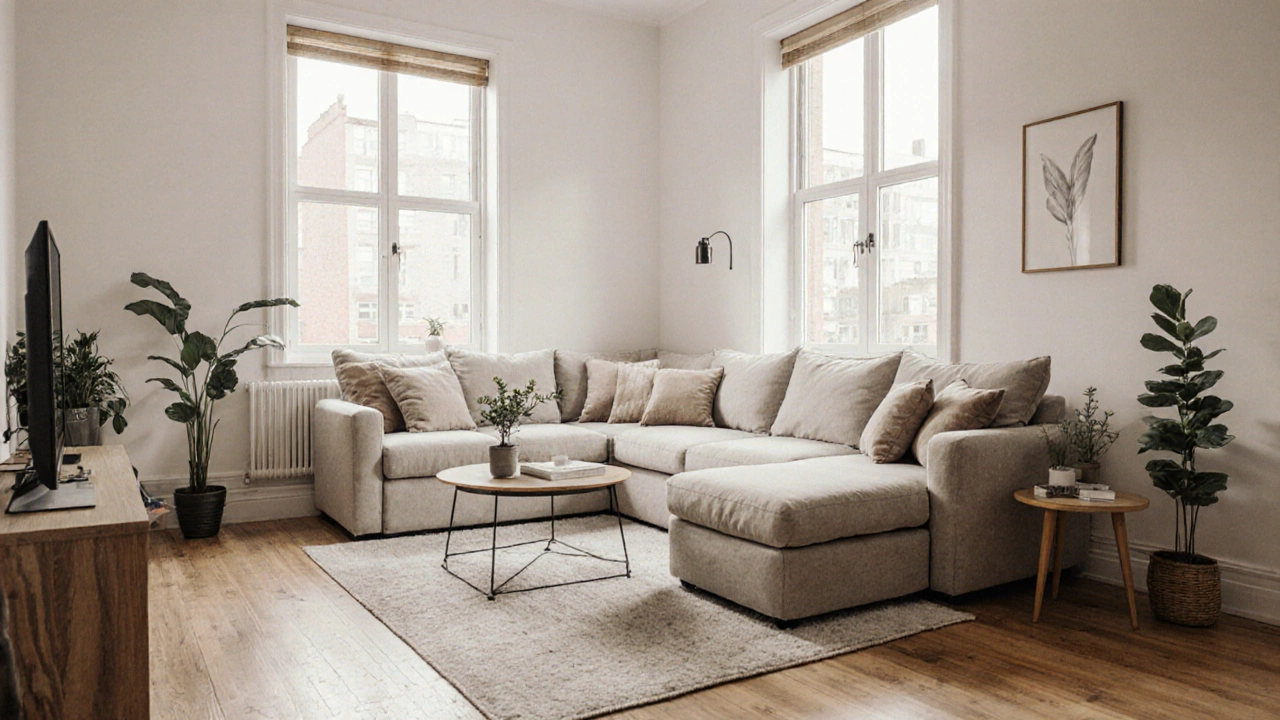
You used to pick a sofa and live with it. Now, you build one. Modular sofas dominate living rooms because they adapt. Need a sectional for movie nights? Snap the pieces together. Hosting a dinner party? Rearrange it into a U-shape. Moving to a smaller apartment? Take off a chaise and keep the rest.
Brands like Article, IKEA, and local Canadian makers are seeing 40% more sales on modular systems than fixed frames. Why? People want control. A 3-seater with a corner piece and an ottoman that doubles as storage? That’s the sweet spot. Look for ones with removable, machine-washable covers-life happens, and fabric that can’t be cleaned is a dealbreaker.
Storage Beds Are No Longer a Luxury
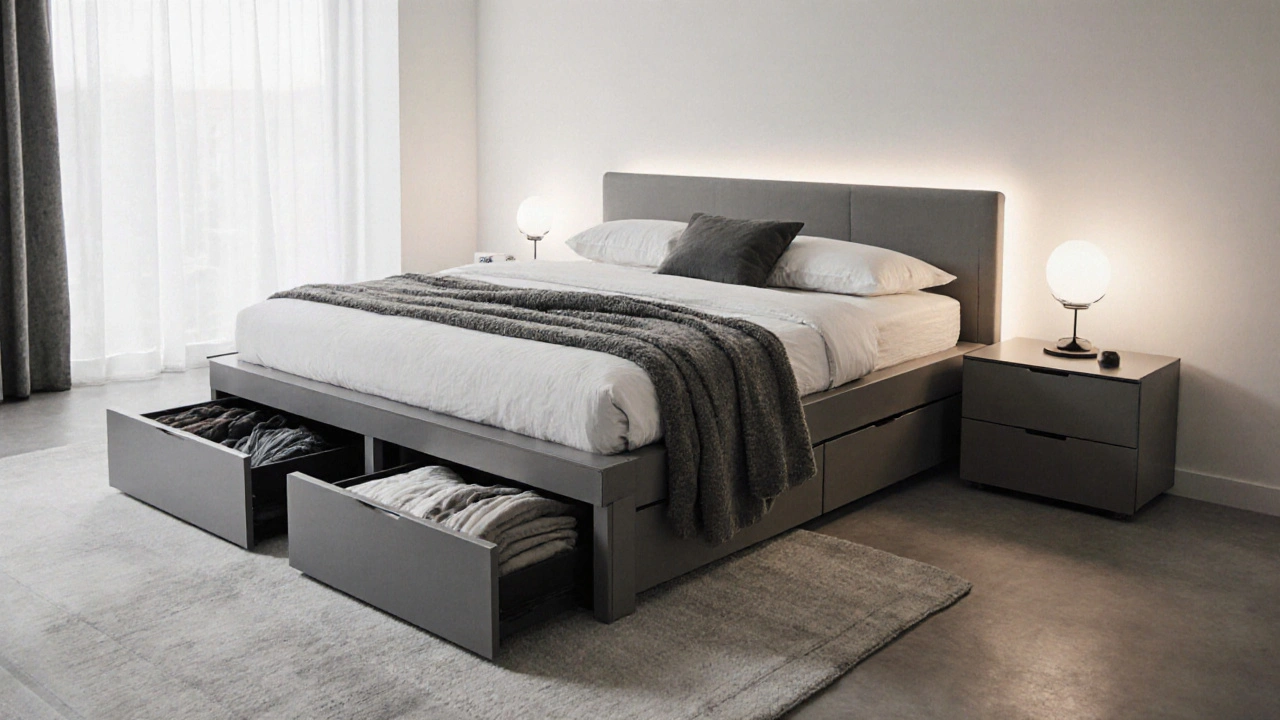
If you live in a studio, a small apartment, or even a house with limited closet space, your bed isn’t just for sleeping. It’s storage. In 2025, beds with built-in drawers, hydraulic lifts, or under-bed sliding bins are the norm, not the exception.
Studies from the Canadian Furniture Association show that 68% of buyers under 40 now prioritize under-bed storage over headboard style. It’s not about fancy designs-it’s about reclaiming square footage. A platform bed with four deep drawers can hold off-season clothes, linens, or even suitcases. No need for a bulky dresser. No need to cram things into a closet that’s already full.
Multi-Functional Tables Are Stealing the Spotlight
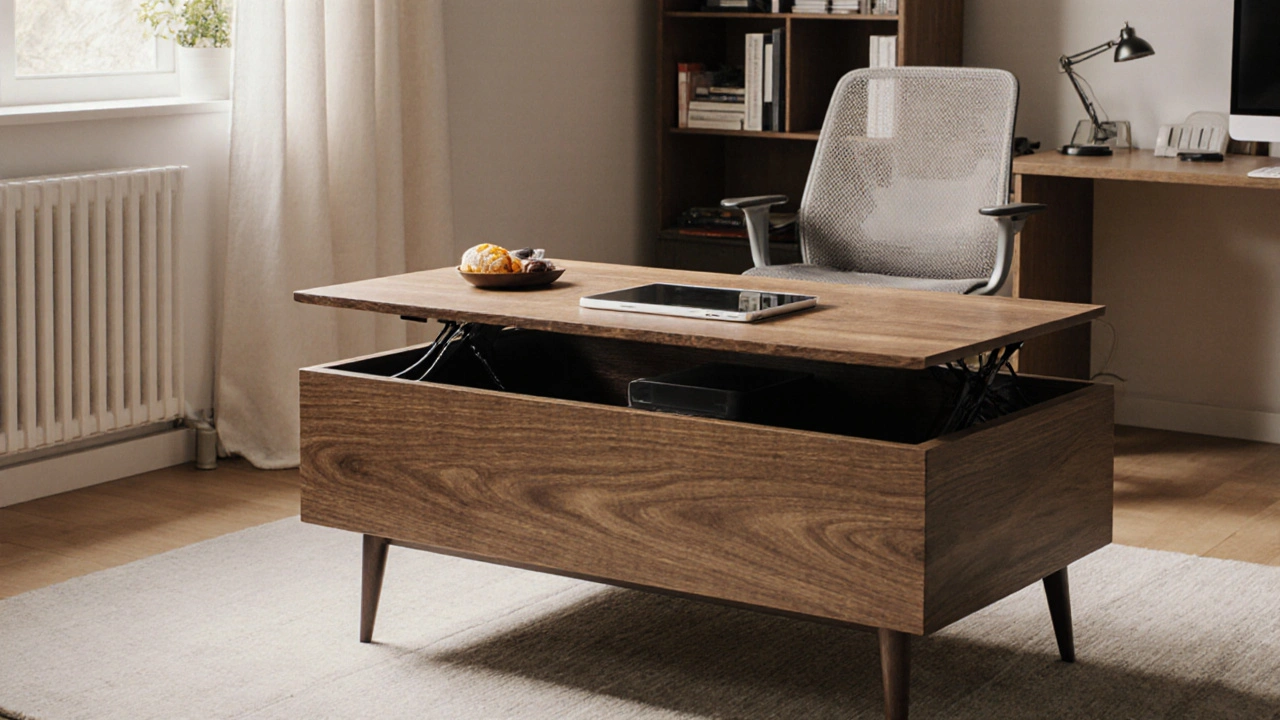
Remember when a coffee table was just for drinks and magazines? Not anymore. Today’s top sellers are tables that convert. Lift-top tables that turn into desks. Nesting tables that tuck away when not in use. Extendable dining tables that grow from four to eight seats for holidays.
One popular model in Burlington shops is a walnut coffee table with a hidden compartment that lifts to reveal a charging station, a tray for snacks, and a flip-up surface for working. It’s not just furniture-it’s a mini workstation, entertainment center, and storage unit rolled into one. People are tired of clutter. They want one piece that does five jobs.
Compact Dining Sets Are Winning Small Spaces
Large, heavy dining tables are out. In their place: lightweight, space-saving sets. Think: round tables with leaf inserts, wall-mounted drop-leaf tables, or bar-height counters with stools that tuck underneath.
Real estate listings now regularly mention "dining nook" instead of "formal dining room." Buyers don’t want empty space. They want efficiency. A 42-inch round table with two extendable leaves fits in a corner, seats four comfortably, and can expand to six without looking out of place. Pair it with stackable chairs-easy to move, easy to store-and you’ve got a dining solution that doesn’t eat up your kitchen.
Outdoor Furniture That Lasts
People are spending more time outside than ever. But they’re not buying cheap patio sets that fade in a year. Demand is up for all-weather furniture made with recycled plastics, powder-coated aluminum, and Sunbrella fabric.
Brands like Tropitone and local Canadian makers using recycled ocean plastic are seeing record sales. A set that survives snow, rain, and UV rays without cracking or fading? That’s the new standard. Buyers want to leave it outside year-round. They don’t want to store it. They don’t want to replace it. They want it to last.
Home Office Furniture That Doesn’t Feel Like Work
Remote work isn’t going away. But people are done with ugly, industrial-looking desks. The demand is for home office pieces that blend into living spaces. Think: wooden desks that look like sideboards. Bookshelves that double as room dividers. Chairs with cushioned seats and armrests that feel like your favorite living room lounger.
One trend: desks with integrated cable management and wireless charging pads. No more tangled wires under the table. Another: ergonomic chairs with breathable mesh backs and adjustable lumbar support-because sitting all day shouldn’t hurt. The best home offices don’t scream "office." They whisper, "I work here too."
What’s Not Selling Anymore
Not all furniture is trending. Here’s what’s fading out:
- Large, ornate wooden dining sets (too big, too heavy, too formal)
- Upholstered headboards with intricate tufting (hard to clean, not practical)
- Glass-top coffee tables (fingerprints, breakage, and safety concerns with kids or pets)
- Matching bedroom sets (people want mix-and-match, not cookie-cutter style)
- Plastic outdoor furniture (cheap, flimsy, doesn’t last)
These aren’t just outdated-they’re becoming liabilities. Buyers see them as high-maintenance, space-wasting, or poorly made. They’re looking for durability, adaptability, and simplicity.
What to Look For When Buying
Here’s a quick checklist before you buy:
- Can it be moved easily? (Weight matters if you rent or plan to move)
- Does it have hidden storage? (Every extra inch counts)
- Is the material easy to clean? (Fabric, wood, metal-what happens when you spill coffee?)
- Can it serve more than one purpose? (Table that becomes a desk? Sofa that turns into a bed?)
- Is it made to last? (Check warranties, material quality, and customer reviews)
Don’t fall for trends that look good in a magazine but don’t fit your life. The best furniture doesn’t just match your walls-it matches your habits.
Final Thought: Furniture Is Personal
There’s no single "best" piece. But there’s a clear pattern: people want furniture that works harder, takes up less space, and lasts longer. It’s not about luxury. It’s about smart living.
If you’re shopping now, focus on function first. Style follows. A modular sofa that fits your body, a bed that stores your winter coats, a table that turns into a workspace-these aren’t luxuries. They’re necessities in 2025.
What type of furniture is most popular in 2025?
Modular sofas, storage beds, multi-functional tables, compact dining sets, and durable outdoor furniture are the top sellers. Buyers prioritize adaptability, hidden storage, and materials that last. Furniture that serves multiple purposes and fits small spaces is winning over traditional, bulky pieces.
Is modular furniture worth the investment?
Yes, if you value flexibility. Modular furniture lets you reconfigure your space as your needs change-whether you’re moving, hosting guests, or just wanting a new layout. It’s especially smart for renters, small homes, or families who grow and change over time. Look for high-quality frames and removable, washable covers to get the most out of it.
Where should I buy furniture in 2025?
Local makers and online brands like Article, Burrow, and IKEA offer the best mix of quality, design, and value. Avoid big-box stores that sell cheap, mass-produced items unless you’re on a tight budget. Check reviews for durability and customer service. Many Canadian brands now use sustainable materials and ship nationwide.
What furniture should I avoid buying right now?
Avoid large, ornate dining sets, glass-top coffee tables, matching bedroom suites, and cheap plastic outdoor furniture. These are either too bulky, hard to maintain, or don’t last. Buyers are moving toward minimalist, functional, and durable pieces instead.
Does furniture material really matter?
Absolutely. Solid wood, powder-coated metal, recycled plastics, and Sunbrella fabric last years longer than particle board, thin veneers, or untreated fabric. Check the frame-solid wood or steel is better than glued joints. For upholstery, look for high-density foam and removable covers. You’ll save money in the long run by buying once instead of replacing every few years.

Rubina Jadhav
November 17, 2025 AT 08:09Storage beds are a game changer. I have one and I finally stopped tripping over suitcases.
Jitendra Singh
November 18, 2025 AT 01:56I’ve been living in a 300 sq ft apartment for three years. Modular sofas and lift-top tables aren’t trends-they’re survival tools. I’d go back to a studio with a full-size bed and no storage any day.
Shivani Vaidya
November 18, 2025 AT 02:14The shift toward functional design reflects a deeper cultural evolution. We are no longer collecting objects for display, but curating environments for sustainability and ease. This is not mere aesthetics-it is an ethical alignment with minimalism as a lived practice.
When we choose furniture that endures, we reject the cycle of disposability. When we select pieces that adapt, we honor the fluidity of human life. These are not purchases. They are commitments to intentional existence.
It is no coincidence that the most sought-after items are those that require no maintenance, offer silent utility, and dissolve into the background of daily life. The true luxury is not ornamentation-it is freedom from clutter.
I have seen people cry when they realize their glass coffee table is a liability. Not because it broke, but because it symbolized everything they were trying to leave behind.
Let us not mistake utility for austerity. Functionality is not cold-it is compassionate. It says: I value your time. I value your space. I value your peace.
The future of design is quiet. It does not shout. It does not demand. It simply works.
Raji viji
November 19, 2025 AT 00:56Modular sofas? Please. Everyone’s just copying IKEA because they’re too lazy to think for themselves. I’ve got a 1970s leather sectional that’s still solid as hell-no snap-on pieces needed. You people treat furniture like Lego and wonder why nothing lasts.
And don’t even get me started on ‘storage beds.’ That’s just a fancy word for ‘I’m too poor to buy a dresser.’
Real talk: if your entire lifestyle revolves around hiding stuff under your mattress, maybe you need to downsize your life, not your furniture.
Madhuri Pujari
November 20, 2025 AT 02:30Oh wow, another article telling us what we ‘should’ want. How original. ‘Multi-functional tables’? That’s just a table with a lazy person’s excuse for not owning a desk. And ‘outdoor furniture that lasts’? Newsflash: if you’re leaving it outside year-round, you’re not ‘living mindfully,’ you’re just bad at maintenance.
Also, ‘no matching bedroom sets’? Cool. So now instead of a coordinated look, we get a dumpster fire of mismatched nightstands from three different IKEA trips? Thanks for the aesthetic chaos.
And who wrote this? A furniture salesman on a caffeine bender? ‘Furniture that whispers’? That’s not design-that’s poetry written by a marketing intern who thinks ‘minimalist’ means ‘boring.’
Let’s be real: people buy this stuff because they’re scared of commitment. They want to change their whole living room every six months and call it ‘evolving.’ It’s not smart living. It’s emotional instability with a warranty.
sumraa hussain
November 20, 2025 AT 11:05Bro I just bought a lift-top coffee table and now I work from the couch, eat snacks on it, charge my phone on it, and my cat sleeps on the hidden compartment. It’s a miracle. I didn’t know furniture could be this chill.
Also the fact that you can wash the covers? Life-changing. My dog thinks the sofa is his personal buffet. He’s a greasy little menace. Now I just throw the slipcover in the wash and he doesn’t even notice.
And outdoor furniture made from ocean plastic? That’s the kind of stuff that gives me hope. Like, we’re literally turning trash into something that lasts. That’s poetry.
Also I saw someone try to buy a glass coffee table last week. I stopped them. I said ‘sir, you have a toddler.’ They looked at me like I was a wizard. I am a wizard. I am the Furniture Shaman.
Parth Haz
November 21, 2025 AT 04:17I appreciate the practical insights in this piece. The emphasis on durability and multifunctionality aligns with long-term financial prudence and environmental responsibility. In an era of rapid consumption, choosing well-made, adaptable pieces is not merely a preference-it is a responsible decision.
As someone who has moved five times in seven years, I can attest that lightweight, modular, and easily reconfigurable furniture reduces stress, cost, and waste. The shift away from ornate, heavy pieces is not a trend-it is a necessary evolution.
I encourage others to view furniture as an investment, not an expense. A well-built storage bed or extendable table will serve you for decades, while disposable items only burden your future self.
Thank you for highlighting the importance of material quality and warranty transparency. Too many buyers overlook these details until it’s too late.
Vishal Bharadwaj
November 22, 2025 AT 03:07Storage beds? 68% of buyers under 40? Where’d you get that stat? I looked up the Canadian Furniture Association and they don’t even publish numbers like that. This whole thing feels like a sponsored post disguised as journalism.
Also ‘modular sofas’? Yeah, they’re everywhere because they’re cheaply made and fall apart after a year. I’ve had three. The frames crack, the connectors rattle, and the fabric pills like crazy. You’re not ‘adapting’-you’re just replacing faster.
And ‘sunbrella fabric’? That’s just a brand name. It’s not magic. It’s polyester with a fancy label. Same with ‘recycled ocean plastic’-most of it’s just virgin plastic with a green sticker.
Stop buying into marketing fluff. The real trend? People are tired of being told what to want.
Rajashree Iyer
November 22, 2025 AT 05:49Every piece of furniture is a mirror of the soul. The modular sofa? It is the manifestation of our fear of permanence. We do not commit to form because we are afraid of being trapped. We dismantle, we rearrange, we reconfigure-because to sit still is to face the silence within.
The storage bed? It is not about space. It is about repression. We hide our winter coats, our old letters, our forgotten dreams beneath the mattress, because to acknowledge them would mean we must change.
And the multi-functional table? Oh, how it dances on the edge of identity. Is it a desk? A dining surface? A temple of convenience? It is all and none. It is the modern human: fragmented, adaptable, lost in utility.
We do not buy furniture. We buy illusions of control. We think we are designing our lives. But in truth, we are merely rearranging the boxes that contain us.
What is the soul of a chair that can become a bed? Is it still a chair? Or has it become a metaphor for our inability to choose?
Perhaps the most revolutionary act is not to buy anything at all. To sit on the floor. To breathe. To be.
anoushka singh
November 23, 2025 AT 19:05Ok but why are all these ‘smart’ furniture pieces so expensive? I saw a ‘multi-functional’ table for $1,200. I could buy a whole dining set for that. Are we being scammed or just really bad at math?
Also I tried to get a storage bed and the one they showed me had like 2 inches of space under it. Like… that’s not storage, that’s a dust trap. Who’s writing these reviews?
And why is everyone obsessed with ‘removable covers’? I just want something that looks nice and doesn’t make me feel guilty when I spill wine. Why is everything so complicated now?
Madhuri Pujari
November 24, 2025 AT 05:05Oh look, someone actually responded to my comment. You’re still wrong. But at least you’re trying. Keep pretending you’re not just following trends.