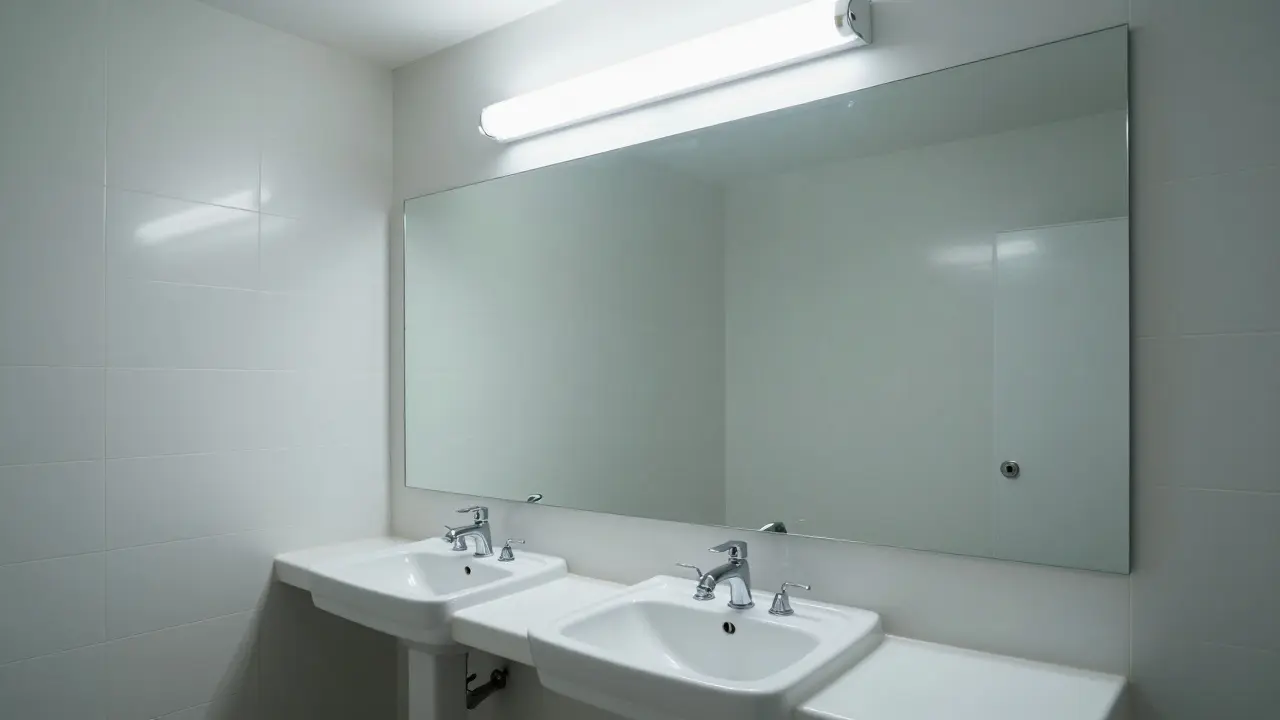
Walk into any bathroom from the 2000s and you’ll likely see it-a giant, frameless mirror stretching from floor to ceiling, covering the whole wall behind the sink. Back then, it was the go-to move for making small spaces feel bigger. But today? That same mirror can look dated, like a relic from a time when more was always assumed to be better.
So are wall-to-wall mirrors in bathrooms outdated? The short answer: not always. But they’re no longer the default. What’s changed isn’t the mirror itself-it’s how we use space, light, and style in bathrooms now. People aren’t just looking for size anymore. They want personality, balance, and intentionality.
Why Wall-to-Wall Mirrors Were Popular
Twenty years ago, bathroom design was all about creating the illusion of space. Small bathrooms were common, especially in condos and older homes. A full-wall mirror reflected light and doubled the visual area, making the room feel airy and open. It was cheap, easy to install, and didn’t require fancy framing. Builders loved it. Homeowners loved it too-especially if they were trying to sell.
But there was a trade-off. These mirrors often came with no frame, no edge detail, no character. They were functional, not beautiful. And when paired with harsh fluorescent lighting and white tile, they turned bathrooms into sterile, clinical spaces. Think: dentist’s office, not sanctuary.
What’s Replacing Them
Today’s best bathrooms don’t just reflect-they enhance. Designers are moving away from covering entire walls and toward curated mirror shapes, sizes, and placements that add style, not just function.
Here’s what’s trending instead:
- Over-vanity mirrors-taller than they are wide, centered above the sink, often with integrated lighting. These focus attention where you need it: your face.
- Architectural shapes-ovals, circles, hexagons, and even asymmetrical designs are replacing plain rectangles. A circular mirror over a double vanity adds softness to a hard-edged room.
- Frameless with hidden edges-some mirrors still stretch across the wall, but now they’re set into recessed niches or framed with LED strips. The mirror doesn’t dominate-it blends.
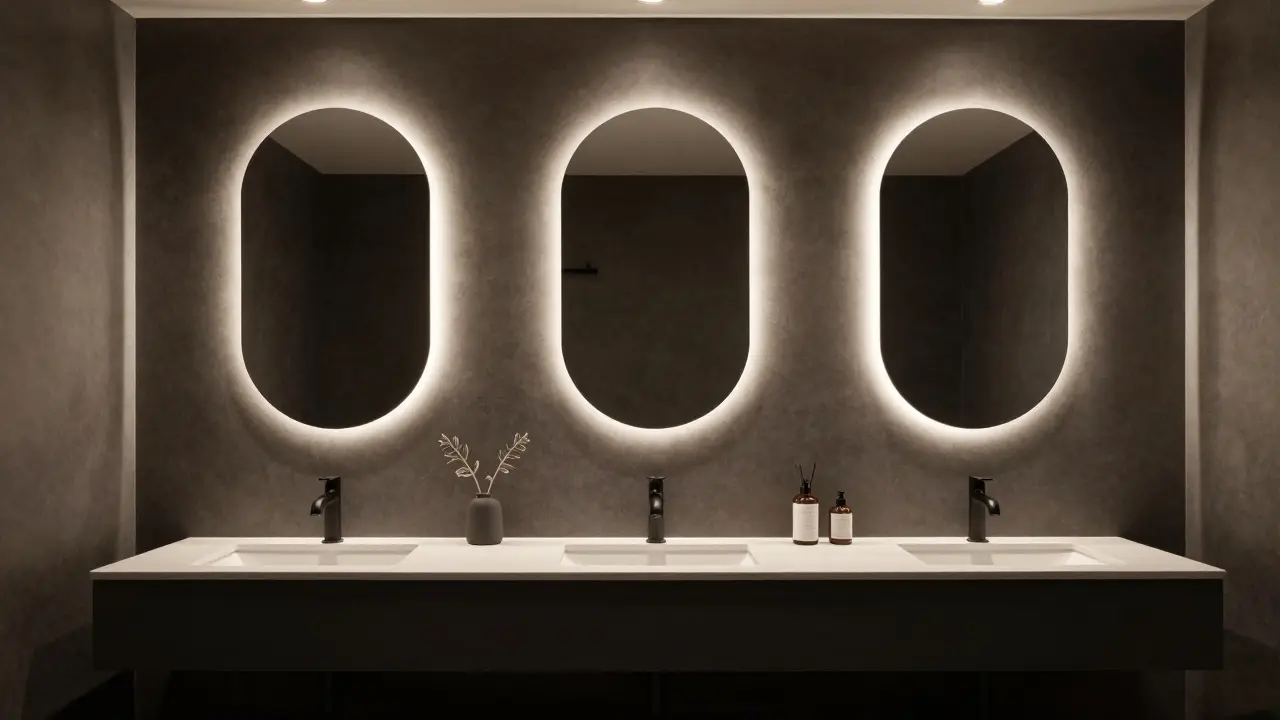
- Multiple smaller mirrors-three vertical mirrors above a double sink, each with its own lighting. It’s modern, balanced, and feels custom.
One homeowner in Toronto replaced her full-wall mirror with three 24-inch oval mirrors above a floating vanity. She says the change made the space feel more luxurious-not bigger, but more thoughtful. "It doesn’t scream ‘bathroom,’" she told me. "It feels like part of the room."
When Wall-to-Wall Mirrors Still Work
Don’t throw yours out just yet. There are still situations where a full-wall mirror makes sense.
- Small powder rooms-if your bathroom is under 40 square feet and has no windows, a mirror that covers the entire back wall can still be the best way to open up the space.
- Home gyms or dressing areas attached to bathrooms-if you use the space to check your outfit or form, a full mirror is practical, not decorative.
- Modern minimalist design-when paired with monochrome tiles, recessed lighting, and zero-profile fixtures, a frameless mirror can feel intentional, not lazy.
But even in these cases, the trend is shifting. Instead of a single mirror, designers are using mirrored tiles, mirrored cabinet doors, or mirrored backsplashes. These give the same reflective effect without the overwhelming presence.
Lighting Changes Everything
One reason wall-to-wall mirrors feel outdated isn’t the mirror-it’s the lighting around it. Old-school bathrooms had one ceiling light shining down on the mirror. That created harsh shadows under the eyes and chin.
Today’s bathrooms use vertical lighting on either side of the mirror. Sconces with warm LED bulbs mimic natural daylight. This is why vanity mirrors with built-in lighting are so popular-they solve the problem at the source.
If you keep a full-wall mirror, upgrade the lighting. Add two wall sconces at eye level, or install a slim LED strip along the top edge. The mirror won’t look outdated if the light makes you look good.
Material Matters
Not all mirrors are created equal. The cheap, silver-backed glass from the 2000s tends to yellow over time, especially in humid bathrooms. It also reflects greenish tones, making skin look dull.
Modern mirrors use high-quality float glass with copper-free backing and anti-fog coatings. Some even have anti-microbial layers. You can’t see the difference, but you’ll feel it-your reflection looks truer, cleaner, sharper.
If you’re keeping an old wall-to-wall mirror, consider replacing it with a modern equivalent. A new mirror with the same size can cost less than $300 and will last twice as long.
What Buyers Think
If you’re planning to sell your home, here’s what real estate agents in Ontario are seeing in 2025:
- Homes with oversized, frameless mirrors are getting lower offers if the rest of the bathroom feels generic.
- Homes with custom mirror shapes, integrated lighting, and high-end finishes are selling faster and for 5-8% more.
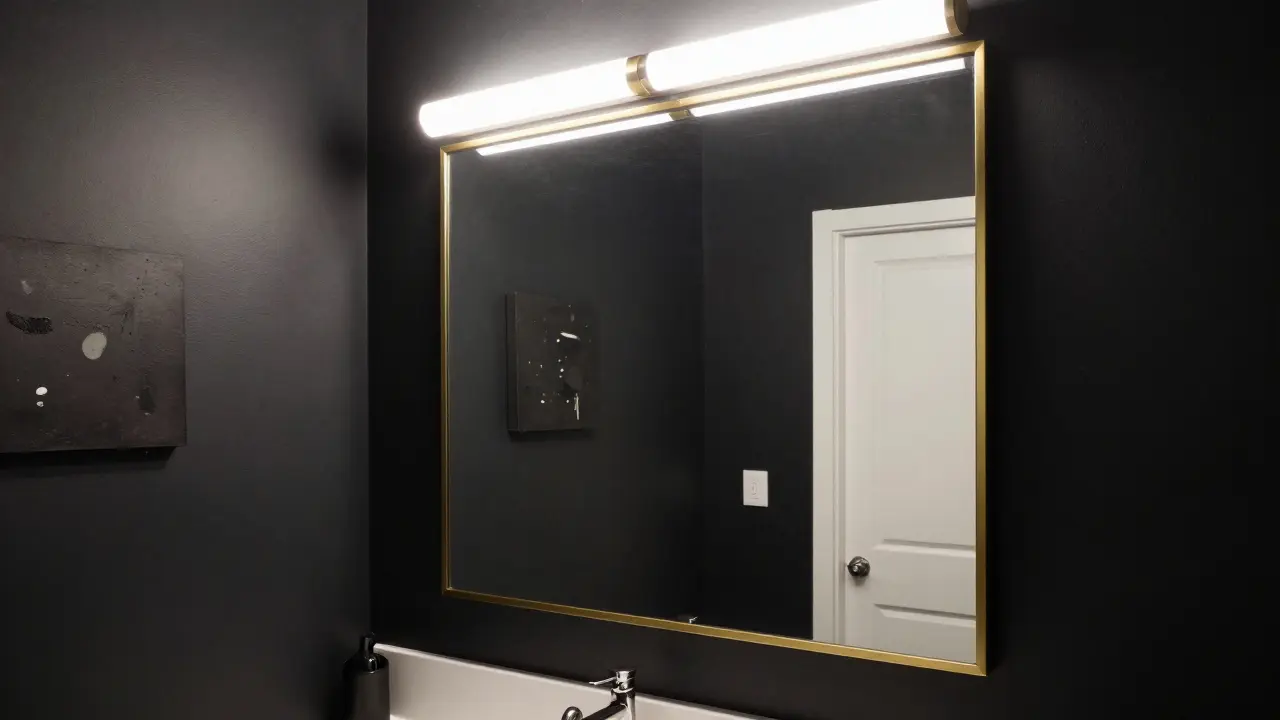
- Buyers under 35 are asking for mirror styles that match their Instagram aesthetic-think matte black frames, brass edges, or mirrored cabinets.
It’s not about being trendy for trend’s sake. It’s about showing that you paid attention to detail. A bathroom with a thoughtfully chosen mirror says, "I didn’t just fix this room-I designed it."
DIY Upgrade Ideas
Don’t want to rip out your entire bathroom? Here are low-cost ways to modernize a wall-to-wall mirror without a full remodel:
- Add a frame-use peel-and-stick wood or metal trim. It’s temporary, reversible, and costs under $50.
- Install LED strips-stick a waterproof LED light bar along the top or sides. Turn it on at night and your mirror becomes a focal point.
- Paint the wall behind it-a dark charcoal or deep blue behind a mirror adds depth and makes the reflection pop.
- Hang art beside it-a small painting or print on either side balances the mirror’s dominance.
One client in Burlington did option #3-painted the wall behind her mirror matte black. She said it turned her 20-year-old bathroom into something that looked like it belonged in a design magazine.
Final Verdict
Wall-to-wall mirrors aren’t dead. But they’re no longer the smart default. They’re a tool-and like any tool, they need to be used with purpose.
If your mirror is cracked, yellowed, or paired with outdated lighting, replace it. If it’s clean, well-lit, and fits the rest of your design, keep it-but consider adding a frame or lighting to elevate it.
Today’s best bathrooms don’t try to trick the eye. They invite you in. A mirror should reflect your face, not dominate the room. Choose size and shape based on function and feeling-not just square footage.
Ask yourself: does this mirror make the space feel more open, or more overwhelming? If it’s the latter, it’s time for a change.
Are wall-to-wall mirrors still good for small bathrooms?
Yes, but only if the rest of the design supports it. In very small bathrooms with no windows, a full-wall mirror can still help create the illusion of space. But instead of using a cheap, frameless mirror, pair it with recessed lighting, a dark accent wall behind it, or mirrored tiles to make it feel intentional, not outdated.
Can I update my wall-to-wall mirror without replacing it?
Absolutely. Add a peel-and-stick frame, install LED lighting along the top or sides, or paint the wall behind it a deep color. These changes cost under $100 and can make your mirror look modern without a full renovation.
What’s the best shape for a bathroom mirror in 2025?
Oval and circular mirrors are trending for single vanities. For double vanities, three vertical rectangular mirrors or a wide, low-profile horizontal mirror with integrated lighting are popular. Avoid plain rectangles unless they’re part of a minimalist, high-end design.
Do mirrors make a bathroom look bigger?
They can, but only if they’re placed correctly and lit well. A mirror across from a window reflects natural light and doubles the sense of space. A mirror in a dark corner with no lighting just looks like a big, empty surface. Placement and light matter more than size.
Are framed mirrors outdated?
Not at all. In fact, framed mirrors are making a comeback. Matte black, brass, and brushed nickel frames add texture and warmth. Even a thin metal border can make a mirror feel custom and expensive. Frameless mirrors look modern only when the rest of the room is ultra-minimalist.

Christina Morgan
December 23, 2025 AT 12:06I replaced my full-wall mirror with three oval ones last year and honestly? Life changed. No more harsh overhead lighting making me look like a zombie at 7 a.m. Now I actually enjoy getting ready. The space feels curated, not clinical. Also, my dog stopped barking at his reflection. Win-win.
Pro tip: get the ones with dimmable LED edges. You’ll thank me when you’re applying mascara at midnight.
Kathy Yip
December 25, 2025 AT 07:06i dont know why but i always thought mirrors were supposed to be invisible? like, the point is to see yourself, not to notice the mirror. now everything’s got frames and lighting and it feels like the bathroom is trying too hard. am i the only one who just wants a plain glass and get on with it?
Bridget Kutsche
December 25, 2025 AT 09:16For anyone thinking about upgrading: don’t just swap the mirror-think about the whole vibe. I did the matte black wall behind my mirror + brass sconces combo and it turned my tiny bathroom into a spa. Seriously, it cost under $200 and took a weekend. No contractor needed.
Also, if your mirror’s yellowing? That’s not just ‘old’-that’s toxic. Modern mirrors don’t discolor. Invest in one with copper-free backing. Your skin will thank you.
And yes, framed mirrors are back. Matte black is the new neutral. Stop being afraid of edges.
Jack Gifford
December 27, 2025 AT 05:22Can we talk about how everyone’s suddenly obsessed with ‘intentionality’? It’s just a mirror. You don’t need a PhD in interior design to decide if you want to see your face clearly. The fact that we’re treating bathroom mirrors like art installations is ridiculous.
Also, ‘Instagram aesthetic’? Please. Most of those ‘design magazine’ bathrooms look like they were curated by a robot that hates human imperfection.
Sarah Meadows
December 28, 2025 AT 15:18Let’s be real-this whole ‘curated mirror’ trend is just coastal elite nonsense. Real people don’t care about oval vs. rectangle. They care about not having to squint because their mirror’s too small. If you’re in a 300 sq ft apartment, a full-wall mirror isn’t a design choice-it’s survival.
And if you’re spending $300 on a ‘modern’ mirror, you’re being scammed. Buy a cheap one and slap a frame on it. Done.
Nathan Pena
December 29, 2025 AT 11:49The entire premise of this article is flawed. You’re attributing aesthetic shifts to ‘intentionality’ when the real driver is commodification of taste by design influencers. The wall-to-wall mirror was a functional solution to spatial constraints in mid-century housing stock. What we’re seeing now isn’t evolution-it’s performative minimalism engineered by Pinterest algorithms to sell LED strips and $120 peel-and-stick frames.
Also, ‘matte black frames’? That’s just black paint on aluminum. It’s not luxury. It’s aesthetic inflation.
Mike Marciniak
December 30, 2025 AT 23:51They’re putting mirrors in bathrooms because they want you to see yourself. But why? So you can compare yourself to the ads? So you can see how much you’ve changed since the last time you looked? This isn’t about design. It’s about control. The mirror industry knows people hate what they see. That’s why they keep selling new versions. They don’t want you to feel good-they want you to keep buying.
VIRENDER KAUL
December 31, 2025 AT 21:21It is a matter of cultural and architectural evolution. In India, we have traditionally used ornate mirrors framed with brass or wood, not because of trends but because of the symbolic value of reflection as self-awareness. The modern trend of minimalism is not inherently superior-it is merely a Western aesthetic imposition. One must consider context. In a humid climate, frameless mirrors accumulate condensation and mold. Framed mirrors with ventilation are not just aesthetic-they are hygienic.
Moreover, the notion that ‘more is outdated’ is a fallacy of scarcity thinking. Abundance, when intentional, is elegance.
Mbuyiselwa Cindi
January 2, 2026 AT 01:44My sister in Cape Town did the paint-behind-the-mirror trick and it’s the only thing I’ve ever seen make a rental bathroom feel like home. She used deep green, not black. It’s like the mirror became a window to another world. No fancy lighting, no frame-just color. If you’re scared to commit, start there. It’s reversible, cheap, and actually makes you feel better when you look in the mirror.
Also, if your mirror’s yellow? Just replace it. It’s not worth the weird skin tone it gives you. Trust me, your selfies will thank you.
Krzysztof Lasocki
January 3, 2026 AT 12:00Oh wow, so now we’re giving mirrors personality tests? ‘Does it make the space feel more open or more overwhelming?’ Bro. It’s a mirror. It reflects light and your face. If you need a 12-sentence essay to decide whether to keep yours, maybe you’re overthinking this.
Also, ‘Instagram aesthetic’? That’s just what happens when people spend more time curating their bathroom for strangers than using it. I’ve got a 1998 mirror with a crack in the corner. I look at it every morning. It reminds me I’m still here. That’s all I need.