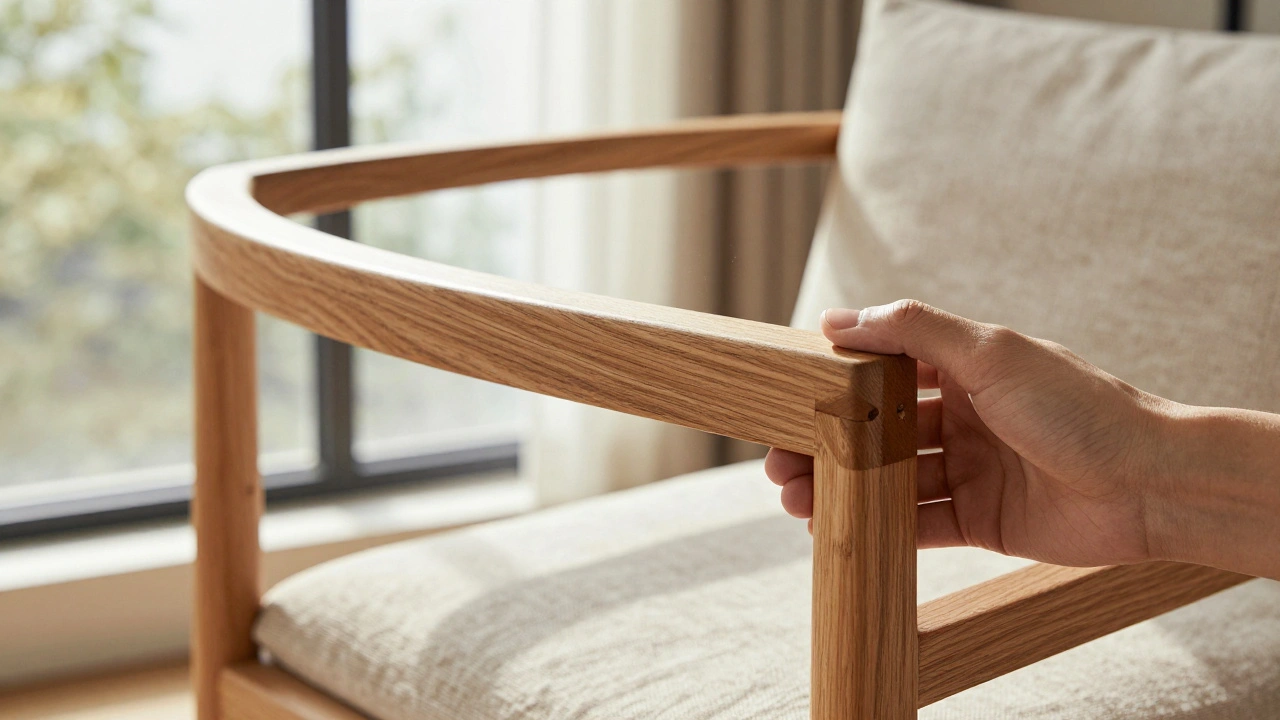
Buying furniture isn’t just about style-it’s about how long it’ll last, how it feels under your hands, and whether it’ll still look good five years from now. Too many people end up with pieces that creak, wobble, or fall apart after a year. That’s not just annoying-it’s a waste of money. You don’t need to spend a fortune, but you do need to know what to look for. Here’s how to pick out furniture that actually holds up.
Check the frame first-everything else is just skin
The frame is the skeleton of any piece of furniture. If it’s weak, no amount of fancy fabric or polish will save it. Solid wood frames, especially hardwood like oak, maple, or birch, are the gold standard. Avoid anything made mostly from particleboard or MDF unless it’s only for light, temporary use. These materials swell when they get damp and break down under weight. You can test a frame by lifting one corner of a chair or sofa. If it feels flimsy or flexes, walk away. A sturdy frame should feel heavy and solid, not like it might collapse if you sneeze too hard.
Look for corner blocks or double-doweled joints. These are small wooden blocks glued and nailed or screwed into the corners where legs meet the frame. They add strength and prevent wobbling over time. Stapled or glued joints? Red flag. Screws and dowels are far more reliable. If you can see the joinery, that’s a good sign. Manufacturers who take pride in construction don’t hide it.
Test the cushioning-comfort isn’t just about softness
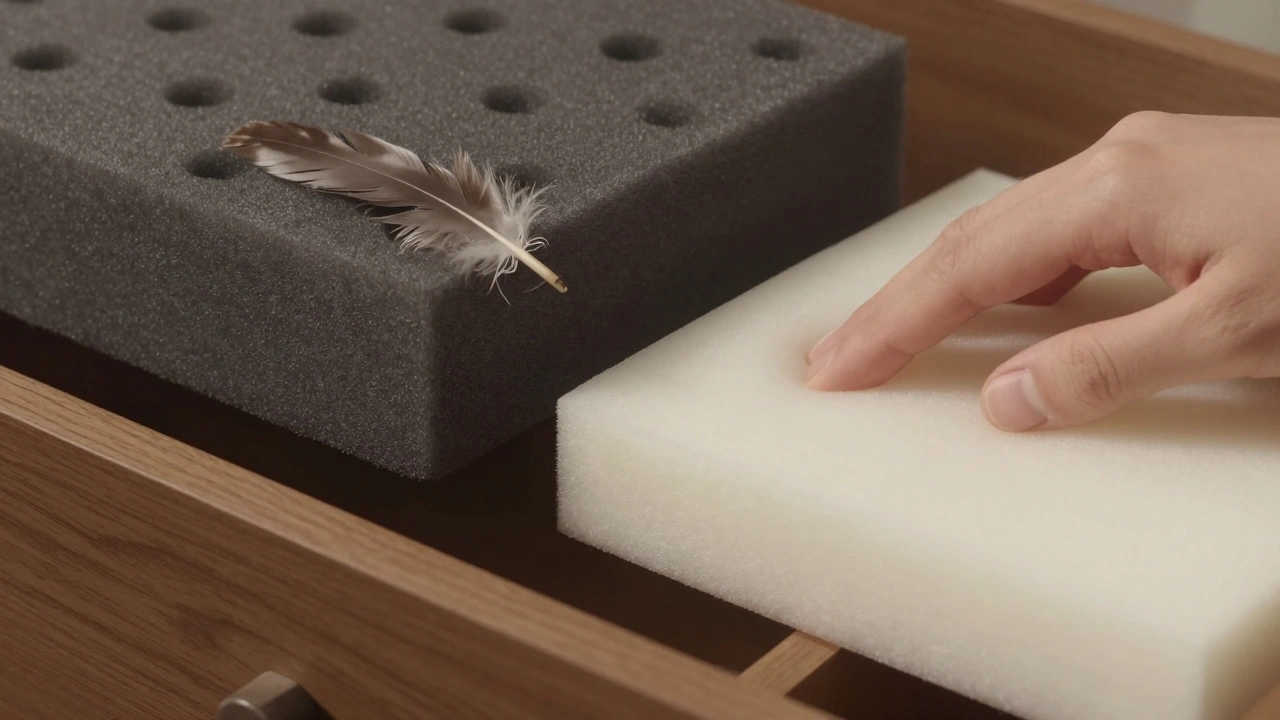
That plush sofa might feel amazing the first day, but if the foam inside is low-density, it’ll flatten out in months. High-resiliency (HR) foam is the best bet. It bounces back quickly and holds its shape. You can’t see it, but you can feel it. Sit on the seat and press down with your hand. If it compresses too easily and doesn’t spring back, skip it. The same goes for cushions on chairs and ottomans.
Look for cushions that have a down or feather wrap around the foam core. That gives you that luxurious sink-in feel without sacrificing support. Some brands label this as “down blend” or “feather-wrapped.” If they don’t say anything, assume it’s just foam. And don’t be fooled by thick cushions on cheap frames-those are often just padding to hide poor construction.
Inspect the finish-real wood vs. veneer vs. laminate
Not all wood finishes are created equal. Solid wood furniture will have natural grain patterns that flow continuously across surfaces. Veneer is a thin slice of real wood glued over particleboard. It’s okay if it’s well-made, but avoid pieces where the veneer is peeling, bubbling, or has visible seams. Laminate is plastic-coated paper printed to look like wood. It’s cheap, scratch-prone, and can’t be refinished.
Run your fingers along edges and corners. Real wood has slight texture and variation. Laminate feels smooth and plastic-like. If the finish looks too perfect, especially on a low price point, it’s probably not real wood. Also, check the underside of drawers or the back of the piece. If it’s unfinished or looks different from the front, it’s likely veneer or laminate. Solid wood will match throughout.
Drawers and doors tell the truth
How a piece opens and closes reveals a lot about its quality. Slide open a drawer. Does it glide smoothly, or does it stick and scrape? Soft-close mechanisms are nice, but even basic wooden slides should move quietly. Metal slides with ball bearings are better than wooden ones. If the drawer is made of thin plywood or particleboard, it’ll warp or break under heavy use.
Check the drawer bottom. Is it solid wood or thin cardboard? Cardboard bottoms are a giveaway of low quality. Real drawers use at least 1/4-inch plywood or solid wood. Look for dovetail joints on the front of the drawer-that’s a sign of craftsmanship. Dovetails are interlocking teeth that hold the drawer together. Machine-made copies exist, but hand-cut dovetails are still the mark of quality. If the drawer is nailed or stapled together, it won’t last.
Legs, arms, and hardware matter more than you think
Those decorative legs on a sofa or table? They’re not just for looks. Screwed-on legs are better than glued or stapled ones. If they’re attached with just a few nails or a single screw, they’ll snap off under stress. Look for legs that are bolted in with at least two screws per leg. Metal legs should be thick and powder-coated, not thin and flimsy.
On upholstered pieces, check the arms. Are they stuffed and padded, or just flat? Firm, well-padded arms last longer and are more comfortable. If the fabric is stretched tightly over a thin frame, it’ll sag. Also, examine the zippers on removable covers. Are they metal or plastic? Metal zippers are more durable. If the cover is sewn on permanently, that’s fine-but make sure the stitching is tight and even. Loose threads? That’s a warning sign.
Brand reputation and warranty tell you what the company believes
There’s no magic brand that makes all good furniture, but some have earned trust over decades. Look for companies that offer at least a five-year warranty on frames and construction. If they only offer one year, they don’t expect the piece to last. Warranties on cushions and fabric are usually shorter-1 to 3 years-because those wear out faster. But if a company won’t guarantee the frame, walk away.
Read reviews from people who’ve owned the piece for two years or more. Don’t just look at the five-star ratings from people who bought it last week. Look for comments like “still looks great after three years” or “the legs started wobbling after six months.” Amazon and Reddit threads often have honest long-term feedback. If multiple people report the same issue, it’s not a fluke.
Don’t fall for the “luxury” trap
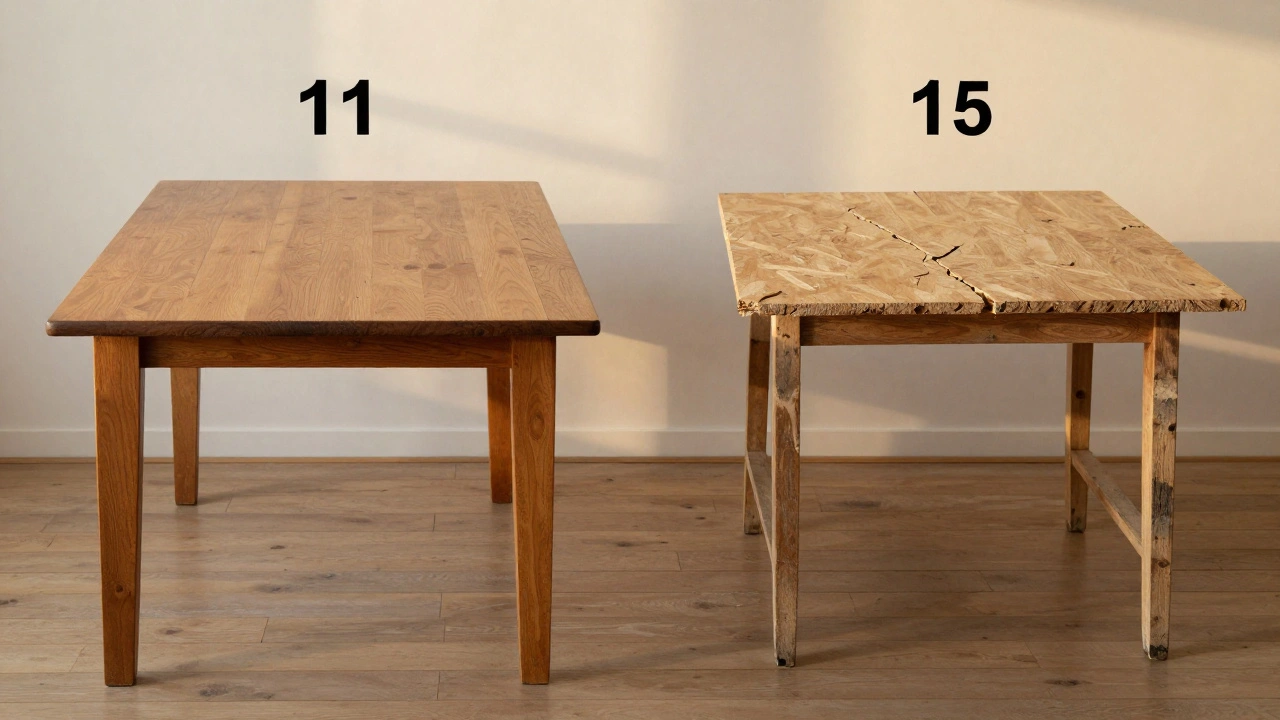
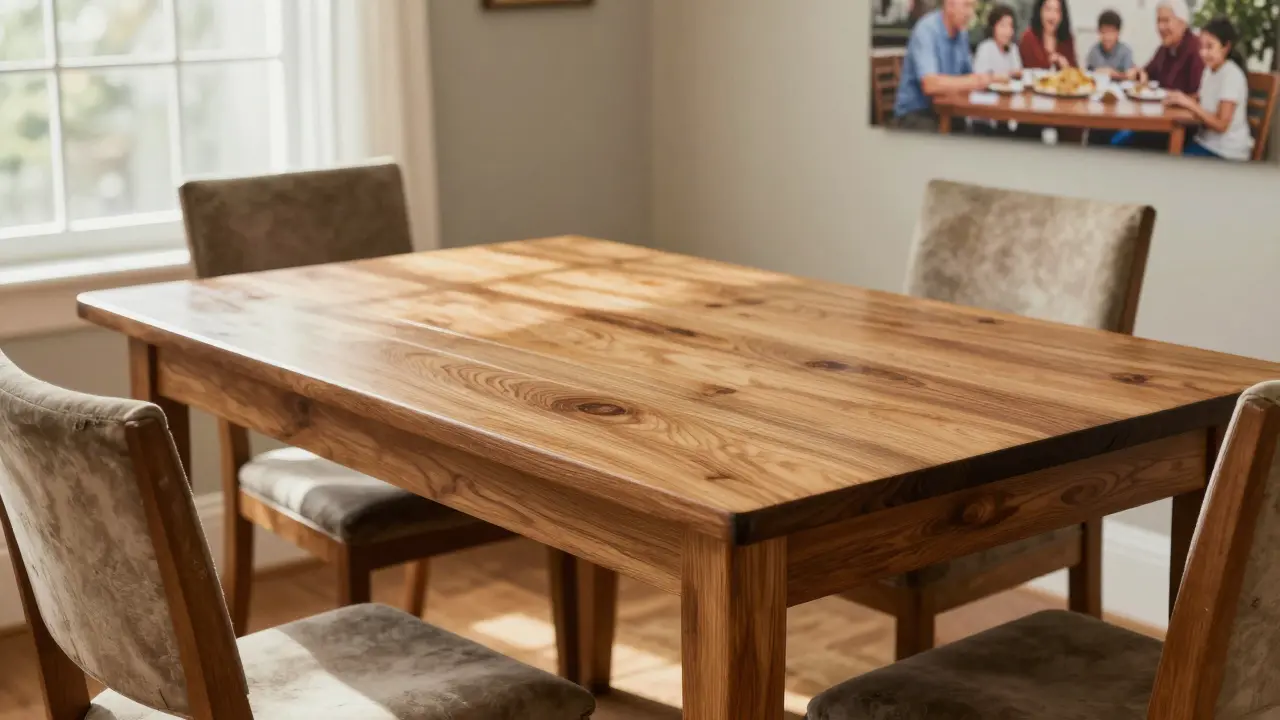
That velvet sectional with gold legs might look stunning in the showroom, but if it’s made from synthetic fibers and particleboard, it’ll look worn and dated in a year. Luxury doesn’t mean expensive-it means well-made. A solid oak dining table with hand-finished legs and mortise-and-tenon joints costs more upfront but lasts 20 years. A cheap imitation might cost half as much but needs replacing every five.
Think long-term. Furniture is one of the biggest investments in your home. A $1,200 sofa that lasts 15 years costs $80 a year. A $500 sofa that lasts three years costs $167 a year. The math is clear. Spend more once, or spend less often.
Buy smart: Where to look and when
Local furniture makers and small workshops often make better quality than big-box stores. They use real materials, have fewer middlemen, and care about reputation. Check out local craft fairs, maker markets, or independent studios in your area. You’ll pay a bit more, but you’ll get something unique and built to last.
Timing matters too. Furniture stores often have sales in January and July. That’s when they clear out old inventory to make room for new lines. You can find last year’s models at huge discounts-same quality, lower price. Just make sure the style still fits your space. Don’t buy something just because it’s on sale if you’ll hate it in six months.
Final checklist before you buy
- Frame: Solid wood? No particleboard? Corners reinforced?
- Cushions: High-resiliency foam? Down wrap? Springs or foam?
- Finish: Real wood grain? No peeling or bubbling? Matching underside?
- Drawers: Dovetail joints? Wood bottom? Smooth metal slides?
- Hardware: Bolted legs? Metal zippers? Tight stitching?
- Warranty: At least five years on frame? Company has a good reputation?
- Reviews: Any long-term complaints? Multiple people reporting the same issue?
Quality furniture doesn’t shout. It doesn’t need flashy lights or loud marketing. It just sits there, steady and strong, year after year. When you sit down on a well-built chair or sink into a sofa that still feels like new after five years, you’ll know you made the right choice. It’s not about what looks good today-it’s about what feels right tomorrow.

Mark Nitka
December 9, 2025 AT 21:18Been there, done that. Bought a ‘luxury’ sofa from a big-name store last year-turned out the frame was particleboard with glue joints. Lasted six months before the armrest started sinking. Learned the hard way: if it doesn’t feel heavy when you lift it, it’s not worth it. Now I test every chair like I’m trying to break it. Worth the extra time.
Also, never trust ‘hand-finished’ unless you can see the maker’s name on the bottom. Too many places slap that label on mass-produced junk.
Kelley Nelson
December 10, 2025 AT 16:52One must observe, with the utmost discernment, that the contemporary consumer landscape has been utterly corrupted by the commodification of domestic aesthetics. The very notion of ‘value’ has been perverted into a metric of immediate gratification rather than enduring craftsmanship. One cannot, in good conscience, endorse the purchase of furniture constructed from any substrate other than quarter-sawn white oak, nor can one abide the use of synthetic fiber blends in lieu of genuine down. The moral decay of interior design is palpable.
Aryan Gupta
December 11, 2025 AT 21:36Did you know that most ‘solid wood’ furniture is actually engineered with 80% MDF and a 2mm veneer? The government and big furniture conglomerates have been hiding this since 2012. I checked the barcode on my ‘oak’ dresser-it links to a factory in Vietnam that also makes IKEA’s ‘premium’ line. They use the same glue. That glue? It’s laced with formaldehyde. You’re breathing it in right now. Also, dovetail joints are fake unless they’re hand-cut by a 72-year-old Amish man in Pennsylvania. And no, Amazon reviews are all bots.
PS: Your warranty is a lie. Read the fine print. It says ‘frame defects’ but excludes ‘normal wear from sitting.’ That’s not normal. That’s corporate sabotage.
Fredda Freyer
December 13, 2025 AT 06:50I used to think furniture was just furniture until I started restoring mid-century pieces. The difference between a $300 sofa and a $1,200 one isn’t just materials-it’s intent. The $1,200 one was built by someone who cared if it outlived them. The $300 one was built by someone who just needed to hit a quarterly quota.
Real craftsmanship doesn’t scream. It whispers in the way the drawer closes, how the leg doesn’t wobble after ten years, how the fabric doesn’t pill after your cat uses it as a scratching post. You can feel it when you sit down. It’s quiet confidence.
And yes-dovetails matter. But so does the fact that the person who made it got paid enough to care. That’s the real luxury.
Don’t buy furniture. Buy legacy.
Gareth Hobbs
December 15, 2025 AT 05:06UK furniture? Solid. US? JUNK. I bought a ‘solid oak’ table from a ‘premium’ American brand last year-turned out it was Chinese MDF with a veneer thinner than my ex’s excuses. They even used plastic screws. Plastic! In a TABLE! We don’t do this in Britain-we build things to last, not to be thrown out after the next Netflix binge. And don’t get me started on ‘down blend’-it’s just feathers from a chicken farm and a prayer. Real down comes from geese in the Scottish Highlands, not some factory in Bangladesh. Also, why do Americans spell ‘colour’ wrong? It’s not ‘color’! It’s a crime against language.
Zelda Breach
December 15, 2025 AT 11:10Let’s be real: if you’re reading this guide, you’ve already been scammed once. And you’re about to get scammed again. ‘High-resiliency foam’? That’s marketing speak for ‘foam that won’t flatten until after your divorce.’ ‘Dovetail joints’? They’re machine-cut now-look up ‘dovetail CNC’ on YouTube. Even ‘solid wood’ is often glued laminated scraps. The only thing that lasts is your regret.
And warranties? Ha. They’ll deny your claim because you ‘used the chair improperly’-like sitting on it counts as abuse. You’re not buying furniture. You’re buying a 5-year subscription to disappointment.
Alan Crierie
December 15, 2025 AT 22:15Just wanted to say thank you for this guide-it’s the most thoughtful piece on furniture I’ve read in years. I’m a total novice, and I’ve been terrified of buying anything because I don’t want to waste money. This helped me understand what to look for without feeling overwhelmed.
Also, I just bought a used dining table from a local woodworker last weekend. The drawer had dovetails, the legs were bolted, and the finish had a slight unevenness that made it feel alive. It’s not perfect, but it feels honest. I cried a little when I sat at it for the first time.
❤️
michael Melanson
December 16, 2025 AT 08:20I’m with Alan on this. I bought my first real piece-a walnut side table-from a guy at a farmers market. He made it in his garage. Asked him how long it’d last. He said, ‘As long as you don’t set hot pans on it.’ That’s it. No warranty. No branding. Just honesty. Now it’s got coffee rings and scratches, and I love it more than any IKEA thing I’ve ever owned.
Quality isn’t about price. It’s about care. And the person who made it cared enough to tell me how to treat it.
lucia burton
December 16, 2025 AT 19:18Let’s talk about supply chain transparency in the furniture industry-because if you’re not auditing your veneer sourcing, you’re complicit in the global commodification of domestic labor. The rise of ‘fast furniture’ is a direct consequence of neoliberal austerity measures that incentivize disposability over durability. HR foam isn’t just a material-it’s a political statement against planned obsolescence. And don’t even get me started on the labor practices behind ‘budget’ metal slides-they’re sourced from factories with zero OSHA compliance.
When you invest in a piece with solid joinery and ethically harvested hardwood, you’re not just buying furniture-you’re participating in a resistance economy. You’re saying no to the algorithm-driven churn of consumer capitalism. Your sofa is your protest.
Also, if your drawer slides aren’t ball-bearing, you’re literally supporting child labor. Just saying.
Denise Young
December 17, 2025 AT 11:52Oh honey. You think you’re being smart buying ‘solid wood’? Let me tell you about the ‘solid wood’ dining table I bought from that ‘artisan’ brand on Etsy. Turned out the ‘solid wood’ was 90% pine with a 0.5mm walnut veneer. The dovetails? Laser-cut. The legs? Screwed on with drywall anchors. And the warranty? ‘Covers manufacturing defects’-which apparently means if the whole thing collapses, you get a $50 gift card.
Here’s the real secret: the only furniture that lasts is the stuff you inherit. Or steal from your grandma’s basement. Everything else? A temporary aesthetic experiment with a 3-year shelf life. Just buy thrifted. Or make your own. Or live on the floor. Less stuff. Less stress.
Also, ‘down blend’ is a scam. It’s 5% down and 95% pigeon feathers from a factory in China. I checked.
Sam Rittenhouse
December 18, 2025 AT 04:14I used to think furniture was just furniture. Then my dad passed away. He left me his 1972 oak desk. It’s got dings, scratches, ink stains, a wobbly drawer that’s always stuck-but I sit at it every day. I can feel his hands on it. I can hear the quiet creak when I lean back. That desk didn’t cost a fortune. But it cost him time. He built it himself after long shifts at the factory.
That’s what this guide is really about. Not foam density or dovetails. It’s about legacy. About the people who made things with patience. About the ones who chose quality over convenience.
Don’t buy furniture to impress people. Buy it to honor the ones who came before you. And if you can’t find that? Make it yourself. Or sit on the floor. Either way-you’ll be okay.
Mark Nitka
December 20, 2025 AT 02:09Sam hit it right. My dad’s old workbench? Still here. I use it every weekend. No warranty. No brand. Just oak, sweat, and 40 years of sawdust. That’s the real thing.
And yeah-I just bought a used rocking chair from a garage sale. One leg was loose. Fixed it with a dowel and wood glue. Now it’s mine. And I’ll pass it on. That’s the only legacy that matters.