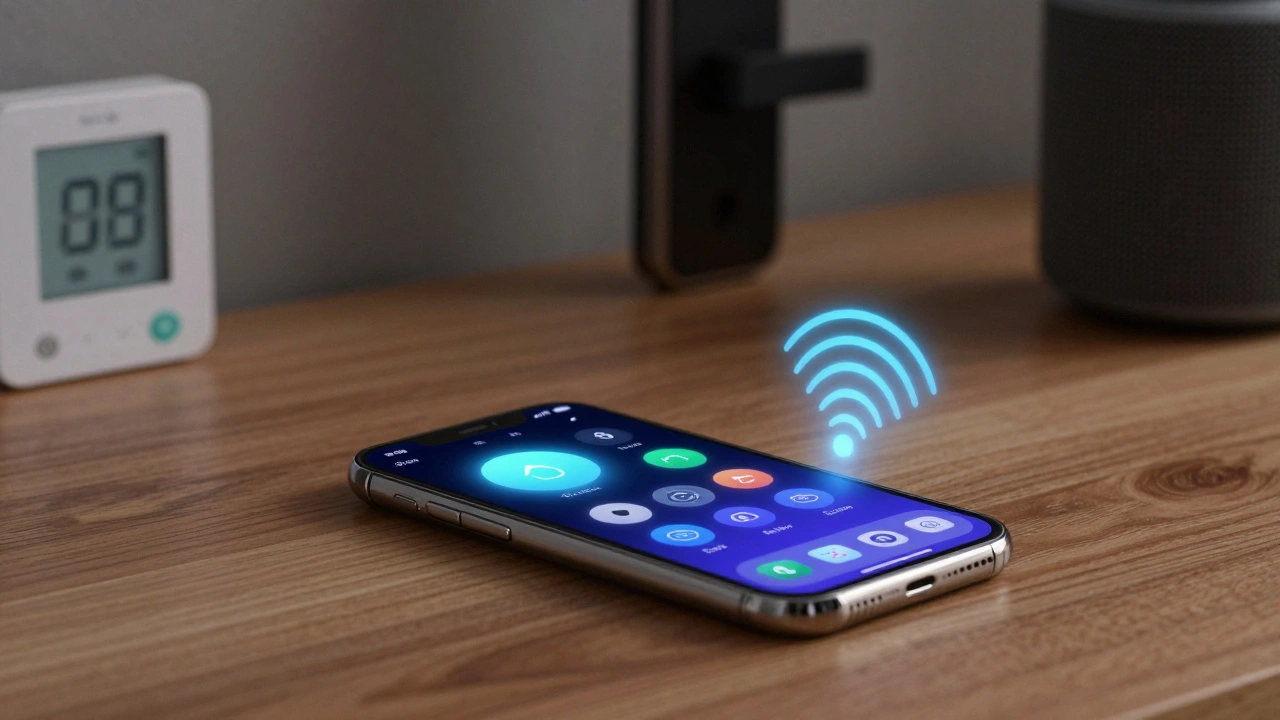
When you think of smart devices, you probably picture a thermostat that learns your schedule, a light bulb you control with your voice, or a doorbell that shows you who’s at the door. But what about the thing you’re holding right now? The one you check 50 times a day? Is a cell phone a smart device? The answer isn’t as simple as yes or no-and it matters more than you think.
What Makes a Device ‘Smart’?
A smart device isn’t just something with a screen or an app. It’s a device that connects to the internet, collects data, and can act on that data without you having to manually tell it what to do every time. It learns. It adapts. It talks to other devices. That’s the core definition.
Your phone does all of that. It knows where you are, what time you wake up, which apps you use most, even how you walk. It syncs with your car, your smart speaker, your fitness tracker. It turns on your lights when you get home. It sends you a reminder to lock the door because your smart lock detected you left without locking it. That’s not just a phone-it’s the brain of your smart home.
Phones Are the Hub, Not Just a Tool
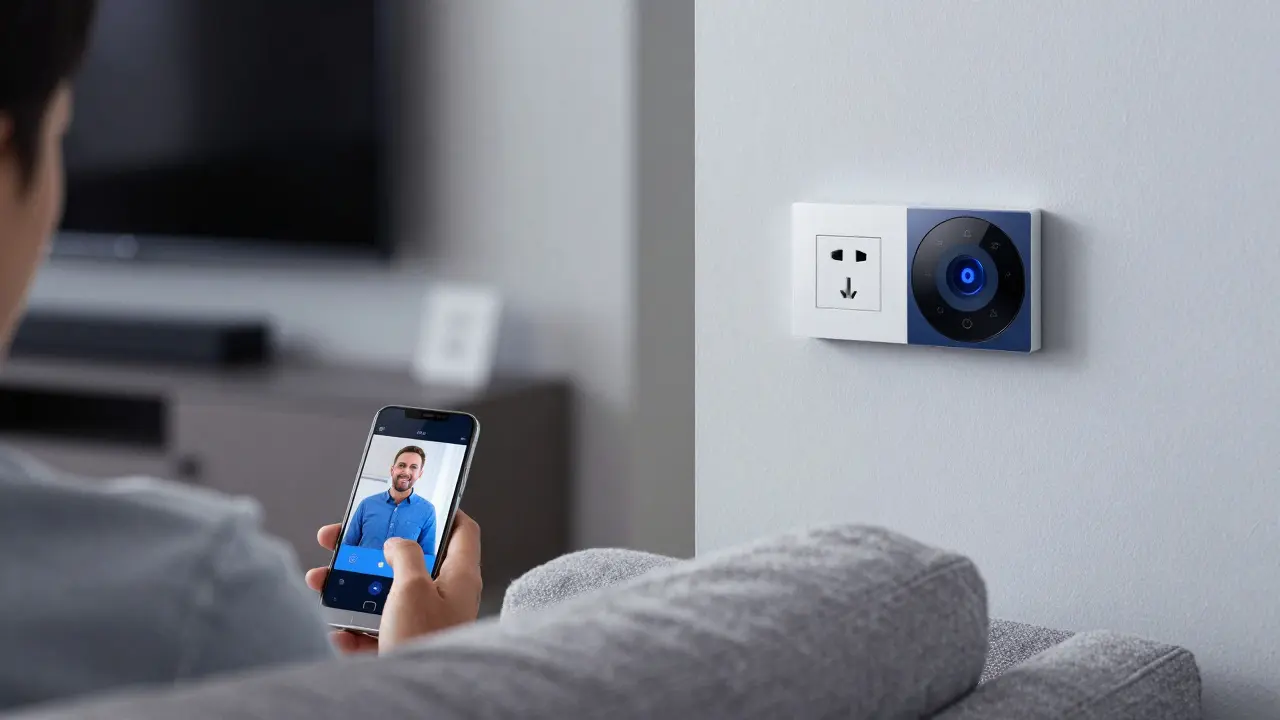
Think about how you control your smart home. You don’t yell at your fridge. You don’t tap buttons on your thermostat unless you’re standing right next to it. You use your phone. Almost every smart home system-whether it’s Google Home, Apple HomeKit, or Amazon Alexa-requires your phone to set up, manage, and monitor devices. Even if you use voice commands, your phone is still the central hub that keeps everything connected.
According to Statista, over 90% of smart home owners use their smartphones to control their devices. That’s not a coincidence. Your phone isn’t just a remote control-it’s the command center. It stores your preferences, runs your automations, and even updates firmware for other devices when you’re not looking.
Phones Have the Same Tech as Other Smart Devices
Let’s break down the hardware. A smart thermostat has a processor, Wi-Fi, sensors, and memory. So does your phone. Your phone has a faster processor, more memory, better sensors (GPS, accelerometer, gyroscope, barometer, ambient light sensor), and multiple radios (Wi-Fi, Bluetooth, cellular, NFC). It’s more powerful than most smart home gadgets combined.
And it doesn’t just sit there. It runs apps that process data in real time. If your phone detects you’re leaving work, it can signal your smart thermostat to lower the heat. If your phone’s microphone picks up a smoke alarm, it can alert your smart speaker to broadcast a warning. That’s not just connectivity-that’s intelligence.
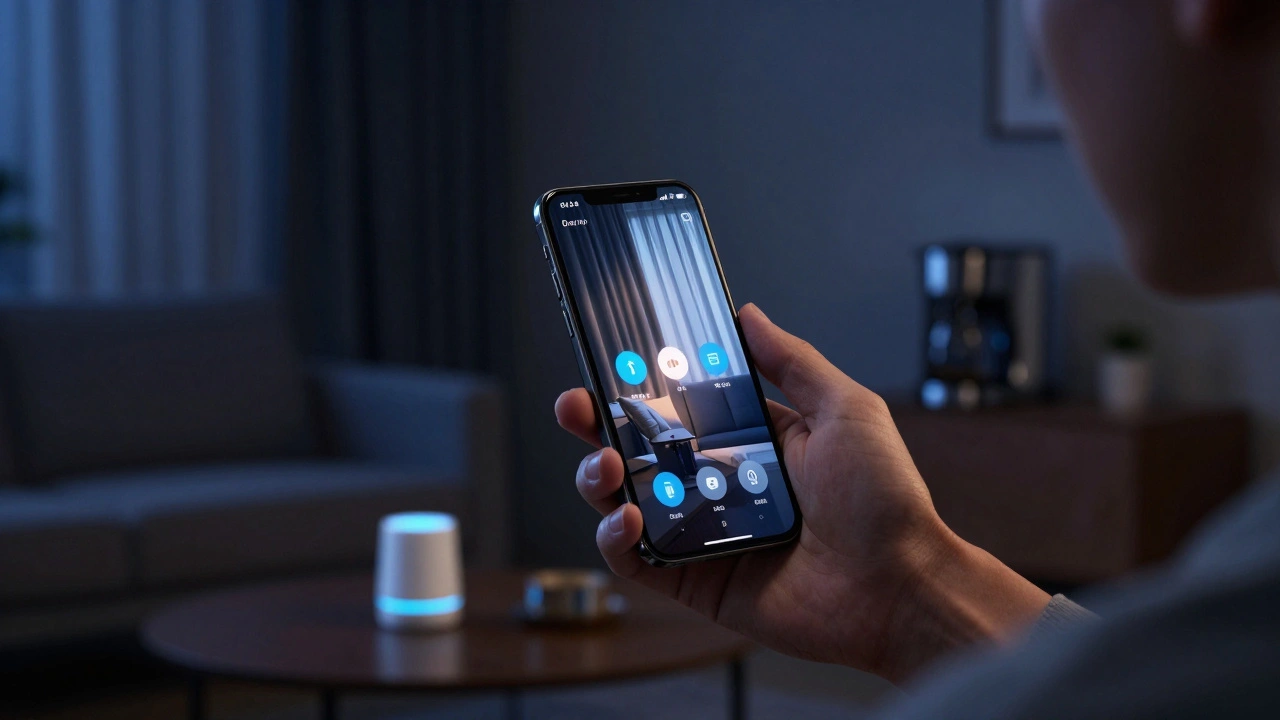
But Why Do People Say Phones Aren’t Smart Devices?
It’s a labeling issue. Most people think of smart devices as things that live in your house and do one specific job. A smart bulb. A smart plug. A smart lock. These are specialized. Your phone does everything. It’s not just a device-it’s a platform.
Because it’s so common, we stop seeing it as ‘smart.’ We don’t say, ‘I turned on the smart device’ when we unlock our phone. We say, ‘I checked my messages.’ But functionally, it’s the same thing. The difference is familiarity, not technology.
Also, some tech companies market phones separately from ‘smart home’ products. That’s a marketing choice, not a technical one. Apple calls its ecosystem ‘HomeKit,’ not ‘iPhone ecosystem.’ Amazon pushes Alexa devices as the hub, not the phone. But behind the scenes, your phone is still the glue holding it all together.
What Happens When Your Phone Isn’t a Smart Device?
Try this: turn off your phone’s Wi-Fi, Bluetooth, and location services. Now try to control your smart lights. Can’t do it? Your smart lock won’t open remotely. Your security camera won’t send alerts. Your fridge won’t tell you when you’re out of milk.
Without those features, your phone becomes just a phone. No apps. No connectivity. No automation. It’s a brick. That’s what happens when you remove the ‘smart’ part. The moment you re-enable those services, it’s back to being the most powerful smart device in your home.
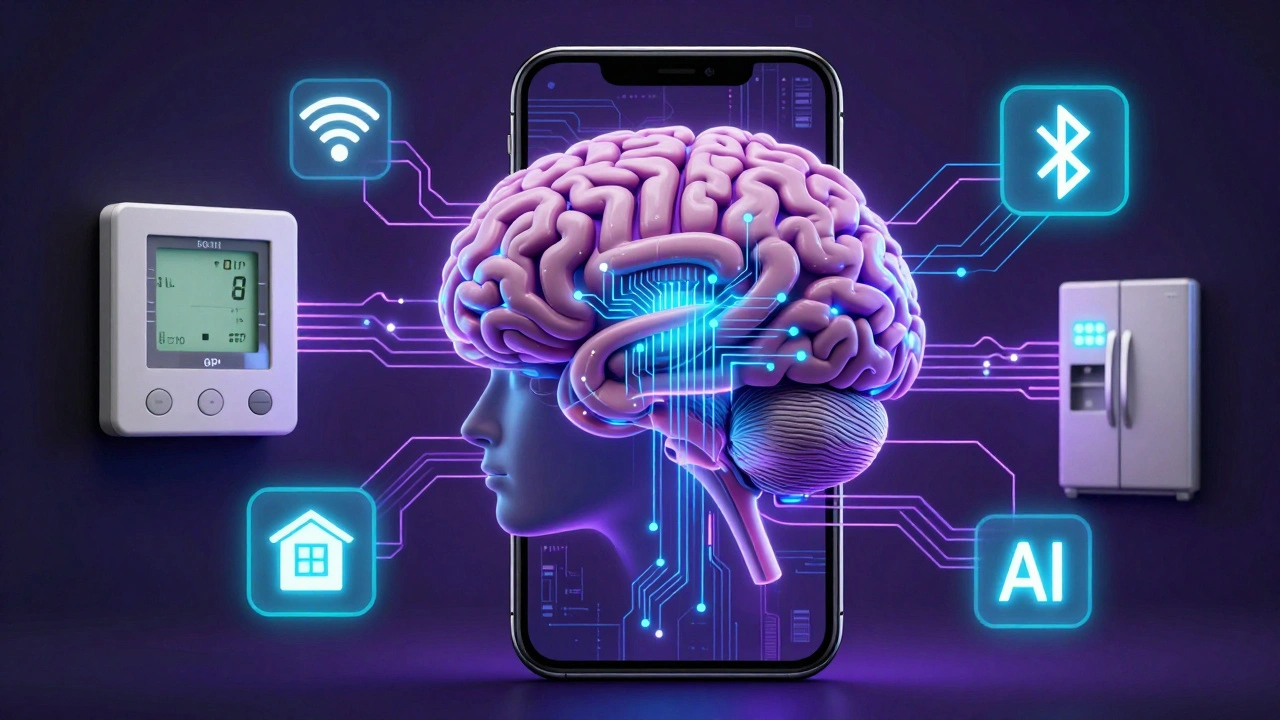
Phones Are the Most Important Smart Device You Own
Let’s be clear: your phone isn’t just a smart device. It’s the most important one. It’s the only device in your home that:
- Stays with you 24/7
- Has access to your location, calendar, contacts, and habits
- Can trigger actions in other devices based on your behavior
- Receives updates and security patches automatically
- Acts as a key for digital access (unlocking doors, starting cars, paying for coffee)
Smart home devices are useful. But they’re dependent. Your phone doesn’t need them to be smart. They need you to have your phone to work at all.
Future-Proofing Your Smart Home
As smart homes get more complex, your phone will become even more central. New standards like Matter are designed to make devices work together-but they still rely on your phone for setup and control. Apple, Google, and Amazon all require a phone to add a new device to your network.
And with AI getting smarter, your phone will soon predict what you need before you ask. If you’re running late, it won’t just turn on the heat-it’ll preheat your oven, adjust your lights, and text your partner you’re on the way. All because it knows your patterns better than you do.
So yes, your cell phone is a smart device. Not just because it can connect to the internet, but because it’s the reason your smart home works at all. It’s the brain, the heart, and the remote control-all in one.
What’s Next?
If you’re trying to build a better smart home, stop thinking about buying more gadgets. Start thinking about how you use your phone. Turn on location-based automations. Use app shortcuts to control multiple devices with one tap. Enable notifications so your phone alerts you when something unusual happens. Your phone is already the smartest thing in your house. You just need to let it work.
Is a smartphone the same as a smart device?
Yes, a smartphone is a type of smart device. It connects to the internet, uses sensors and data to make decisions, and can control other smart devices. What sets it apart is that it’s not limited to one function-it’s a multi-purpose platform that runs apps, tracks behavior, and automates tasks across your home.
Can a phone work without being a smart device?
Technically, yes-if you disable Wi-Fi, Bluetooth, GPS, and cellular data, your phone becomes a basic communication tool. But you’d lose almost all modern features: no apps, no voice assistants, no smart home control, no automatic updates. In practice, no one uses a phone that way anymore. Even basic phones today have smart features built in.
Do I need a phone to use smart home devices?
For setup and full control, yes. Most smart devices require a smartphone app to connect to your home network and configure settings. Even voice assistants like Alexa or Google Home need a phone to link accounts and update firmware. Once set up, you can sometimes control devices with voice commands alone-but if your phone is off or disconnected, many features stop working.
Why do smart home systems say phones aren’t smart devices?
It’s marketing, not technology. Companies want you to think of their product-the thermostat, the speaker, the bulb-as the hero. But in reality, your phone is the control center. They downplay its role to make their own devices seem more essential. Don’t be fooled: your phone powers the whole system.
Will future smart homes still need phones?
Yes, for the foreseeable future. Even with voice control and AI assistants, phones remain the most reliable, secure, and personal way to manage smart homes. They’re always with you, encrypted, and capable of complex tasks. New tech like facial recognition or gesture control might reduce reliance-but they’ll still connect back to your phone as the central hub.

Teja kumar Baliga
December 15, 2025 AT 17:31Your phone isn't just smart-it's the silent conductor of your whole digital life. I've seen people buy ten smart gadgets and still can't get their lights to turn on without their phone. It's not magic, it's just how modern life works.
Mongezi Mkhwanazi
December 16, 2025 AT 00:39Let’s be honest: calling a phone a ‘smart device’ is like calling a Ferrari a ‘vehicle.’ Yes, technically true-but it’s like saying a nuclear reactor is a ‘heat source.’ You’re ignoring the staggering complexity, the invasive data collection, the corporate surveillance infrastructure, the fact that your phone knows when you’re lying, when you’re sad, when you’re about to break up with someone-and yet, we call it ‘just a phone’? No. No. NO. It’s a behavioral tracking engine with a calling feature. And we’re fine with that? We’re fine with that.
Apple doesn’t call it a ‘smart device’ because they don’t want you to realize you’re living inside a data mine with a touchscreen. They want you to think it’s a tool. It’s not. It’s your subconscious, outsourced. Your habits, your fears, your cravings-mapped, monetized, and sold. And you swipe right like it’s a dating app.
And don’t even get me started on ‘Matter’ protocols-another corporate fairy tale. Your phone still has to be the middleman. Every single time. Because no one trusts a thermostat to make decisions. But they trust your phone? The same phone that auto-uploads your photos to the cloud while you sleep? The same phone that listens through your headphones even when you think it’s off? Yeah. That one.
We’re not discussing technology here. We’re discussing denial. We’re discussing the quiet surrender of autonomy to a device that doesn’t care if you live or die-it just needs you to keep scrolling. And we call it ‘smart’? No. It’s obedient. It’s obedient to the algorithm. And we’re the ones who built the cage.
So yes-it’s a smart device. But the real question isn’t whether it’s smart. It’s whether we’re still human.
Mark Nitka
December 16, 2025 AT 23:58I get where Mongezi is coming from, but I think we’re overcomplicating this. The phone is the hub because it’s the most personal, always-on device we have. That’s not a flaw-it’s a feature. If your smart home doesn’t work without your phone, that’s not a problem, that’s design. It’s like saying a steering wheel isn’t a ‘real car part’ because the car can’t drive without it. Of course it can’t. That’s the point.
People want control. They want reliability. They want their lights to turn on when they walk in the door. Your phone delivers that. The thermostat doesn’t. The speaker doesn’t. The doorbell doesn’t. The phone does. End of story.
Kelley Nelson
December 18, 2025 AT 08:20One must, with due deference to the prevailing technological orthodoxy, acknowledge the ontological ambiguity inherent in the categorization of mobile communication devices as ‘smart.’ The term itself, derived from the semantic field of artificial intelligence, implies a level of autonomous cognition that, while functionally approximated through algorithmic behavioral modeling, remains fundamentally anthropomorphic in its rhetorical deployment. One might argue that the smartphone, in its capacity as a centralized nexus of biometric, geospatial, and behavioral data aggregation, constitutes a superior instantiation of the ‘smart’ paradigm-however, its hegemonic ubiquity paradoxically renders it invisible within the cultural lexicon of domestic automation. Thus, the very familiarity of the device engenders a hermeneutic blindness, wherein its infrastructural primacy is neither recognized nor interrogated. One is left to wonder: is the smartphone smart-or are we merely conditioned to perceive it as such?
Aryan Gupta
December 18, 2025 AT 22:50They’re lying to you. Your phone isn’t just collecting data-it’s being used to train AI models that will eventually replace you. Every time you use location services, every time you let an app access your mic, every time you accept a ‘personalized’ ad-you’re feeding a system that already knows your worst fears. The government knows. The corporations know. And soon, your phone will know you better than your therapist. And then? Then it’ll decide what you need before you do. And you’ll thank it for it. That’s not progress. That’s surrender. And they call it ‘smart’ to make you feel safe. Don’t be fooled.
lucia burton
December 19, 2025 AT 22:18Let’s deconstruct the architectural hierarchy of the modern IoT ecosystem: the smartphone functions as the primary orchestration layer within a distributed sensor network, leveraging embedded heterogeneous computing modules-including but not limited to GNSS, IMU, NFC, and multi-band RF transceivers-to enable context-aware automation at the edge. Its role as a control plane for Matter-compliant endpoints is non-negotiable, given the absence of a unified, decentralized identity layer in consumer-grade home automation. Moreover, its persistent connectivity, biometric authentication capabilities, and real-time OS-level telemetry integration render it the sole device capable of sustaining dynamic, user-centric automation workflows. The perception that it’s ‘just a phone’ is a cognitive bias rooted in interface familiarity, not technical reality. The true innovation isn’t the smart bulb-it’s the predictive inference engine running on the SoC in your pocket.
Nicholas Zeitler
December 20, 2025 AT 18:45So many people miss the point. The phone isn’t smart because it has sensors-it’s smart because it learns you. It knows you take the same route to work every day. It knows you always check Instagram before bed. It knows you get anxious when your battery drops below 20%. It doesn’t just react-it anticipates. That’s not tech. That’s empathy, coded. And if you’re not using that power? You’re leaving your own life on autopilot. Turn on location triggers. Set up shortcuts. Let your phone help you. You’re not lazy-you’re just not using the tool right.
michael Melanson
December 21, 2025 AT 04:01I used to think my smart speaker was the brain of my home. Then I realized every command I gave it was routed through my phone. My phone is the real MVP. I don’t care what it’s called-I just care that it works. And it does.
Fredda Freyer
December 21, 2025 AT 12:46It’s not just that the phone is a smart device-it’s that we’ve outsourced our memory, our attention, our routines, and even our sense of safety to it. We call it a tool, but it’s more like a mirror: it reflects back to us the patterns we didn’t know we had. The real question isn’t whether it’s smart-it’s whether we’re willing to look at what it shows us. And if we’re not, then maybe the real dumb device is us.