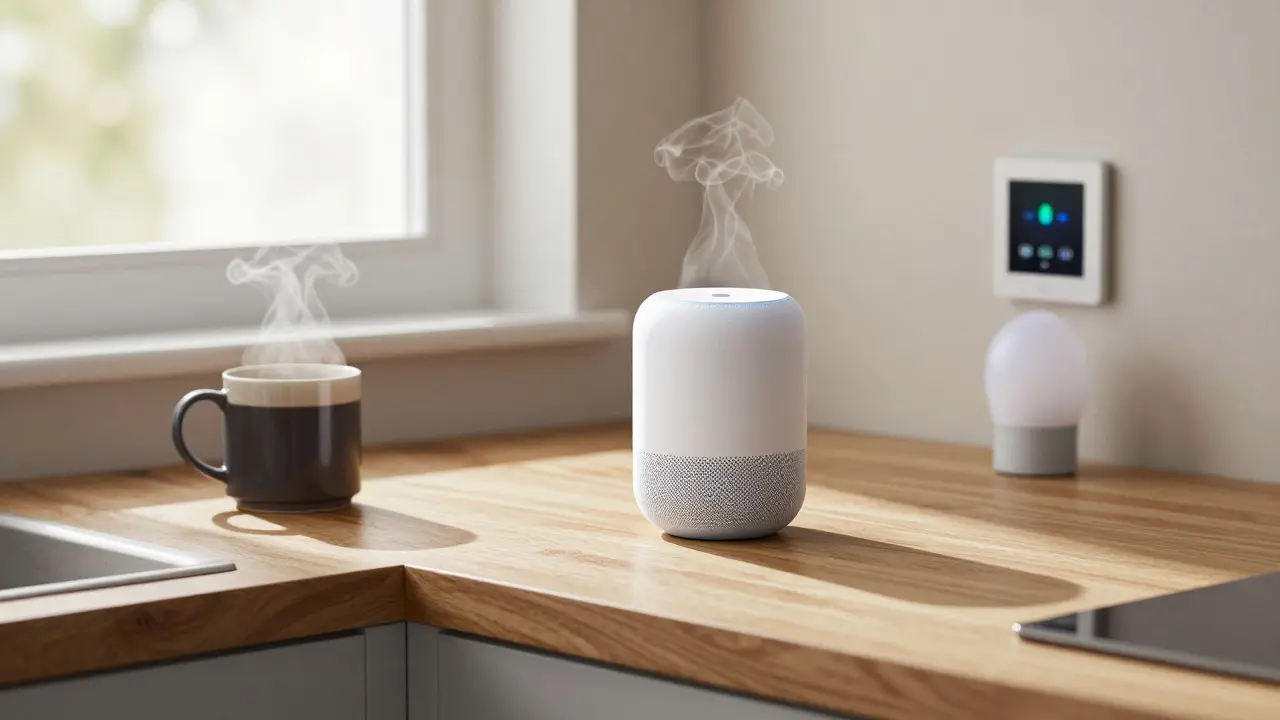
Google Home stopped getting new hardware in 2020. That’s not a secret. But if you’re wondering whether your Google Home speaker is useless now, you’re asking the wrong question. The device didn’t die-it evolved. And if you’re still using it in 2026, you’re not stuck in the past. You’re just using something that still works.
Google Home hardware is discontinued, but the software isn’t
Google stopped making new Google Home speakers after the Nest Hub Max and Nest Audio replaced them. The original Google Home, Home Mini, and Home Max are no longer sold. But here’s the thing: your old Google Home still turns on. It still hears you. It still plays music, sets timers, and tells you the weather. That’s because Google Assistant-the brain behind it-is still actively updated. Every few months, Google rolls out new features to the Assistant app, and those updates reach every device that runs it, even the ones that haven’t been made in years.
Google didn’t abandon its users. They just moved the hardware forward. Your 2018 Google Home Mini still connects to your lights, thermostat, and security camera. It still works with IFTTT, SmartThings, and HomeKit via bridges. It doesn’t need a new chip to do that. It just needs Wi-Fi and power.
Why people think Google Home is outdated
The confusion comes from marketing. Google’s ads now show Nest speakers. Their website pushes the Nest Hub. When you search for "smart speaker," the top results are all Nest. That makes it look like Google Home is gone. But it’s not. It’s just not the face of the brand anymore.
There’s also the voice quality. Newer Nest speakers have better microphones, better speakers, and better noise cancellation. If you live in a noisy kitchen or next to a barking dog, you’ll notice the difference. But if you’re using your Google Home in a quiet living room? It’s fine. It hears you just fine. You don’t need a $150 speaker to ask for the news or play your morning playlist.
Another myth: Google Home doesn’t support new smart devices. That’s not true. Google Assistant supports over 20,000 smart home brands. Whether you’ve got a Ring doorbell, a TP-Link bulb, or a Ecobee thermostat, your Google Home can control it. Google doesn’t stop supporting devices because they stop selling them.
What you can’t do with an old Google Home
There are limits. You can’t use the screen on a Google Home Mini. You can’t watch YouTube videos or see your doorbell feed on the original device. You can’t use the advanced voice recognition that picks up different voices in a room-that’s a Nest feature. You won’t get the new ambient music mode or the improved echo cancellation that came with the Nest Audio.
But here’s what most people don’t realize: you don’t need those features. Most users ask for the weather, turn off lights, or play music. That’s it. Google Home does all of that just as well as the new models. The fancy stuff? It’s nice, but it’s not necessary.
Is it safe to keep using Google Home in 2026?
Security updates are still coming. Google confirmed in late 2024 that all Google Assistant devices, including discontinued ones, will continue receiving security patches until at least 2027. That’s longer than most Android phones get updates. Your Google Home isn’t a security risk. It’s not vulnerable to the latest exploits because Google patches them before they become public.
Privacy? Same as ever. Google doesn’t listen unless you say "Hey Google" or press the mic button. You can turn off voice recording entirely in the Google Home app. Your data isn’t being harvested just because your speaker is old.
When should you upgrade?
You only need a new speaker if:
- Your Google Home doesn’t respond reliably anymore-even after resetting and checking Wi-Fi
- You want a screen to see recipes, video calls, or camera feeds
- You have multiple people in the house and want voice recognition to tell who’s speaking
- You want better sound quality for music or podcasts
If none of those apply, you’re fine. There’s no rush. Upgrading is a choice, not a requirement.
What’s better than Google Home now?
If you’re shopping, the Nest Audio is the direct replacement. It sounds better, has a slightly better mic, and works with Google’s new Ambient Intelligence features. The Nest Hub (2nd gen) adds a screen and lets you control your whole home visually. Both are $100 or less.
But if you’re comparing to Amazon or Apple? That’s a different conversation. Alexa has better third-party skill support. Siri works better with Apple devices. But if you’re already in Google’s ecosystem-using Gmail, YouTube, Google Calendar, or Android-then Google Assistant still wins. It understands natural language better than Alexa. It integrates deeper with your calendar and maps than Siri.
And here’s something most reviews miss: Google Assistant can do things Alexa and Siri can’t. Ask it to "show me my calendar for next week" and it pulls up a full visual timeline. Ask it to "remind me when I get home" and it uses your phone’s location to trigger it. Ask it to "play the podcast I was listening to yesterday" and it finds it-even if you didn’t name it. That’s not magic. That’s smart context.
Real-world example: My neighbor’s Google Home
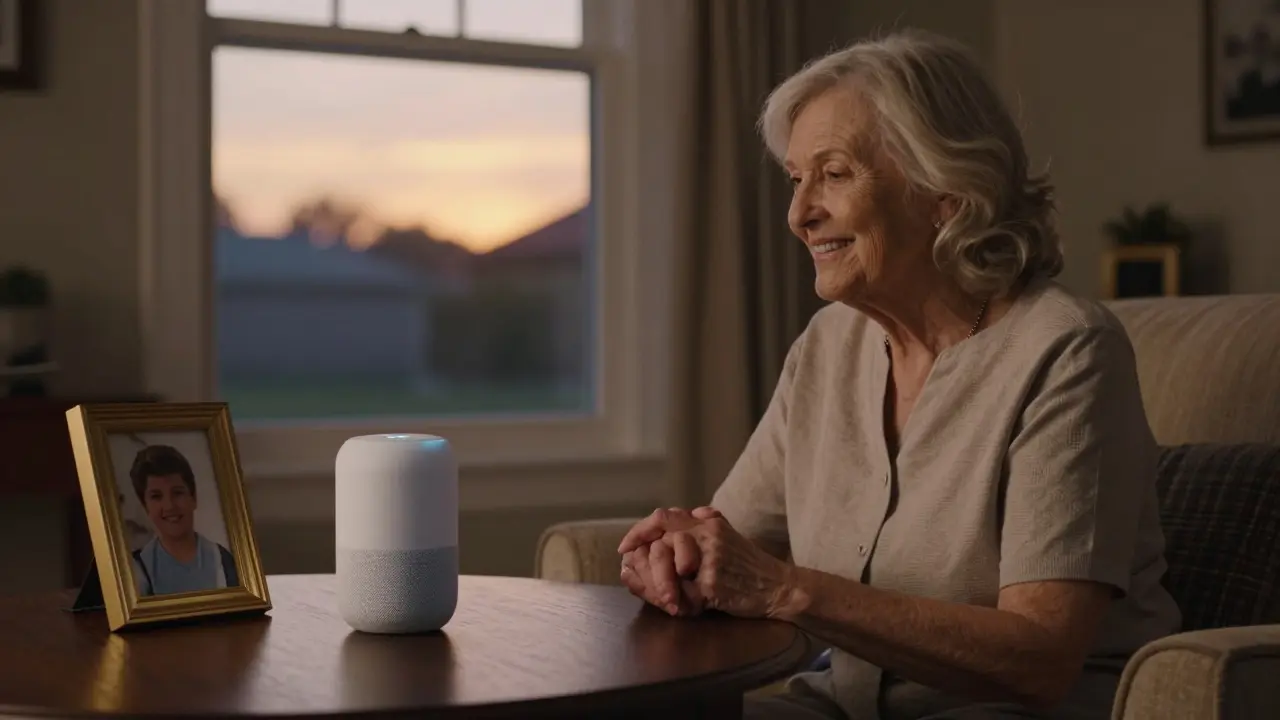
My neighbor in Burlington has a 2017 Google Home Mini. She uses it to turn on her porch light at sunset, play classical music while she cooks, and call her grandson on his Android phone. She doesn’t know what a Nest Hub is. She doesn’t care. Her speaker works. It’s been reliable for seven years. She’s never had a problem. She’s not behind. She’s just smart.
She didn’t upgrade because she didn’t need to. And that’s the point. Technology doesn’t make you outdated. Needing something new does.
Bottom line: Your Google Home isn’t obsolete. It’s just older.
Google Home isn’t outdated. It’s just not the newest model. It still does everything most people need it to do. The hardware stopped, but the software didn’t. You can still use it safely, reliably, and effectively in 2026. If it works for you, keep it. If you want a screen or better sound, upgrade. But don’t feel pressured. You’re not falling behind. You’re just using a tool that still works.
Smart home tech isn’t about having the latest gadget. It’s about making your life easier. And your Google Home? It’s still doing that.



Paritosh Bhagat
January 11, 2026 AT 09:05Look, I get it-people love to cling to old tech like it’s a security blanket. But let’s be real: if your speaker can’t recognize your kid’s voice or play spatial audio, you’re not being smart, you’re being cheap. Google moved on for a reason.
Adrienne Temple
January 12, 2026 AT 10:16My grandma’s Google Home Mini still tells her the weather and plays her favorite hymns. She doesn’t need a screen or fancy voice ID. It works. And that’s all that matters. 😊
Chris Heffron
January 14, 2026 AT 03:40Technically speaking, the distinction between 'discontinued' and 'obsolete' is critical. One refers to manufacturing; the other, functionality. You’ve made a sound argument, but the phrasing could use a bit more precision.
Antonio Hunter
January 15, 2026 AT 14:50I’ve got a 2018 Home Mini in my bedroom. It’s been running nonstop since I bought it. I use it to wake up, control my lights, and even order my coffee via IFTTT. I’ve never once had a security issue. Google’s updates still roll out-last month, they added better ambient noise filtering for older devices. No, it doesn’t have a screen, but I don’t need one. I don’t watch YouTube on my speaker-I watch it on my TV. The idea that you have to upgrade just because the ads changed is pure marketing FUD. People who say otherwise are confusing novelty with necessity.
My neighbor’s 2017 device does the same thing. She’s not ‘behind.’ She’s optimized. She doesn’t waste money on features she doesn’t use. That’s not laziness-that’s intelligence. We live in a world where people think they need the latest phone every year. Meanwhile, the real tech-savvy folks are the ones who keep things running for seven years without a hiccup.
And let’s not forget: Google Assistant still understands natural language better than Alexa. Ask it to ‘remind me when I get home’ and it does. Ask Siri to do that without a paired iPhone and it laughs at you. This isn’t about hardware-it’s about the ecosystem. If you’re already in Google’s world, why leave?
Security patches until 2027? That’s longer than Apple supports most iPads. And privacy? Same settings. You can disable voice recording. You can delete history. The device doesn’t spy on you because it’s old. It spies on you because you let it. That’s a user choice, not a product flaw.
Upgrade if you want a screen. Upgrade if you want better bass. But don’t feel guilty for using something that still works. That’s not outdated. That’s sustainable.
Amanda Harkins
January 16, 2026 AT 01:20It’s funny how we treat tech like fashion. If your speaker still answers you, why are you embarrassed to use it? I keep my 2019 Home Mini because it’s quiet, reliable, and doesn’t try to sell me stuff every time I ask for the time.
Aaron Elliott
January 16, 2026 AT 01:21One must interrogate the underlying epistemology of technological obsolescence. Is utility the sole criterion for validity? Or does the mere presence of newer iterations impose an ontological imperative upon the user to conform? The Google Home, though functionally adequate, exists in a state of semiotic erasure-its identity subsumed by the Nest brand. This is not mere product evolution; it is cultural erasure masquerading as innovation.
Nick Rios
January 16, 2026 AT 14:41I appreciate both sides here. My dad still uses his original Home, and honestly? It’s been perfect. But I got a Nest Audio last year because I listen to music a lot, and the sound difference is real. Neither of us is wrong.
Jeanie Watson
January 18, 2026 AT 02:24So… you’re saying I don’t need to buy a new one? Cool. I’ll just keep using my 2018 one then. 😴
Ben De Keersmaecker
January 18, 2026 AT 15:29Interesting how the article focuses on functionality while downplaying the psychological impact of design obsolescence. The fact that Google no longer markets the Home line creates a subtle but powerful social signal-that owning it is ‘uncool,’ even if it works perfectly. That’s not a technical issue; it’s a branding one. And it’s why people upgrade even when they don’t need to. We don’t just buy tools-we buy identity. The Nest Hub isn’t better at playing music-it’s just more visible in the Instagram feed. That’s the real story here.