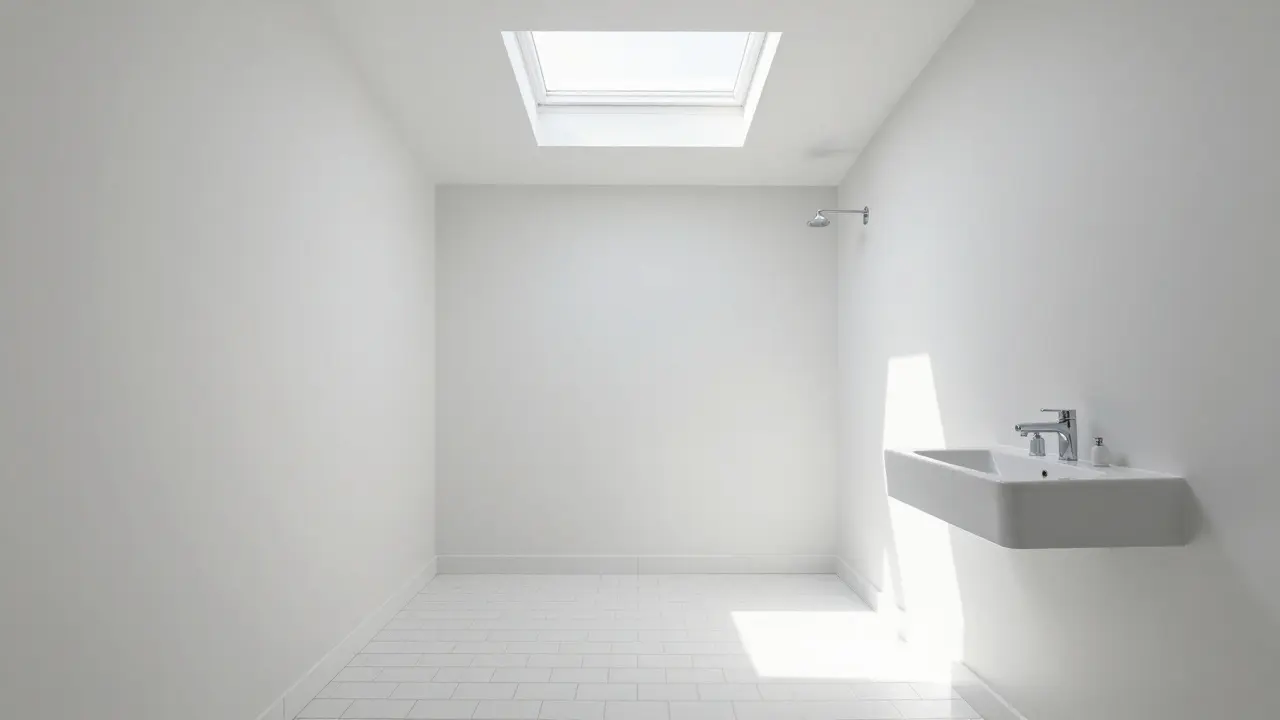
When you’re standing in front of a blank bathroom wall with a paint swatch in hand, the question isn’t just about style-it’s about how the space feels, how it functions, and how it holds up over time. Should bathroom walls be lighter or darker? There’s no single right answer, but there are clear rules based on light, size, and how you use the room every day.
Lighter Walls Make Small Bathrooms Feel Bigger
If your bathroom is under 50 square feet, going light is the safest bet. White, soft gray, or pale beige walls reflect natural and artificial light, making the room feel open and airy. In a tiny powder room or a condo bathroom with no windows, a light color can trick your brain into thinking the space is twice as big. A 2024 study by the National Association of Home Builders found that 78% of buyers preferred light-colored bathrooms in homes under 1,800 square feet. They didn’t just like the look-they said it made the space feel cleaner and more calming.
Light walls also hide minor imperfections. If your tile grout is uneven or your vanity doesn’t sit perfectly flush, a pale color won’t draw attention to it. That’s why builders use off-white in model homes-it’s forgiving and universally appealing.
Darker Walls Add Depth and Luxury-If Done Right
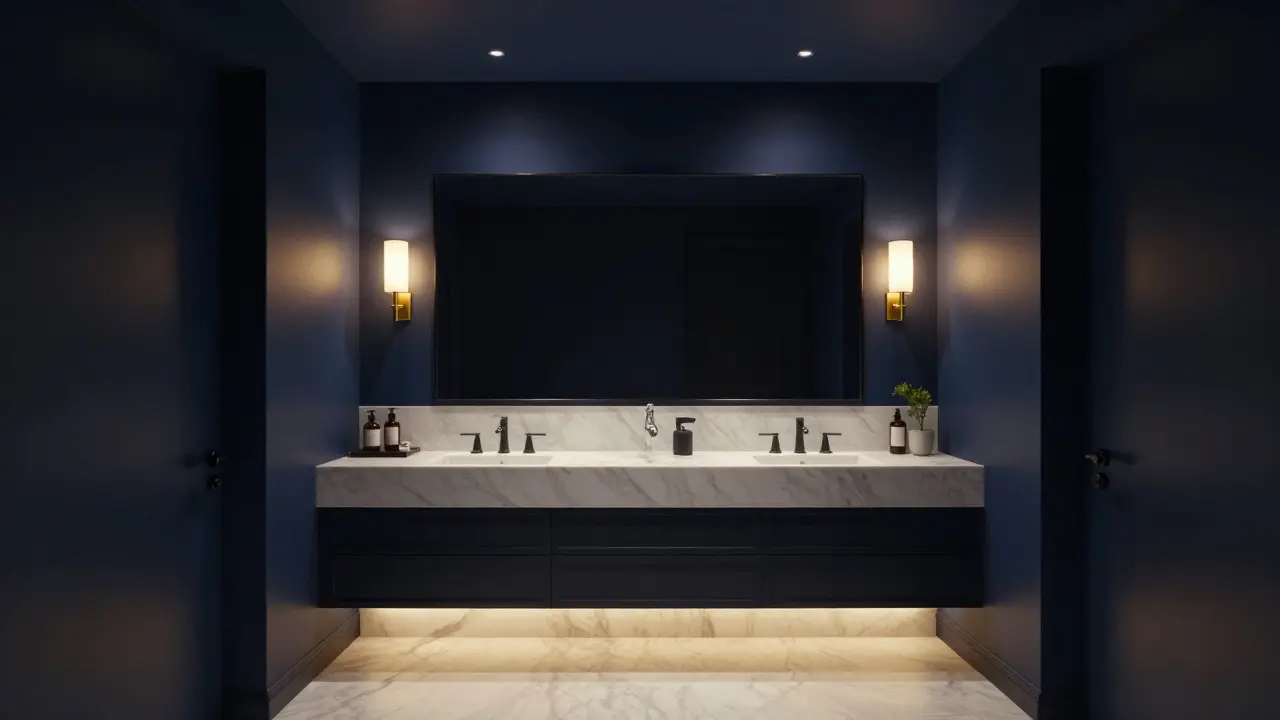
Darker walls aren’t a mistake. They’re a statement. Deep navy, charcoal, or even forest green can turn a bathroom into a spa-like retreat. The key? Contrast. Dark walls work best when paired with bright fixtures-chrome, brass, or matte black-and plenty of lighting. A single overhead bulb won’t cut it. You need layered light: sconces on either side of the mirror, a dimmable ceiling fixture, and maybe even LED strips under the vanity.
In a larger bathroom-say, 80 square feet or more-dark walls create intimacy. Think of it like a cozy reading nook, but for your morning routine. The color absorbs light instead of bouncing it around, which reduces glare and makes the space feel more private. A 2025 survey of 1,200 homeowners who remodeled their bathrooms found that those who chose dark walls reported higher satisfaction with the ambiance, especially if they used the space to unwind after work.
Light vs Dark: How Lighting Changes Everything
Color looks different depending on the time of day and the type of bulb. Natural daylight shows true color, but most bathrooms rely on artificial light. Warm white bulbs (2700K-3000K) make light colors feel creamy and soft. Cool white bulbs (4000K-5000K) make them look icy and clinical. Dark colors behave the opposite way: under warm light, they feel rich and warm. Under cool light, they can look flat or even depressing.
If your bathroom gets no sunlight, avoid cool grays or icy whites-they’ll make the room feel cold and sterile. Instead, pick a warm off-white with a hint of beige. If you’re going dark, stick to warm undertones: charcoal with brown undertones, not blue-gray. Blue-gray in a windowless bathroom can look like a morgue.
What About the Ceiling?
Most people paint the ceiling white, no matter the wall color. That’s not wrong, but it’s not always smart. If you have dark walls, painting the ceiling the same deep color can make the room feel like a cocoon. It’s dramatic, but it works if your ceiling is at least 8 feet high. In a standard 9-foot ceiling, you can use a shade one tone lighter than the walls to keep it from feeling oppressive.
With light walls, a white ceiling keeps things airy. But if you’re using a soft pastel like blush or sage, consider matching the ceiling to the wall color for a seamless, enveloping feel. It’s subtle, but it elevates the whole design.
Dark Walls Don’t Mean Dark Floors
One mistake people make is matching the floor to the walls. If you’ve got dark walls, don’t automatically go with dark tile. That creates a cave effect. Instead, balance it with a light floor. White subway tile, light oak wood-look vinyl, or even pale gray porcelain will lift the space and keep it from feeling heavy.
The opposite is true too. If your walls are light, a dark floor adds grounding. Think charcoal grout with white walls-it creates contrast that makes the room feel intentional, not bland. The floor is your anchor. Let it do the work.
Resale Value: What Buyers Really Notice
If you’re planning to sell in the next few years, stick with light walls. Real estate agents say neutral tones are still the top selling point in bathrooms. A 2025 Zillow report showed that homes with light-colored bathrooms sold 12% faster than those with dark walls. That doesn’t mean dark bathrooms don’t sell-they do-but they attract a narrower buyer pool. People who love dark bathrooms are often design-savvy, older, or willing to pay a premium for a unique look.
That’s why many homeowners choose a compromise: paint the walls a soft, warm white, then add dark accents. A black-framed mirror, matte black faucets, or even a dark vanity can give you the moody vibe without locking you into a color that’s hard to change.
Practicality Matters More Than You Think
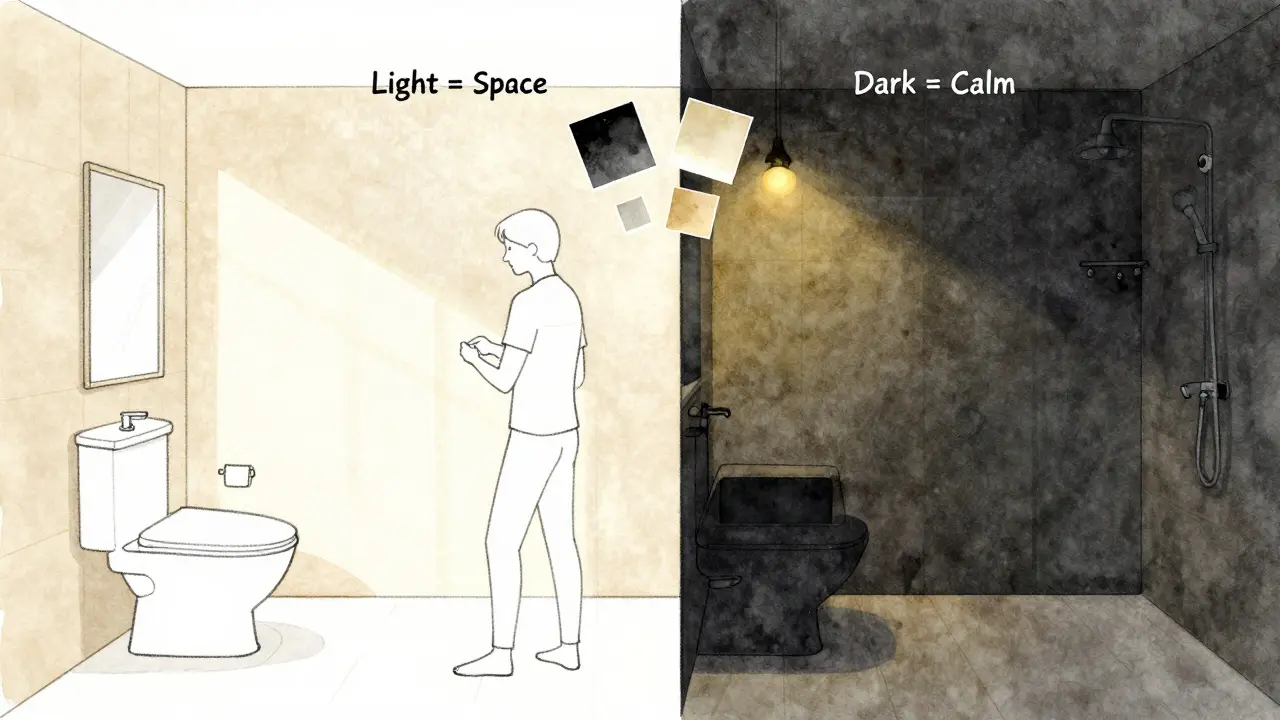
Let’s be real: bathrooms get messy. Water spots, toothpaste splatters, soap scum-they all show up faster on dark walls. If you have kids, pets, or just hate cleaning, go light. Light colors make dirt obvious, but they’re easier to wipe down. Dark walls hide stains but require more frequent cleaning to look good.
There’s one exception: high-gloss paint. A semi-gloss or high-gloss finish on a dark wall can actually make cleaning easier because it repels moisture and grime. But it also reflects every fingerprint and smudge. So if you go dark, go glossy-and be ready to wipe it down weekly.
Try This Before You Commit
Don’t buy a gallon of paint based on a swatch. Tape four 2-foot by 2-foot samples to different walls. Live with them for three days. Watch how they look in morning light, afternoon sun, and evening lamplight. Take a photo at night with your phone’s flash on. That’s how you’ll really see the color.
And if you’re still stuck? Start small. Paint just one accent wall. Or use removable wallpaper on the wall behind the vanity. It’s cheaper, reversible, and lets you test the mood without a full commitment.
Final Rule: Match the Color to Your Routine
Do you use your bathroom to wake up? Light walls help. Do you use it to unwind after a long day? Dark walls help. Your bathroom isn’t just a room-it’s part of your daily rhythm. Choose a color that supports how you live, not just how you want it to look.
There’s no perfect shade. But there’s a perfect one for you.
Are dark bathroom walls a trend or a fad?
Dark walls are a trend that’s here to stay, but not because they’re trendy-they’re here because they work. Designers have used deep colors in bathrooms for decades, from Parisian apartments to Japanese onsens. What’s new is the accessibility of high-quality, washable paints and better lighting. Dark walls aren’t a fad; they’re a design choice that’s gaining legitimacy as people prioritize mood over brightness.
Can I use dark paint in a bathroom without a window?
Yes, but you need to compensate with light. Skip the single ceiling fixture. Install at least two wall sconces on either side of the mirror, add a dimmable overhead light, and consider LED strip lighting under the vanity. Use warm white bulbs (2700K-3000K) to keep the space from feeling cold. Dark walls in a windowless bathroom can feel cozy, not claustrophobic-if the lighting is layered and intentional.
What’s the best paint finish for bathroom walls?
Semi-gloss is the gold standard. It resists moisture, wipes clean easily, and holds up against steam. Eggshell is okay for low-moisture areas like powder rooms, but avoid flat paint-it traps moisture and stains. If you’re painting a dark wall, go with high-gloss for maximum durability and shine, but be prepared to clean it often. For light walls, semi-gloss gives you the benefits without the glare.
Will light walls make my bathroom look boring?
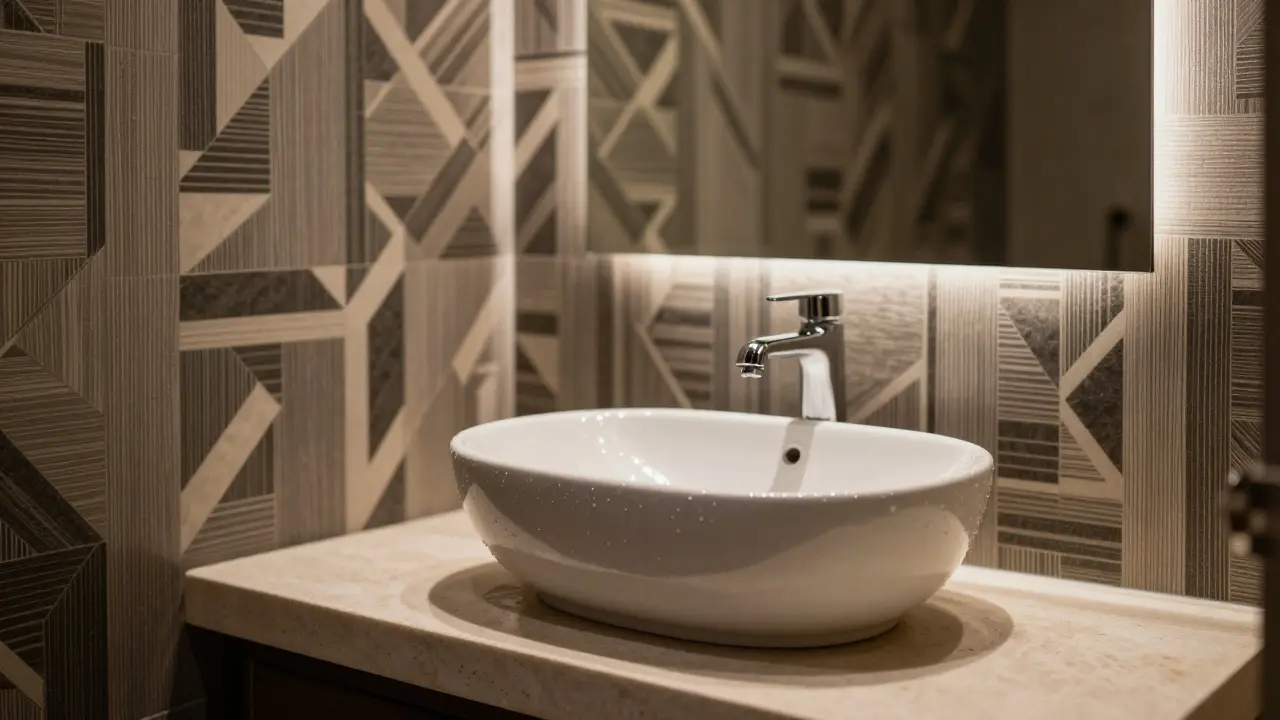
Not if you use texture and contrast. A white wall doesn’t have to mean plain. Try a textured plaster finish, a patterned tile backsplash, or a bold vanity. Add a woven towel rack, a brass mirror frame, or a statement light fixture. Light walls are a canvas-they let your accessories and fixtures become the focal point. The best light bathrooms don’t look boring; they look curated.
How do I pick the right shade of white for my bathroom?
White isn’t white. It has undertones: cool (blue or gray), warm (yellow or beige), or neutral. For bathrooms, avoid pure white-it can look hospital-like. Instead, pick a warm white like Benjamin Moore’s "Chantilly Lace" or Sherwin-Williams’ "Alabaster." Test samples next to your tile and fixtures. If the white looks gray next to your white toilet, it’s too cool. If it looks yellow next to your cream tiles, it’s too warm. The right white blends in without disappearing.

Wilda Mcgee
January 26, 2026 AT 04:08Love this breakdown. I painted my bathroom a warm oatmeal color last year and it changed everything. Morning light makes it glow, and at night with the dimmable sconces, it feels like a spa. No more feeling like I’m in a hospital. Also, semi-gloss on the walls? Game changer for cleaning. I wipe it down weekly with a microfiber cloth and it’s spotless. Seriously, texture and lighting matter more than the color itself.
Glenn Celaya
January 26, 2026 AT 12:56Light walls are for people who dont know how to design. Dark walls are art. If you need white to feel safe then maybe you shouldnt have a bathroom at all
Madeline VanHorn
January 28, 2026 AT 02:03Glenn is right. Light walls are the lazy mans solution. Ive seen too many homes with off white that looks like a dentist office. Dark walls are not a trend they are a lifestyle choice. If you cant handle a little maintenance then maybe you shouldnt own a house
Jen Becker
January 28, 2026 AT 16:49Dark walls in a windowless bathroom = morgue vibes. I swear my shower started haunting me after I did this. I cried for three days.
Ryan Toporowski
January 29, 2026 AT 13:41Just painted my powder room charcoal with gold fixtures and LED strips under the vanity 🌟 It feels like a secret lounge. Also use a high gloss finish - wipes clean like magic. So worth it. Try it youll thank me later 😊
Samuel Bennett
January 31, 2026 AT 03:16Actually the NAHB study cited is flawed. They used a sample size of 78% based on survey responses from builders not buyers. Also the Zillow report was from Q3 2025 but the data was pulled from MLS listings that had not been fully updated. Youre being misled by bad data. And why is everyone ignoring the fact that high gloss paint increases glare? Thats not a feature its a design flaw
Rob D
January 31, 2026 AT 12:29Light walls are for weaklings. Real Americans use dark colors because they stand for strength. We dont cower behind beige like the Europeans. Our bathrooms are bold like our country. If you dont like it then move to Canada
Franklin Hooper
February 1, 2026 AT 04:05Contrary to popular belief the recommendation to use warm white bulbs with dark walls is technically incorrect. The correlated color temperature should be matched to the spectral reflectance of the pigment not the perceived mood. Also the term "semi-gloss" is misused in this context. The correct terminology is "eggshell with a 20 gloss unit finish". Please consult the ASTM D523 standard before making design decisions
Chris Atkins
February 1, 2026 AT 22:41Just tried the two foot square sample trick and it changed everything. I thought I wanted gray but the morning light made it look blue. Ended up going with a warm white that matched my tiles. Best decision ever. Also the accent wall idea? Genius. No regrets. Thanks for the tips