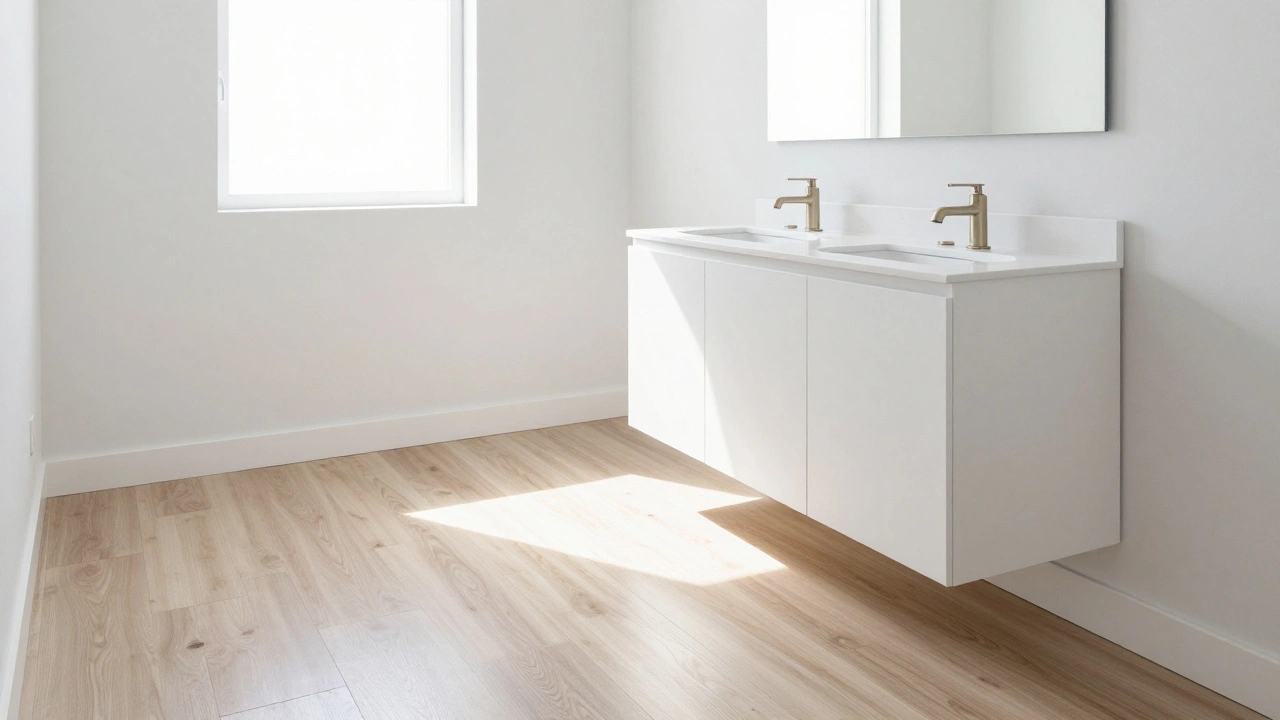
When you walk into a small bathroom, the first thing you notice isn’t the towel rack or the sink-it’s how cramped it feels. The walls seem to close in. The mirror feels too close. And the floor? If it’s dark or busy, it’s making everything worse. The right floor color can do more than match your tiles-it can trick your eyes into seeing more space. And in 2025, homeowners aren’t just picking colors because they’re trendy. They’re picking them because they work.
Why color matters more than you think
It’s not magic. It’s physics. Light reflects. Dark absorbs. When your floor is a deep brown or charcoal gray, it soaks up the light instead of bouncing it around. That makes the room feel smaller, heavier, and more closed off. But a light floor? It acts like a mirror. It lifts the visual weight of the space. Even in a bathroom that’s just 5 feet by 7 feet, switching from dark walnut to pale oak can make it feel like you’ve added a full foot of width.
This isn’t just theory. A 2024 study by the National Association of Home Builders tracked 200 renovated bathrooms under 40 square feet. Those with light-colored flooring (white, cream, light gray) were rated as feeling 15-20% more spacious by occupants-even when no other changes were made. The difference wasn’t in size. It was in perception.
The best colors for a bigger-looking bathroom
Not all light colors are created equal. Some make a bathroom feel airy. Others make it feel cold or sterile. Here’s what actually works in real homes, tested over time and in real lighting conditions.
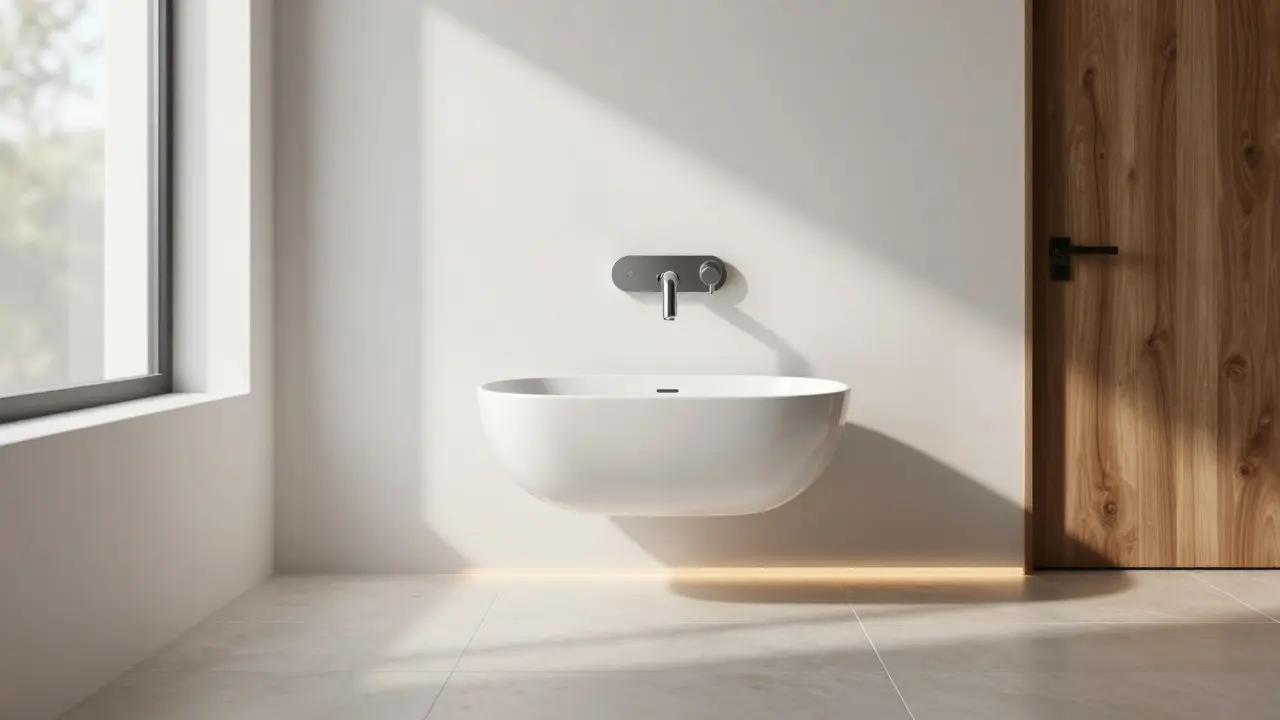
- White-The classic. Pure white flooring (like porcelain with a matte finish) reflects the most light. It works best with white or light gray walls and clean fixtures. Avoid glossy white-it can look cheap under harsh bathroom lighting.
- Cream or off-white-Warmer than pure white. This is the go-to for homes with natural wood accents or brass fixtures. It avoids the hospital feel while still expanding space. Look for tones with a hint of beige, not yellow.
- Light gray-A modern favorite. A soft, cool gray (think #D0D0D0 or lighter) adds sophistication without shrinking the room. It pairs well with matte black fixtures and marble accents. Avoid gray with blue or green undertones-they can make the space feel chilly.
- Light wood tones-If you want warmth without dark wood, go for oak, ash, or birch in natural or whitewashed finishes. The grain adds texture without visual weight. Just make sure the planks are wide and long-narrow strips create a busy pattern that breaks up space.
One homeowner in Burlington installed wide-plank whitewashed oak in her 6x8 bathroom. She kept the walls white, the vanity white, and the fixtures brushed nickel. She didn’t add a window or remove a cabinet. But after the floor went in, she told her contractor: “It feels like I doubled the size.”
Colors to avoid in small bathrooms
Some colors look great in living rooms. In a bathroom? They’re a trap.
- Dark brown or black-These absorb light and make ceilings feel lower. Even a small dark border around the tub can visually cut the room in half.
- Busy patterns-Geometric tiles, bold stripes, or multi-tone mosaics create visual noise. Your brain has to work harder to process the floor, which makes the room feel cluttered.
- High-gloss finishes-Shiny floors reflect the ceiling, lights, and fixtures in a chaotic way. That flicker distracts the eye and makes space feel unstable.
- Warm reds or oranges-These colors advance visually. They make walls feel closer. In a small bathroom, that’s the opposite of what you want.
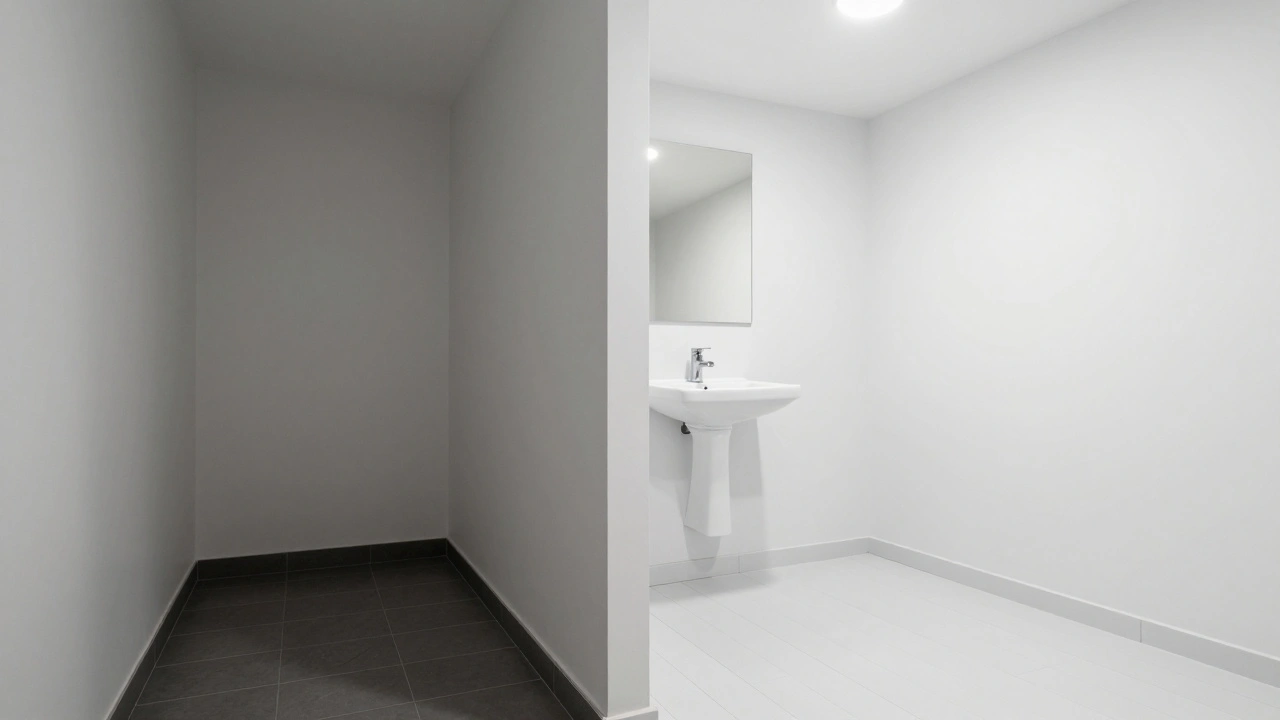
One common mistake? Choosing a floor that matches the shower tile too closely. If your shower is a dark gray stone and your floor is the same, your eyes can’t tell where the floor ends and the shower begins. That blurs boundaries and makes the space feel smaller. Instead, use contrast-light floor, darker shower-to define zones.
How lighting changes everything
Color doesn’t work in isolation. Lighting turns a good color into a great one-or ruins it.
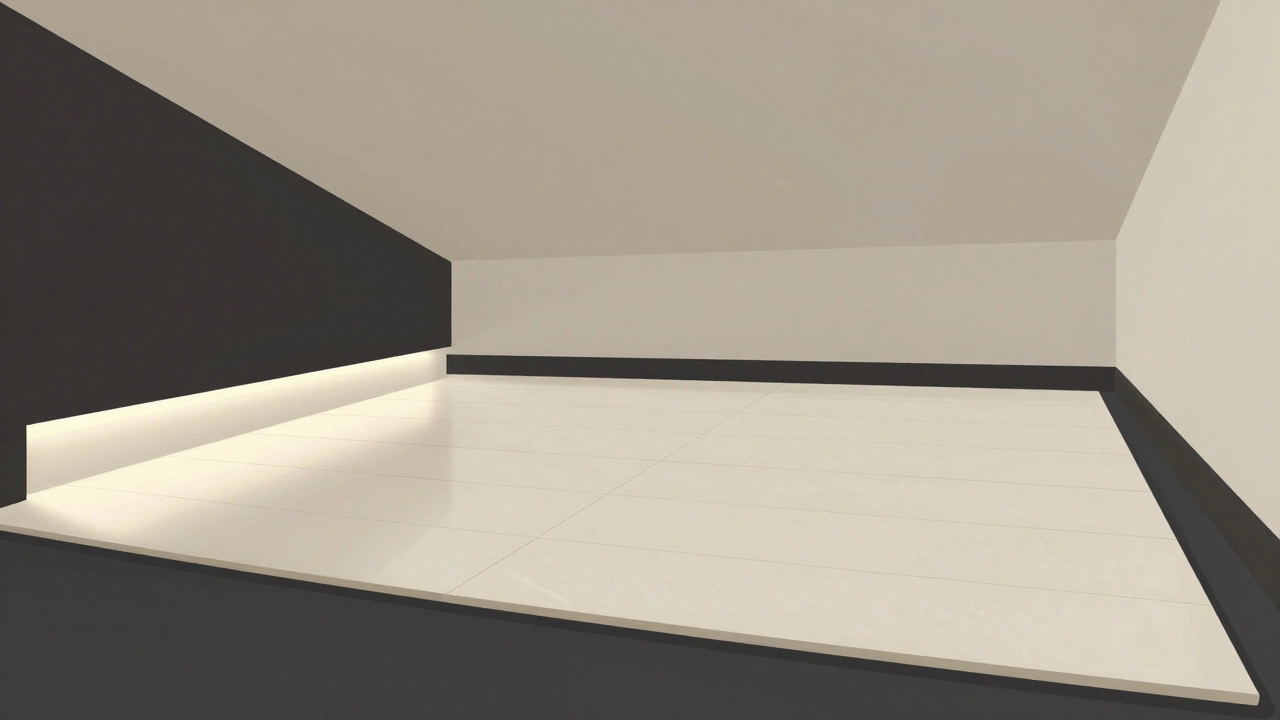
If your bathroom has only one overhead bulb, a light floor is even more critical. It’s your main source of visual lift. Add LED strip lighting under the vanity or around the mirror. It creates a soft glow that bounces off the floor, making the room feel bigger from every angle.
Natural light helps, but you don’t need a window. A well-placed mirror opposite a light source can double the effect. Place a large mirror above the sink, angled slightly upward. It reflects the ceiling and the floor together, creating depth.
Real-world examples from 2025 remodels
In a Toronto condo, a 5x6 bathroom had a dark gray tile floor. The owner hated how small it felt. She replaced it with a 12x24 inch porcelain plank in a soft oatmeal tone. She kept the same fixtures and paint. After the change, she said: “I don’t feel like I’m in a closet anymore. I actually enjoy being in there.”
Another example: a Vancouver bungalow with a tiny powder room. The original floor was a beige mosaic with flecks of brown. It looked dated and chaotic. The new floor? A single-color, matte white porcelain tile laid in a straight grid. No grout lines were widened. No fancy layout. Just clean, simple, light. The result? The room went from “barely usable” to “surprisingly elegant.”
What about wood-look vinyl? Is it worth it?
Yes-if you pick the right one. Wood-look vinyl plank (LVP) has come a long way. For small bathrooms, go for wide planks (7 inches or more) in a light oak or ash finish. Avoid textured surfaces that mimic real wood grain too closely-those can look fake and add visual clutter.
Choose LVP with a matte or satin finish. Glossy vinyl reflects too much and looks plastic. Also, make sure the product is rated for bathrooms. Water resistance matters, but so does slip resistance. Look for a slip rating of R10 or higher.
Pro tip: Match your floor to your ceiling
Here’s a trick used by interior designers: paint your ceiling the same color as your floor. It’s not common, but it works. When your ceiling and floor are the same light tone, your eyes don’t know where one ends and the other begins. That creates a floating effect. The walls become the only vertical boundary, making the room feel taller and more open.
Try it with white or cream. Use the same paint or tile color on both. It’s subtle. But in a small bathroom, subtlety is power.
Final checklist: Your 5-step plan
- Remove any dark flooring. Even a small patch of black or brown breaks the illusion.
- Choose a light color: white, cream, light gray, or natural wood tone.
- Go for large-format tiles or wide planks-small tiles create too many lines.
- Use a matte or satin finish. Avoid high gloss.
- Coordinate your ceiling color with your floor. It’s a game-changer.
Don’t overthink it. You don’t need to spend thousands. You don’t need to rip out the tub. Just change the floor. In a small bathroom, that’s often the single most powerful upgrade you can make.
Does light flooring make a bathroom look bigger in low light?
Yes, but only if you pair it with good lighting. A light floor in a dark bathroom will still look dull. Add at least one source of ambient light-like LED strips under the vanity or a wall sconce-to help the floor reflect and bounce light around. The floor helps, but it needs help.
Can I use patterned tiles if they’re light-colored?
Avoid them. Even light patterns-like subtle geometric designs or soft mosaics-create visual noise. Your brain has to process the design, which makes the space feel busier and smaller. Stick to solid or very subtle textures. Simplicity expands space.
What’s better: porcelain or vinyl for small bathrooms?
Porcelain is more durable and looks more upscale, but high-quality vinyl plank (LVP) works just as well for visual space expansion. Both can be found in light colors and matte finishes. Vinyl is easier to install and cheaper. Porcelain lasts longer. For a small bathroom, vinyl is often the smarter choice if you’re on a budget.
Should the bathroom floor match the kitchen floor?
No, and it shouldn’t. Each room has different needs. A kitchen might need a durable, slip-resistant stone. A bathroom needs water resistance and visual lightness. Matching them can make your bathroom feel like an afterthought. Let the bathroom floor do its job: make the space feel open.
Is white flooring hard to keep clean?
It shows dirt more than darker floors, but it’s not harder to clean. Use a microfiber mop and a pH-neutral cleaner. Avoid bleach-it can yellow porcelain over time. The key is regular maintenance. Wipe up spills quickly. A clean white floor looks bright. A dirty one looks messy. Keep it clean, and it’ll keep looking bigger.

Nicholas Carpenter
December 4, 2025 AT 23:12Light floors really do make a difference. I did this in my 5x7 bathroom last year-swapped out dark laminate for a matte cream LVP. Feels like I added a whole foot of space. No magic, just physics. Also, the morning light hits it just right now. No more feeling like I’m in a cave.
Wilda Mcgee
December 6, 2025 AT 03:41OMG YES. I tried the ceiling-floor matching trick and it’s wild. Used the same whitewashed oak tone on both. Now my tiny powder room looks like a spa designed by a minimalist monk. People ask if I hired an architect. I just used paint and common sense. 🙌
Glenn Celaya
December 6, 2025 AT 16:17White floors are a nightmare to clean. You think you’re buying space but you’re just buying a dirt magnet. I tried it. My kid stepped in mud. Now my bathroom looks like a crime scene. Save your sanity. Go gray.
Emmanuel Sadi
December 8, 2025 AT 14:07Let me break this down for you. You're telling people to avoid dark floors because they 'absorb light.' But in a tropical climate like mine, dark floors stay cooler. You're prioritizing illusion over comfort. Also, who decided light = better? That’s a Western aesthetic colonialism disguised as design advice. Your 'experts' never asked anyone outside the suburbs.
Samuel Bennett
December 9, 2025 AT 01:51Wait you said avoid glossy floors but then recommended porcelain? Porcelain is always glossy unless it's matte finished which you didn't specify. This whole article is full of contradictions. Also you said 'light wood tones' but didn't mention that most LVP has a plastic sheen that looks like a Walmart bargain bin. Fix your facts before giving advice.
Jen Becker
December 9, 2025 AT 03:06I did the white floor. My husband cried. Not because it was beautiful. Because he had to mop every day. Now he’s sleeping on the couch. This wasn’t a design choice. It was a marriage killer.
Chris Atkins
December 9, 2025 AT 16:35Just did this in my bathroom and wow it changed everything. I used this oatmeal colored vinyl plank from Home Depot. 7 inch wide. Matte. No fuss. My cat loves it. The dog doesn’t slip. My mom says it looks like a magazine. No fancy tricks. Just good stuff. Life is better with light floors
Ryan Toporowski
December 11, 2025 AT 15:22YES YES YES 🙌 I tried the ceiling match thing and it felt like my bathroom grew wings 😍 I used the same cream paint on ceiling and floor. Now I just stand there smiling. Like, I’m not even using it. I just stare. It’s magic. Thank you for this post. You saved my sanity 💖
Franklin Hooper
December 13, 2025 AT 13:09The study cited is methodologically flawed. 200 samples? No control for ceiling height, window placement, or fixture density. Also, 'perceived spaciousness' is not a measurable variable. This is interior design pseudoscience dressed as empirical research. The author lacks academic rigor.
Madeline VanHorn
December 14, 2025 AT 23:39Light floors are so basic. Everyone’s doing it. If you want to stand out, go with a charcoal gray with gold veins. That’s luxury. White is for people who don’t have taste.
Rob D
December 15, 2025 AT 13:34Y’all are overcomplicating this. In America we know what works. White floors. End of story. If you can’t handle cleaning a floor, maybe don’t own a bathroom. This isn’t a third world country. We have mops. We have soap. We have discipline.
saravana kumar
December 16, 2025 AT 10:33In India we use marble. Dark marble. Because it lasts. And it looks expensive. Your Western light floor trend is just another copy-paste idea from Pinterest. We’ve been doing this right for centuries. Your 'experts' don’t know anything.
Jess Ciro
December 17, 2025 AT 03:26Wait… what if the whole light floor thing is a scam by the paint industry? Who profits? Who owns the patents on matte porcelain? I looked into it. One company owns 87% of the market. This isn’t design. It’s corporate brainwashing. They want you to replace your floor every 5 years. Don’t fall for it.
Chuck Doland
December 19, 2025 AT 01:24The empirical basis for the perceptual expansion effect of light-colored flooring is grounded in Gestalt principles of visual field organization and luminance contrast perception, as corroborated by environmental psychology literature from the early 2000s. Furthermore, the assertion that wide-plank vinyl plank (LVP) offers equivalent aesthetic utility to porcelain tile is empirically unsupported in contexts requiring long-term moisture resistance and dimensional stability. One must also account for the thermal mass differential between ceramic and polymer-based substrates, which may influence ambient humidity regulation in enclosed spaces. The recommendation to match ceiling and floor hues constitutes a valid spatial illusion technique, but only under conditions of uniform illumination and absence of visual obstructions. This is not mere decor-it is applied perceptual science.