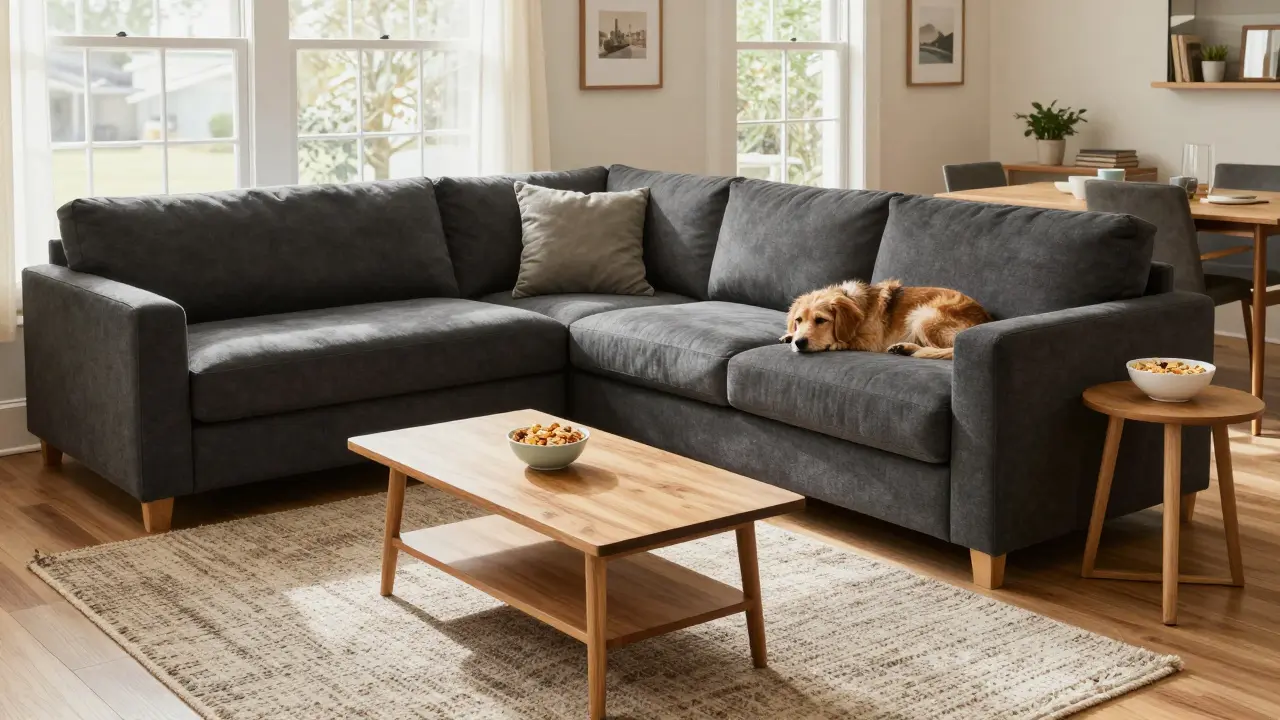
When you're picking out furniture for your home, it’s not just about what looks nice. It’s about what actually works-day after day, year after year. Too many people buy something because it’s on sale or matches an Instagram post, only to regret it six months later when the cushion collapses or the legs wobble. You don’t need a showroom full of options. You just need to ask the right questions before you hand over your money.
How Much Space Do You Really Have?
Measure your room. Not the wall. Not the doorway. The actual space where the furniture will sit. A couch that looks perfect in the store might block your hallway or leave no room to walk around the coffee table. In a typical 12x14 living room in Burlington, a 90-inch sofa leaves just 18 inches of walking space on each side-barely enough for a person to pass. Go smaller. Go lower. Go modular. A sectional with removable pieces lets you rearrange as your needs change. Always leave at least 24 inches of clear path between major pieces. If you can’t fit a person walking through comfortably, it’s too big.
What’s Your Daily Life Like?
Think about your routine. Do you have kids who eat cereal on the couch? Pets that shed? A partner who naps on the sofa every afternoon? These aren’t just lifestyle quirks-they’re dealbreakers for upholstery. Microfiber and performance fabrics like Crypton or Sunbrella hold up against spills, pet claws, and sun fading. Leather ages well but needs regular conditioning. Cotton looks soft but stains easily. A sofa with removable, washable covers is the smartest investment if you live with chaos. And don’t forget the frame. Solid wood or steel frames last decades. Particleboard and plastic joints? They crack under pressure. Check the weight limit. If the manufacturer doesn’t list it, walk away.
Does It Last, or Just Look Good?
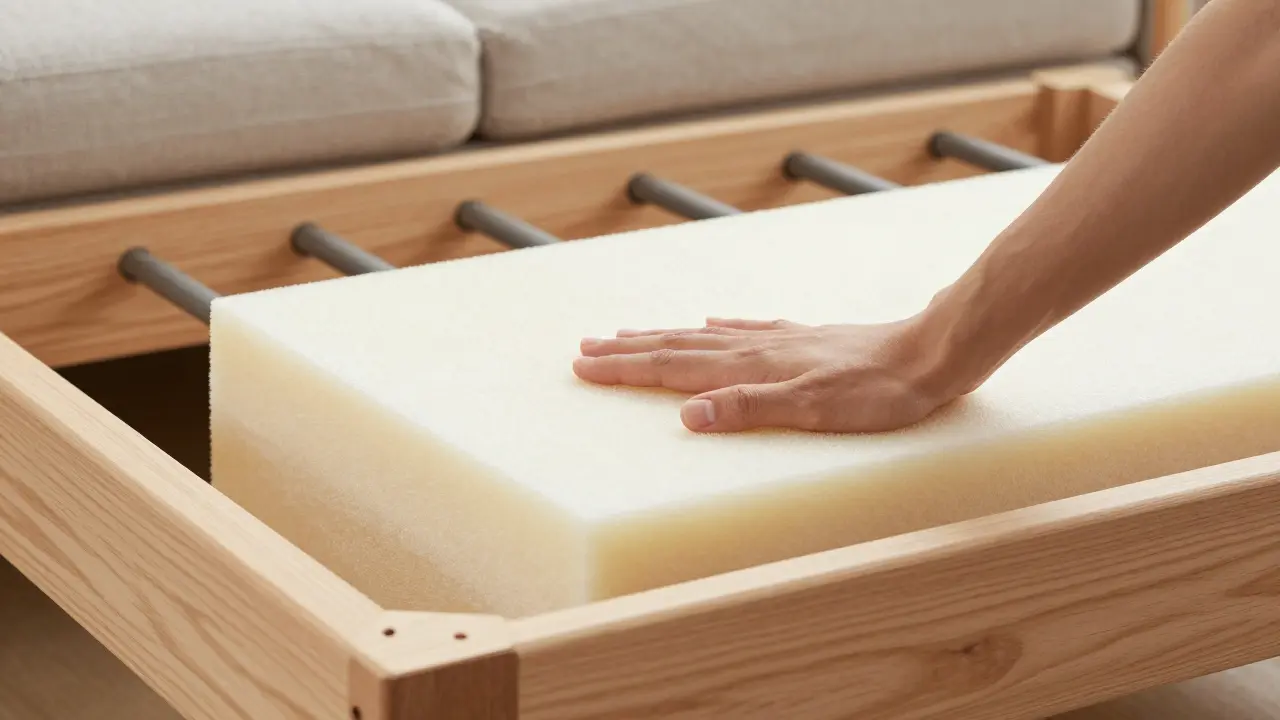
Here’s the truth: furniture that costs $300 rarely lasts five years. That doesn’t mean you have to spend $3,000. Look for brands that use kiln-dried hardwood, double-doweled joints, and eight-way hand-tied springs. These aren’t marketing buzzwords-they’re construction standards. A well-made chair should not creak when you sit down. A good sofa shouldn’t sink in the middle after two years. If you’re buying online, look for reviews that mention long-term use. People who’ve owned something for three years will tell you what really happens. One homeowner in Hamilton replaced their IKEA sofa after 18 months. The same person bought a locally made piece from a workshop in Guelph and still uses it six years later. The price difference? $400. The difference in quality? Night and day.
Comfort Isn’t Just Softness
Soft looks inviting, but it’s not always comfortable. A deep, plush sofa might feel great when you’re lounging-but not when you’re trying to get up after dinner. The ideal seat depth is between 20 and 23 inches. Too shallow, and your legs dangle. Too deep, and you sink in like a hammock. Arm height matters too. Your elbows should rest naturally, not strain upward or sag downward. Test every piece you’re considering. Sit like you live there. Lean back. Cross your legs. Stand up. If it feels awkward after five minutes, it’ll feel worse after five years.
Does It Fit Your Aesthetic-or Just Your Mood?
Colors and styles change. Trends come and go. A velvet emerald sofa might feel bold now, but in two years, you might look at it and think, “What was I thinking?” Stick to neutral bases: charcoal, beige, olive, or warm gray. These tones work with almost any rug, lamp, or throw pillow. Then add color and pattern through removable items-cushions, blankets, artwork. That way, you can refresh your space without replacing the whole room. And avoid matching sets. A dining table and chairs from the same collection often look stiff, like a museum exhibit. Mix materials: wood with metal, fabric with leather. It adds depth and feels more lived-in.
Can You Move It?
Think ahead. Will you move in the next five years? If so, oversized furniture becomes a liability. A sectional that fits perfectly in your current apartment might not make it through the stairwell in your next place. Modular pieces, disassemblable frames, and compact designs give you flexibility. Some sofas come in two or three sections that fit through standard doorways. That’s a huge advantage. Also, consider height. Taller legs make cleaning underneath easier. Low-profile designs look sleek but trap dust and pet hair. If you’ve ever tried to vacuum under a couch with no clearance, you know what I mean.
Is It Made Responsibly?
Furniture production has a real environmental cost. Look for FSC-certified wood, recycled metals, and non-toxic finishes. Avoid products with formaldehyde-based adhesives or flame retardants that leach into the air. Brands like IKEA, Crate & Barrel, and local Canadian makers are starting to publish their sourcing policies. You don’t need to buy eco-certified everything-but if two options are similar in price and quality, pick the one with fewer chemicals and more transparency. It matters for your health and the planet.
What’s the Warranty Really Covering?
Most warranties are toothless. They cover manufacturing defects, not normal wear. A 1-year warranty on a $1,200 sofa? That’s not a promise-it’s a disclaimer. Look for warranties that include frame integrity (10+ years), spring systems (5+ years), and fabric performance (3+ years). Some premium brands offer 15-year frame warranties. That’s a sign they stand by their work. And read the fine print. Does it require professional cleaning? Does it void if you use a vacuum? If the warranty feels like a trap, so does the product.
How Does It Make You Feel?
At the end of the day, furniture isn’t just functional. It’s emotional. You spend hours in your chair. You unwind on your sofa. You eat meals at your table. If a piece feels cold, impersonal, or overly formal, it won’t become part of your life. Choose things that make you want to sit down, relax, and stay awhile. That feeling can’t be measured in inches or pounds. But you’ll know it when you feel it.
What’s the most important factor when buying living room furniture?
The most important factor is how well it fits your daily life-not just your space. A couch that looks great but can’t handle pets, kids, or daily use will become a liability. Prioritize durable materials, solid construction, and easy maintenance over style alone.
Is it worth spending more on a high-end sofa?
Yes, if you plan to keep it for more than five years. A well-built sofa with a hardwood frame, high-density foam, and quality upholstery can last 15-20 years. Cheaper options often need replacing every 3-5 years, which ends up costing more over time. Think long-term value, not upfront price.
What upholstery is best for households with pets?
Performance fabrics like Crypton, Sunbrella, or microfiber are ideal. They resist stains, odors, and claw damage. Darker colors hide fur better. Avoid velvet, linen, or light cotton-they show wear quickly. Always ask for a fabric sample and test it with pet hair and a little water before buying.
How do I know if a piece of furniture is well-made?
Check the frame: it should be solid wood or steel, not particleboard. Look for double-doweled joints and hand-tied springs. Lift a chair or sofa-if it feels heavy and balanced, it’s likely well-built. Shake it gently. If it wobbles or creaks, skip it. Also, inspect the stitching: tight, even seams mean quality workmanship.
Should I buy furniture online or in-store?
Buy in-store for sofas, beds, and dining sets-you need to test comfort and quality. Online is fine for side tables, lamps, or decor. Always check return policies and delivery fees. Many online retailers charge $100+ to return a sofa. If you’re unsure, order a fabric swatch first. Some companies even let you test a piece in your home for a week.

sonny dirgantara
March 12, 2026 AT 05:26bro i just bought this couch on sale and it’s already sinking in the middle lmao
Andrew Nashaat
March 13, 2026 AT 13:15Wow. Just... wow. You didn’t even mention grain direction in the wood, or the moisture content of the kiln-dried lumber-critical for structural integrity! And you say ‘performance fabric’ like it’s a magic bullet-but have you considered the VOC emissions from the backing? Most ‘stain-resistant’ fabrics are coated in PFAS. You’re literally poisoning your family for the sake of ‘easy cleanup.’
Also, ‘removable covers’? Please. Most are sewn with cheap polyester thread that unravels after two washes. If you’re serious about durability, go with leather-yes, it’s expensive-but it ages like fine wine, and it’s naturally flame-retardant without toxic additives. And if you’re using ‘microfiber’ because of pets? You’re just delaying the inevitable. Cat claws shred it like tissue paper. I’ve seen it. I’ve cried. I’ve filed lawsuits.
And don’t get me started on ‘modular’ designs. They’re a scam. The connectors loosen. The joints rattle. You end up with a Frankenstein sofa that looks like it was assembled by a drunk IKEA employee. Real furniture doesn’t come in ‘pieces.’ It comes in one solid, handcrafted unit-preferably from a local artisan who uses mortise-and-tenon joinery, not those plastic dowel nonsense.
And who the hell says ‘neutral bases’? That’s interior design for people who are afraid of color. A home isn’t a corporate lobby. It’s a sanctuary. If you love emerald velvet, buy it. Live with it. Let it tell your story. Stop trying to ‘future-proof’ your aesthetic like it’s a stock portfolio.
And warranty? Ha! Most companies bury the truth in the footer. ‘Frame integrity’ means nothing if the springs are wrapped in synthetic fiber instead of hand-tied steel. Ask for the spec sheet. If they can’t produce it, they’re lying. And if they say ‘professional cleaning required’? Run. That’s not a warranty-that’s a trap.
And don’t even mention ‘eco-certified’ unless you’ve verified the certifier. FSC is a joke. Many ‘certified’ woods are logged from old-growth forests in Indonesia and shipped through Singapore with falsified paperwork. Transparency? Most brands don’t even know where their glue comes from. I’ve done the research. I’ve written the emails. Nobody answers. So stop pretending you’re making ethical choices. You’re just buying more plastic.
Bottom line: if you want furniture that lasts, buy heavy. Buy solid. Buy local. Buy ugly. Buy something that makes noise when you sit down. That means it’s built to last. And if it costs more than $800? Good. That’s the price of not replacing it every three years. Stop being cheap. Your back will thank you. Your kids won’t grow up thinking couches are disposable. And your future self? They’ll be crying tears of gratitude.
Lauren Saunders
March 14, 2026 AT 06:39How quaint. You assume everyone has the luxury of ‘local artisans’ and ‘kiln-dried hardwood.’ I live in a 400-square-foot studio in downtown Chicago with a 20-year-old cat, two toddlers, and a husband who thinks ‘modular’ is a yoga pose. You don’t get to lecture me on ‘mortise-and-tenon’ when I’m choosing between a $299 sofa that doesn’t collapse and a $2,500 ‘investment piece’ that I can’t even fit through the door. Your ‘truth’ is a luxury tax.
And ‘emerald velvet’? Please. That’s the kind of thing you buy after you’ve already paid off your mortgage and your kids are in college. Until then, I’m choosing functional over fashionable-and if that makes me a peasant in your world, so be it. At least I’m not sitting on a $3,000 couch that I can’t clean when my 3-year-old vomits on it. You’re not a furniture guru. You’re a performance artist.
Sandy Pan
March 15, 2026 AT 07:24What if the real question isn’t ‘what furniture lasts’ but ‘what furniture lets us live?’
We treat furniture like a transaction-buy, use, discard-but maybe it’s meant to be a vessel. A vessel for sleep, for laughter, for grief, for quiet mornings with coffee. A couch that sags isn’t broken-it’s worn in by love. A chair that creaks isn’t defective-it’s a soundtrack to decades of stories.
Maybe durability isn’t about kiln-dried oak or eight-way hand-tied springs. Maybe it’s about whether the piece invites you in. Whether it holds space for you when you’re broken. Whether it remembers your body, your habits, your quietest moments.
That’s why I still sleep on a secondhand futon from 2007. It’s lumpy. It’s stained. It’s not ‘aesthetic.’ But it’s mine. And I’ve cried on it. Laughed on it. Wrote poems on it. That’s the only warranty that matters.
Don’t buy furniture to impress the future. Buy it to comfort the present.
Dylan Rodriquez
March 17, 2026 AT 03:46I love this perspective. Honestly, I think we’ve been sold a lie-that furniture has to be ‘perfect’ or ‘investment-grade’ to be worthy.
I bought a $120 secondhand couch from Craigslist. It had a tear on the arm. I sewed it with a needle and thread. Now it’s my favorite spot to read. My dog sleeps there every night. My niece calls it ‘the cloud.’
Quality isn’t just about materials. It’s about care. The care you put into choosing it. The care you put into maintaining it. The care you show by sitting in it, using it, living with it.
Maybe the best furniture isn’t the most expensive. Maybe it’s the one you choose with intention-and then love enough to fix, to clean, to keep.
Let’s stop pretending we need perfection. We need presence.
Nathan Jimerson
March 19, 2026 AT 01:45Great post. So many people overlook how furniture affects daily rhythm. Durability matters, but so does how it fits into your life. A sofa that works for your routine beats a beautiful one that doesn’t.
Janiss McCamish
March 19, 2026 AT 18:17My mom taught me: if you can’t sit on it without feeling like you’re about to fall through, it’s not worth it. I’ve had the same living room set for 12 years. No creaks. No stains. No drama. Just solid wood, decent foam, and a fabric that’s been washed 17 times. It’s not ‘designer.’ But it’s mine. And I’m not replacing it.
Amanda Ablan
March 21, 2026 AT 12:43I think the most underrated question is: ‘Will I still like this in five years?’ Not because trends change, but because *you* change. Your needs, your moods, your routines shift. Furniture that’s too rigid-like matching sets or ultra-modern designs-can feel alienating when your life does. I went from ‘minimalist white sofa’ to ‘warm, textured, slightly mismatched’ after my divorce. The new set didn’t match my decor-it matched my healing. And that’s the real criteria.
Meredith Howard
March 22, 2026 AT 10:55While the emphasis on structural integrity and material transparency is commendable, one must also consider the sociocultural context of consumption. In many households, particularly those with intergenerational living arrangements or limited financial mobility, the concept of ‘long-term investment’ is a luxury. The notion that one must spend upwards of $1,500 for durability ignores systemic economic disparities. A functional, affordable solution-however temporally limited-remains a legitimate and necessary choice. Sustainability must include accessibility, not just material purity.
Gina Grub
March 23, 2026 AT 08:24Let’s be real: most people don’t buy furniture. They buy trauma. That sofa you think is ‘durable’? It’s the same one your ex left behind. The ‘modular’ sectional? It’s the one you assembled at 2 a.m. while crying because your cat hated it. The ‘neutral base’? It’s just beige because you’re too exhausted to pick a color. Furniture is not about craftsmanship. It’s about survival. And if your couch looks like it survived a hurricane and still lets you nap? You won. You’re not a consumer. You’re a warrior.
Kevin Hagerty
March 25, 2026 AT 07:24Oh good. Another person who thinks ‘hand-tied springs’ are a virtue. You know what’s better than hand-tied springs? Not having to care about springs at all. I bought a $400 sofa from Amazon. It’s got memory foam. It’s machine washable. It’s been in my house for four years. My dog peed on it. My kid spilled juice. I threw it in the washer. It dried. It still looks new. You’re all overthinking this. Furniture doesn’t need to be a philosophy. It needs to be functional. And yours? Probably still has the plastic on the legs.
Yashwanth Gouravajjula
March 26, 2026 AT 22:22In India, we often reuse furniture for decades. A wooden chair from my grandfather still sits in my living room. It’s not perfect. It’s not modern. But it holds memories. Sometimes, durability isn’t about materials-it’s about meaning.
Eric Etienne
March 27, 2026 AT 14:00Why are we even having this conversation? Nobody picks furniture based on ‘double-doweled joints.’ They pick it because it’s on sale. Or it’s the one that doesn’t look like a rejected IKEA prototype. Stop pretending this is a science. It’s not. It’s chaos. And that’s fine.
Dylan Rodriquez
March 29, 2026 AT 05:26That’s the thing-chaos is okay. But chaos doesn’t mean giving up. It means adapting. My couch is lumpy. My rug is stained. My coffee table is a repurposed crate. But it’s all mine. And I chose each piece because it fit-not because it was perfect. That’s the real ‘criteria.’ Not the specs. The story.